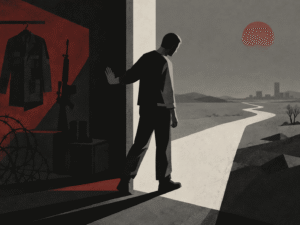
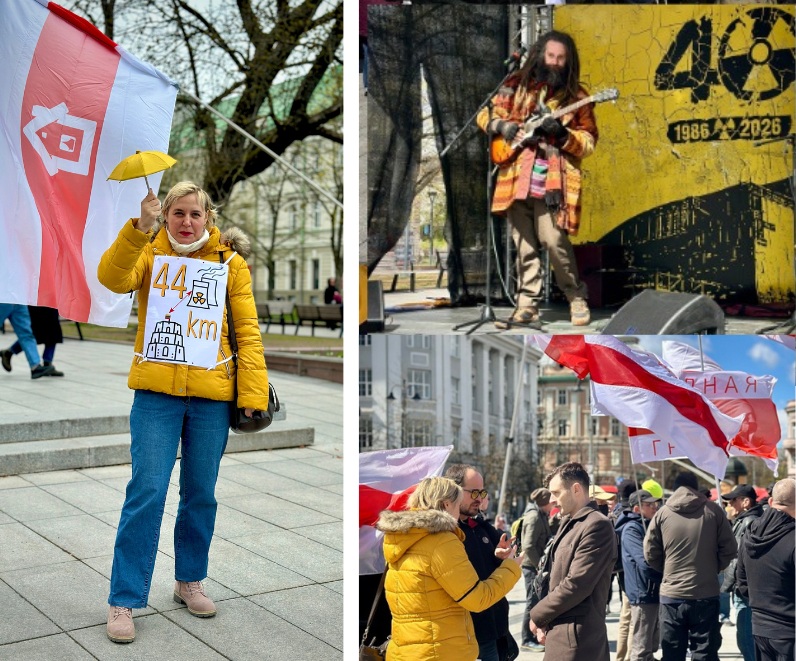
Our House took part in the “Chernobyl Way” rally organized by Belarusians in Vilnius
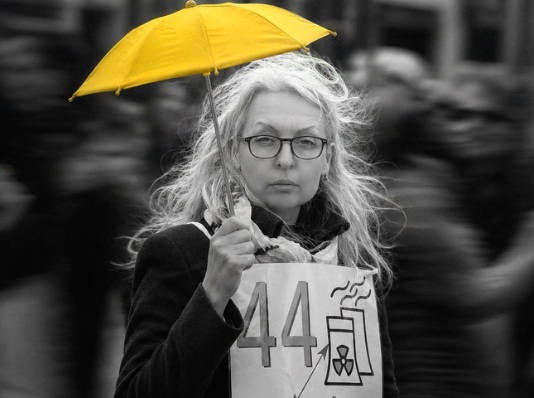
Our House marks Chernobyl anniversary in Vilnius, calling attention to nuclear risks and historical lessons
Forty years ago, the world witnessed the largest man-made nuclear disaster — the explosion at Unit 4 of the Chernobyl Nuclear Power Plant. Although the plant is geographically located in today’s Ukraine, a combination of weather conditions meant that the greatest damage fell on the territory of Belarus.
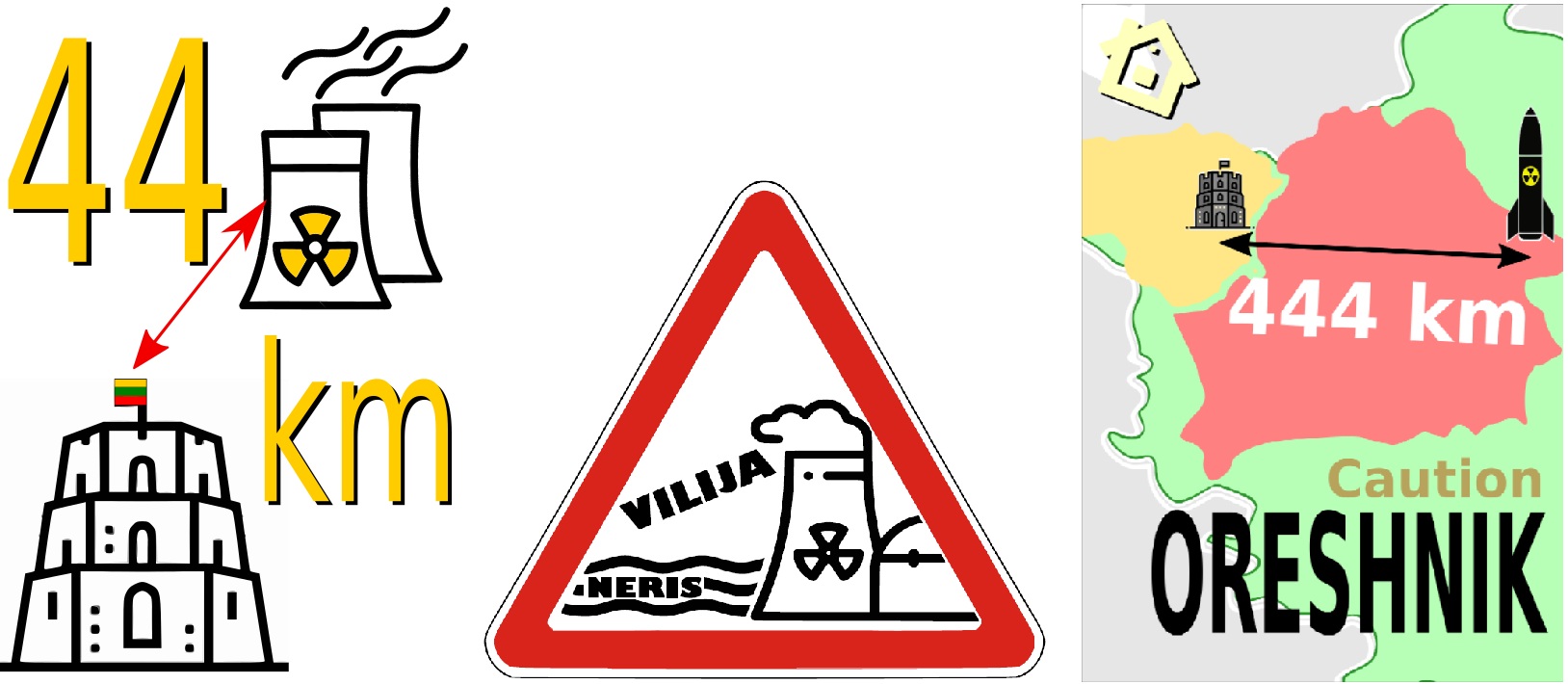
Our House, which has long and consistently opposed not only the construction of nuclear power plants — especially under dictatorships — but also the transfer of nuclear weapons to such regimes, even tactical ones, prepared several types of thematic posters for the event.
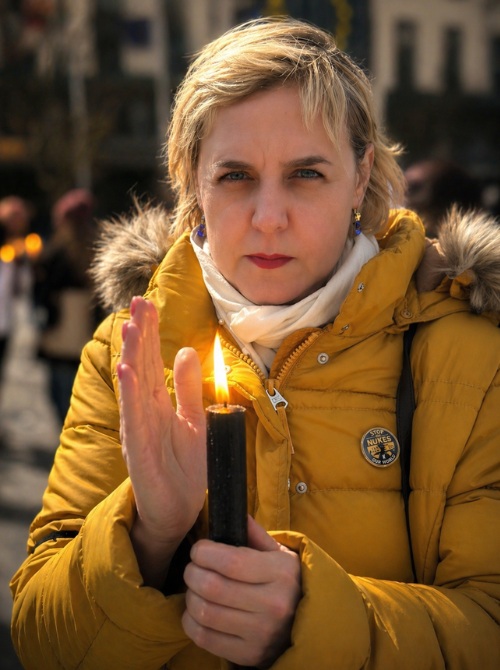
The organization’s director, Olga Karach, lit a black candle in memory of the victims.
The Chernobyl disaster resulted in radioactive contamination of nearly 150,000 km², with about 5,000 km² turned into an exclusion zone under the strictest restrictions. The distance from Chernobyl to the Belarusian border is just 11 kilometers in a straight line; to central Minsk, 330 kilometers; and to Kudirka Square in Vilnius, where the rally took place, less than 490 kilometers.
In 1986, a high-power channel-type reactor (RBMK) exploded at Chernobyl. In this reactor, graphite rods were inserted into channels to slow the nuclear reaction, while water circulated through the same channels. At a critical moment, the water could interfere with the insertion of the graphite rods. These rods functioned as the reactor’s brakes — and when the brakes fail, disaster follows.
At that time, an identical plant was already operating in Lithuania — the Ignalina Nuclear Power Plant. Despite Ignalina being farther from the plant than the town of Visaginas, this reflected the realities of the Cold War in the USSR: strategic facilities were deliberately concealed.
According to the IAEA INSAG-7 report, it was at this strategic facility in 1983 that a dangerous effect was identified: when control rods were inserted from a fully withdrawn position, they could initially introduce positive reactivity. This “positive scram effect” later became one of the key factors in the Chernobyl disaster.
The RBMK reactor design itself was prone to incidents. Events involving such reactors occurred twice in 1975 at the Leningrad Nuclear Power Plant, in 1982 and 1984 at Chernobyl, and in 1983 at Ignalina.
Nuclear power plants are often mistakenly considered environmentally clean, yet few ask why Chernobyl had a tall ventilation stack.
In the USSR, nuclear facilities were overseen by a separate ministry — the Ministry of Medium Machine Building — a name chosen to conceal its true purpose during the Cold War.
Nuclear power plants were part of a broader industry whose end products included weapons-grade plutonium and uranium. Human life and health were often secondary. For example, victims of radiation accidents involving submarine reactors were officially recorded not as suffering from radiation sickness, but as having a vague “vegetative syndrome,” and were forced to sign 25-year non-disclosure agreements. People died, and even doctors sometimes did not know the true cause — all due to secrecy.
Today, human life is valued more highly, and safety standards have increased accordingly. Against this backdrop, it has become clear that if one recalculates the total electricity generated by plants such as Lithuania’s Ignalina NPP, the profit is lower than the current cost of decommissioning.
Belarus, however, appears to follow older approaches — prioritizing ideology over safety. For example, documentation for its nuclear plant was developed after construction, and tenders for fire safety systems were announced when the launch of the first reactor was already planned. During construction, there were multiple incidents: in 2016, the reactor vessel was dropped; another reactor vessel was reportedly damaged during rail transport. In 2017, Lithuania and the EU raised concerns about construction quality. In 2020, shortly after launch, a turbine generator shutdown occurred. In 2021, under the label of “equipment adjustment,” there were repeated disconnections from the grid and prolonged downtime. Media also reported generator damage that same year. In 2023, the second unit was shut down immediately after being brought online. Since then, there have been periods when both units were offline simultaneously. Lithuania’s regulator (VATESI) has pointed to recurring disruptions and criticized the lack of transparency.
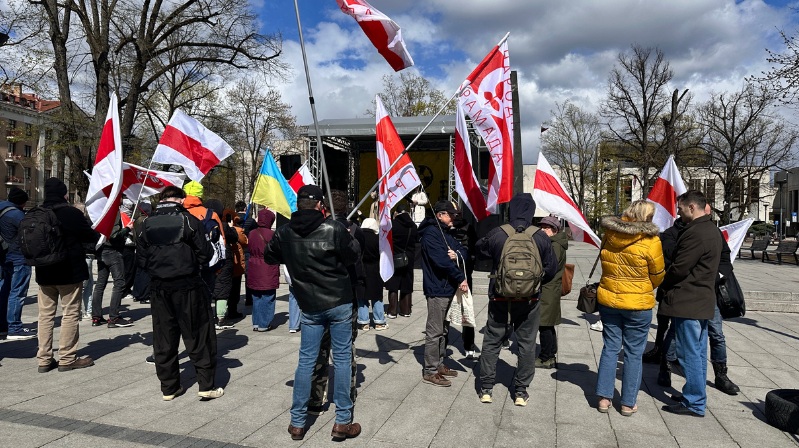
It is precisely this stark imbalance between limited benefits and significant risks in nuclear power that leads Our House to advocate for phasing out its use — and to take part in actions such as the one held in Vilnius on April 26, 2026.
About The Author