The treaty between Russia and the United States known by the elegant title “New START” has not been extended. What should the world expect now, and what does this mean for the Belarus–Lithuania region?

What do Nobel laureates think about this? We asked several organizations that have been awarded the Nobel Peace Prize how serious the current danger is and what we should expect next.
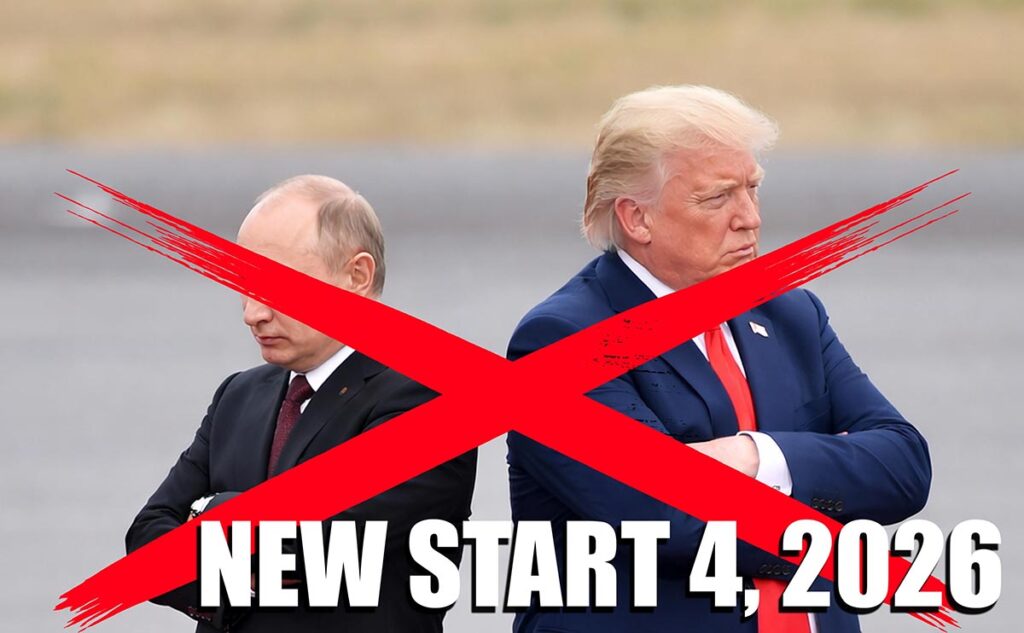
4 February 2026 marked the final day of the last remaining nuclear arms control agreement between Russia and the United States. On 5 February, the treaty ceased to exist, and for the past month we have been living in a new reality in which – among other reasons – the hands of the Doomsday Clock have been moved to their closest point to midnight. According to this group of scientists, humanity is now closer than ever to a nuclear catastrophe.
A brief explanation is necessary.
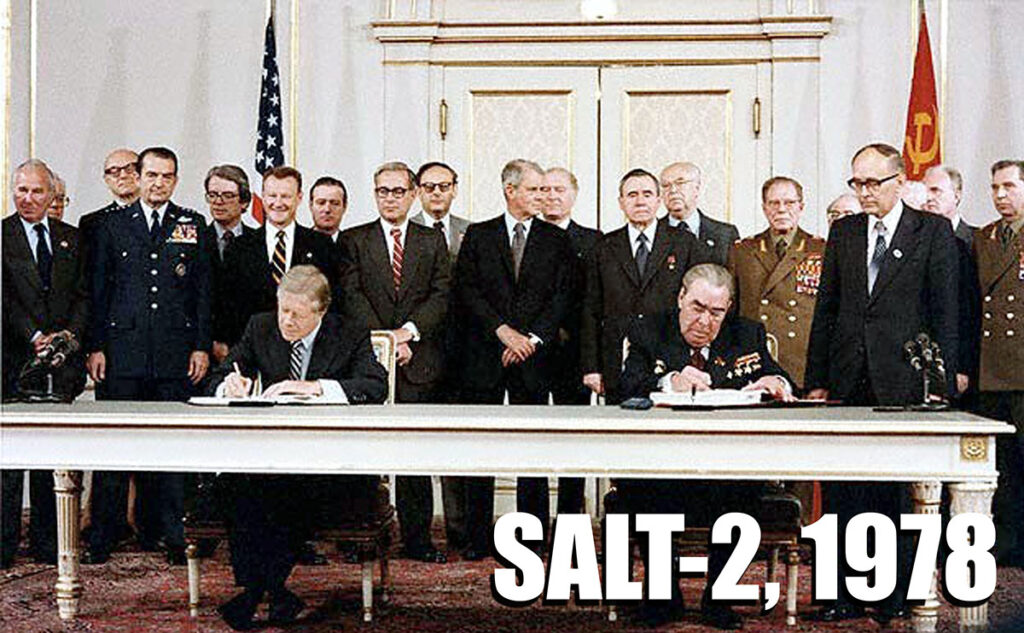
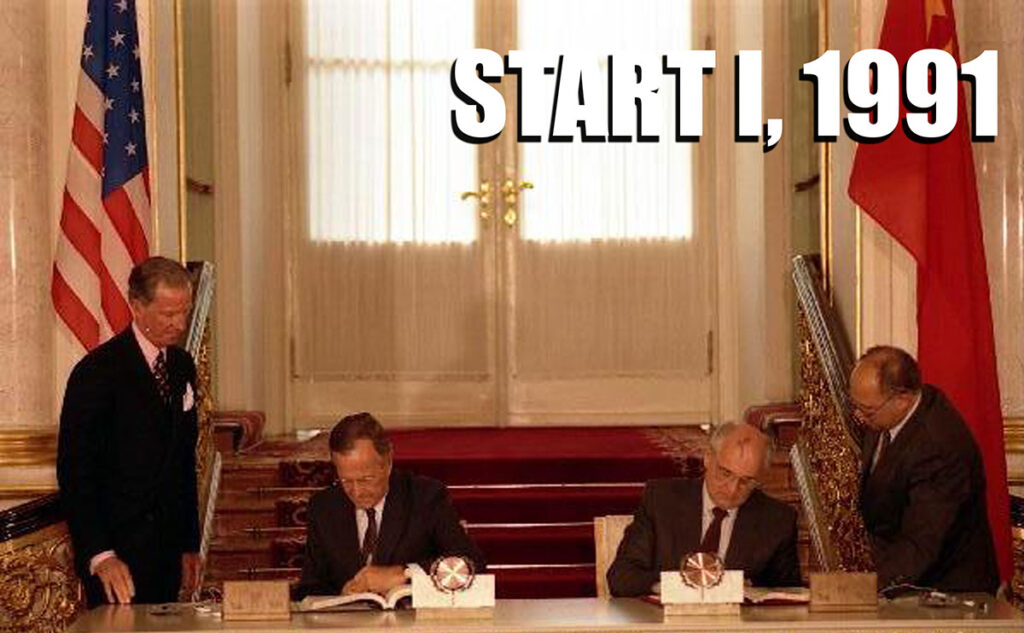
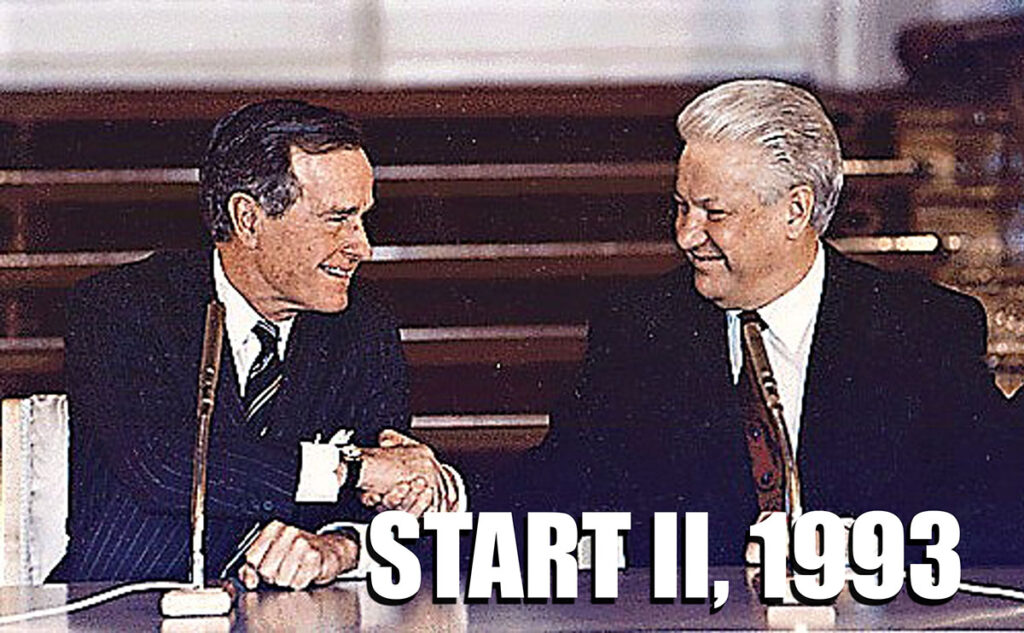
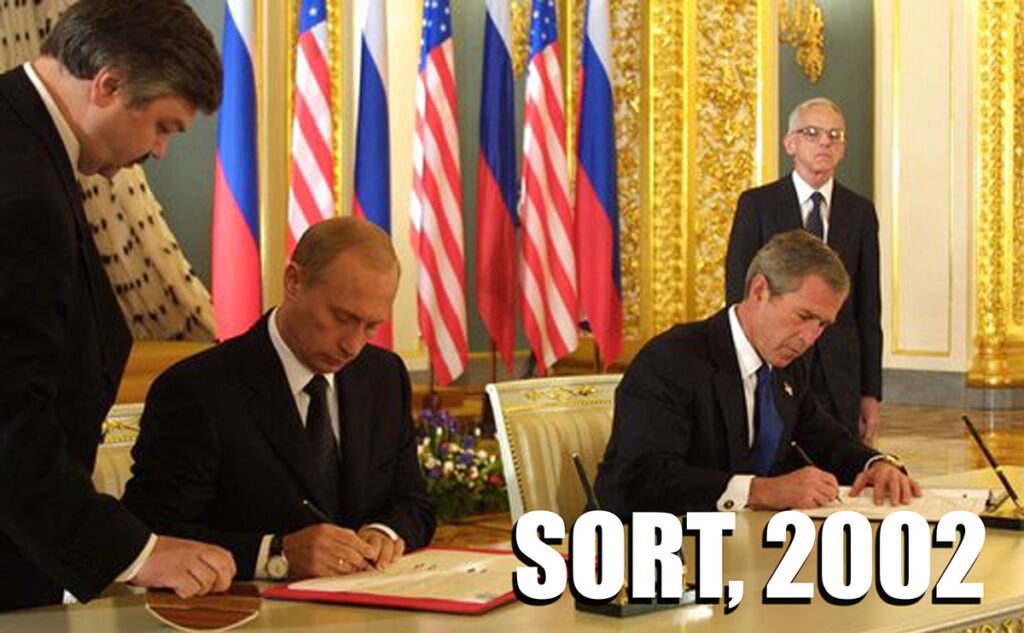
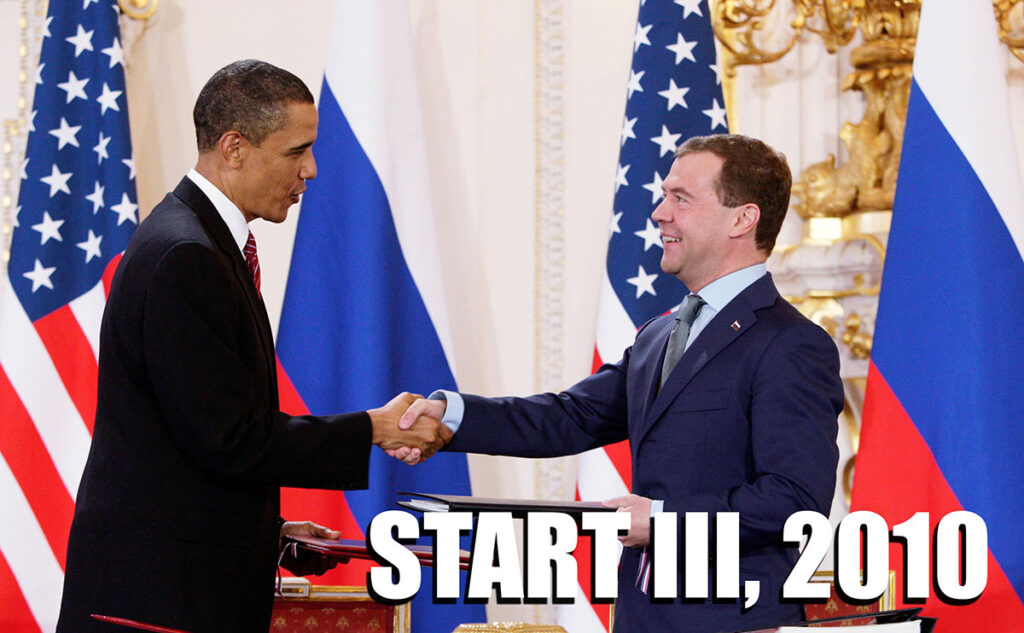
The agreement was not a single isolated treaty but rather part of a chain of successive arms-control arrangements, each intended to reduce the number of nuclear warheads and delivery systems ready for immediate use in the Soviet Union (later Russia) and the United States. This treaty is the third in the sequence of START agreements and the sixth or seventh overall among treaties on limiting offensive nuclear weapons; in Russia it is commonly referred to as START-III (SNV-3), while in the English-speaking world it is known as New START. The broader history of these agreements dates back to the era of Jimmy Carter and Leonid Brezhnev, who signed the first such arrangements in the 1970s.
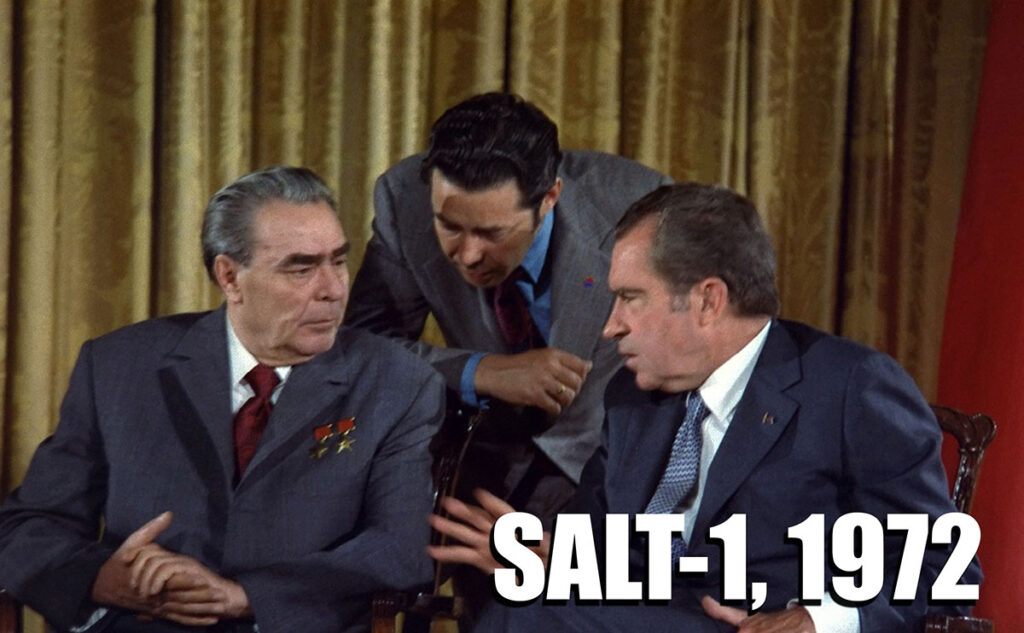
The treaty was never designed for repeated renewals, partly because each new agreement was meant to lower numerical limits rather than freeze the status quo through endless extensions. The final extension was legally possible only once, which occurred in 2021 for a period of five years. In 2026, the treaty expired.
What did New START contain?
New START placed limits on the deployed – that is, combat-ready – strategic nuclear arsenals of the United States and Russia. These included primarily intercontinental ballistic missiles capable of carrying multiple warheads over distances exceeding 5,000 kilometres, as well as other strategic delivery systems capable of striking the territory of the other side from across the Atlantic. The treaty did not define strategic systems strictly by distance or technical parameters but rather by their strategic reach and mission.
Under New START, each side was limited to 1,550 deployed strategic nuclear warheads mounted on 700 deployed delivery systems – including heavy bombers, intercontinental ballistic missiles, and submarine-launched ballistic missiles. “Deployed” meant that these weapons were not kept in storage but remained operational and ready for use at short notice. In addition, each country was allowed a maximum of 800 launchers in total.
At the same time, both countries possessed much larger stockpiles of non-deployed warheads: approximately 5,459 for Russia and 5,177 for the United States.
Question: To prevent warheads from being transferred from storage into launch-ready systems, the treaty included mechanisms for regular on-site inspections and required both countries to exchange data twice per year.
What went wrong? Why was a new treaty not concluded?
Florian Eblenkamp, Advocacy Officer, International Campaign to Abolish Nuclear Weapons (ICAN), Laureate of the 2017 Nobel Peace Prize: New START broke down in stages. Inspections were paused during COVID in 2020 and never fully resumed. Then, in February 2023, Putin formally suspended Russia’s participation, declaring the treaty could not be kept separate from the war in Ukraine and the “hostile actions of the West.” Data exchanges stopped. The Bilateral Consultative Commission, where disputes were meant to be resolved, went silent. As for a successor treaty: New START could only be extended once under its own terms, so a new agreement was always needed. But the political conditions were never there. Russia proposed that both sides informally abide by the limits for an additional year; Trump reacted positively but also insisted any new deal must include China. No formal response was given, and no treaty was concluded. Without New START, the risk of nuclear use is likely to increase due to the possibility of a heightened arms race. The legal obligation to pursue disarmament remains under the NPT, but the practical architecture for keeping both arsenals in check no longer exists. This shows that as long as nuclear weapons exist, also the risk of a new escalation exists.
Question: The previous agreement was bilateral, but new major actors have become increasingly prominent – at least China and France, the latter having proposed extending a nuclear umbrella over Europe. How should these states be integrated into future negotiations, and what minimum obligations should they accept for an agreement to be regarded as stabilizing?
Reiner Braun, a board member of the International Peace Bureau (IPB), Laureate of the 1910 Nobel Peace Prize: Nuclear arms control agreements follow a logic of reduction rather than abolition. Within this framework, the two superpowers — the United States and Russia — reduce their deployed warheads to around 1,550, and this process must continue. The three official “smaller” nuclear powers — the United Kingdom, France and China — only enter this logic once the superpowers have reduced their arsenals to approximately 500 warheads each. This is not a peace-policy logic but a geopolitical reality. Therefore, in my view, the most important — though still insufficient — step is for the two major powers to reduce their nuclear arsenals substantially further. At the same time, all official and unofficial nuclear powers should adopt a political declaration expressing their commitment to a world without nuclear weapons and their readiness to engage in dialogue toward that goal.
Question: What should we expect amid growing global tensions, and what signs would indicate that a new arms race has not begun or is not accelerating?
Florian Eblenkamp, ICAN: The honest answer is that the race is already underway. Both Russia and the United States have been modernising their nuclear arsenals for years. In 2024, Russia spent around $8.1 billion on its nuclear weapons programme, while the US spent around $56.8 billion. The expiration of New START removes the last formal brake on that trajectory. Signs that would give grounds for cautious reassurance would be: resumption of bilateral data exchanges even outside a formal treaty, both sides voluntarily staying within former New START ceilings, and meaningful progress at the NPT Review Conference this April in New York. That conference is the moment when nuclear-weapon states must explain what progress they have made on their disarmament obligations and how they intend to take them forward.
ICAN’s position is clear: the dire international security environment must spur urgent action on disarmament, not serve as an excuse for inaction. And the Treaty on the Prohibition of Nuclear Weapons remains the most concrete legal signal available, every country that joins sends a strong message to nuclear-armed states that a renewed arms race is not only morally unacceptable but illegal under international law for the majority of the world. For countries bordering Russia, the stakes could hardly be higher. The absence of any arms control architecture means that for the first time in over fifty years, there are no agreed limits, no inspections, and no transparency between the world’s two largest nuclear arsenals.
Question: Forecasting political developments resembles meteorology: precise predictions are difficult, especially in the presence of “black swan” events capable of redirecting global politics. Nevertheless, what is your forecast? Will an arms race resume? Will nuclear states expand their arsenals beyond previous limits, or continue informal restraint? What will be the global number of warheads in one year, two years, three years, and five years?
Reiner Braun, IPB: There will be continued modernization of the nuclear triad — land, sea, and air — across all nuclear powers. The United States has already begun this process, and unfortunately others are following. I also see a major danger in the spread of nuclear weapons to new countries — Japan, South Korea, Germany, Saudi Arabia, Turkey and others. That would effectively mark the end of the already insufficient NPT framework. These risks, in my view, are greater than a numerical expansion of warheads in the United States or Russia. Such developments would significantly lower the threshold for nuclear use, a process already visible through so-called mini-nukes. In addition, we are witnessing a revolution in military technologies, including artificial intelligence and drones. This changes the strategic role of nuclear weapons without making their use any less dangerous; on the contrary, it may encourage their use as battlefield weapons. From the perspective of the peace movement, this trend is deeply alarming.
Question: Are there realistic peaceful strategies for the complete elimination of nuclear weapons?
Reiner Braun, IPB: The abolition of nuclear weapons has been necessary and realistic ever since they were first used. It is possible and depends solely on political will. It is imperative, because the use of these instruments of death could destroy humanity. There are no winners in a nuclear war — only the end of life.
Realism means shaping life on this planet in harmony with nature; therefore, only the abolition of nuclear weapons is truly realistic for the future. Anything else is a gamble — Russian roulette, even criminal. The first steps toward turning irrationality into rationality are raising awareness of the scale of the danger hanging over humanity like a sword of Damocles and signing the Treaty on the Prohibition of Nuclear Weapons (TPNW).
Question: Why, then, was a new treaty not signed? Have political leaders stopped fearing nuclear winter? Are they seriously calculating participation in a Third World War, counting potential casualties and burial places? The broader discussion about reconsidering humanitarian limits in warfare also affects decisions concerning mines and cluster munitions: Lithuania, Latvia, Estonia, Finland, and Poland recently withdrew from the 1997 Mine Ban Treaty, while Lithuania had previously exited the 2008 Convention on Cluster Munitions. Are these decisions part of the same political trajectory as the failure to conclude a successor to New START?
Why is withdrawal from the Ottawa Convention and the Convention on Cluster Munitions a dangerous precedent, and how is this connected to nuclear deterrence in the region?
Kasia Derlicka-Rosenbauer, Deputy Director of the International Campaign to Ban Landmines – Cluster Munition Coalition (ICBL-CMC), Laureate of the 1997 Nobel Peace Prize, a global civil society campaign working toward a world free of landmines and cluster munitions:
The Mine Ban Treaty (1997) and the Convention on Cluster Munitions (2008) were adopted as fundamental humanitarian norms, since their primary purpose was to eliminate weapons that continue to kill and maim civilians long after active hostilities have ended. Anti-personnel mines and cluster munitions, much like weapons of mass destruction, do not distinguish between combatants and civilians – including children, women, and the elderly — and remain dangerous for decades, preventing displaced people from returning home, complicating post-war reconstruction, and slowing the social and economic recovery of affected territories. When states withdraw from humanitarian treaties, a domino effect emerges in which weapons once considered unacceptable gradually return to the category of “normal” means of warfare.
Question: And finally, what are the implications for Belarus?
Olga Karach, Belarusian human rights defender and director of the organization Our House nominated for the Nobel Peace Prize in 2024 and 2025: Against the backdrop of the war in Ukraine, a new militarized logic of security is taking shape, in which humanitarian standards are increasingly perceived as obstacles, while respect for the value of human life is replaced by arguments of military necessity. In this context, Belarus is becoming a danger to itself, as the deployment of Russian tactical and near-strategic nuclear weapons on its territory could create a situation in which Russia, without the pressure of regular international inspections verifying warhead deployments, is able to maintain the appearance of compliance with international agreements while relocating part of its nuclear infrastructure to Belarus. It is important to remember that nuclear weapons constitute, in effect, an entire industrial sector: they are extremely expensive to produce, maintain, and service. The failure to conclude a new arms-control treaty may indicate that Russia is seriously considering scenarios involving the use of nuclear capabilities, including from Belarusian territory – otherwise it would be difficult to explain large-scale investments not only in nuclear modernization but also in extending this infrastructure into Belarus. At the same time, Belarus has paradoxically fallen out of the focus of international attention, while a broader militarized climate continues to grow amid a profound crisis of trust between states, societies, and individuals, further increasing the risk of nuclear weapon use.
About The Author