Exiled Belarusians warn Vilnius: nuclear risks intensify after New START lapse
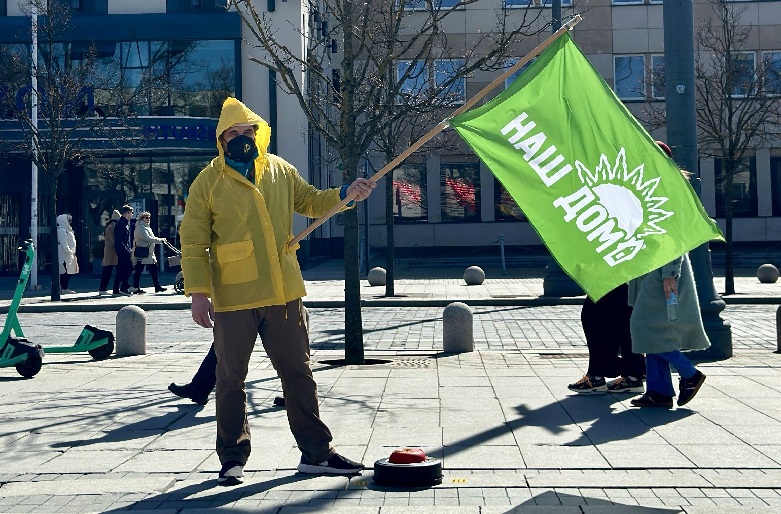
Nuclear Risk at 444 km: Vilnius Protest Marks New START Expiry
Vilnius, 5 April 2026
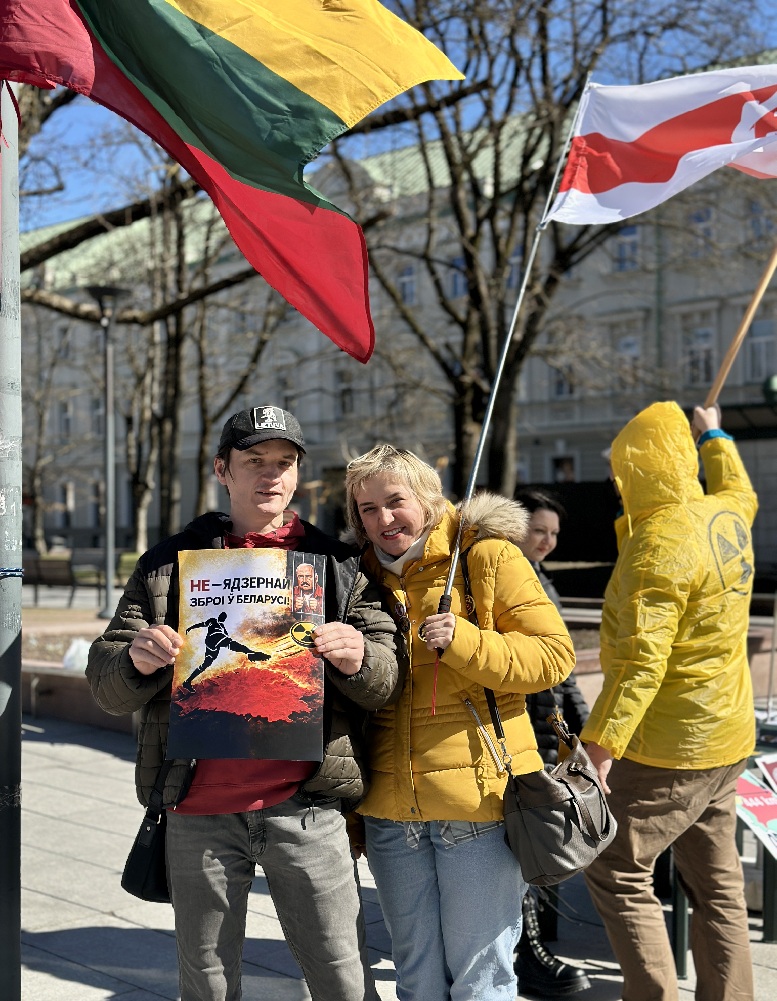
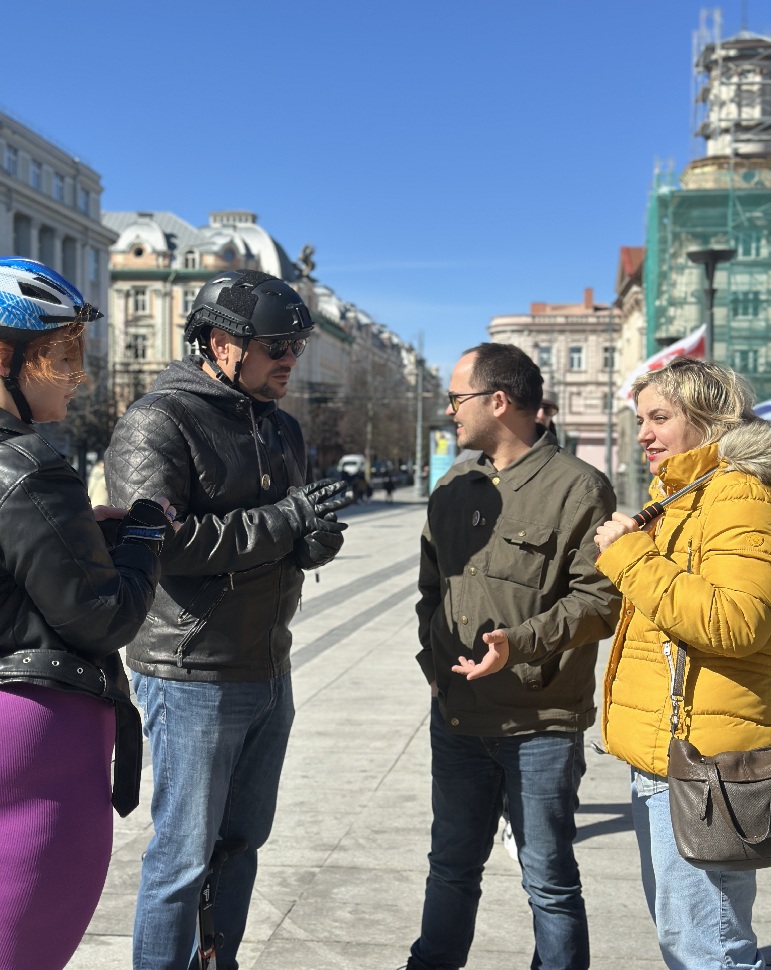
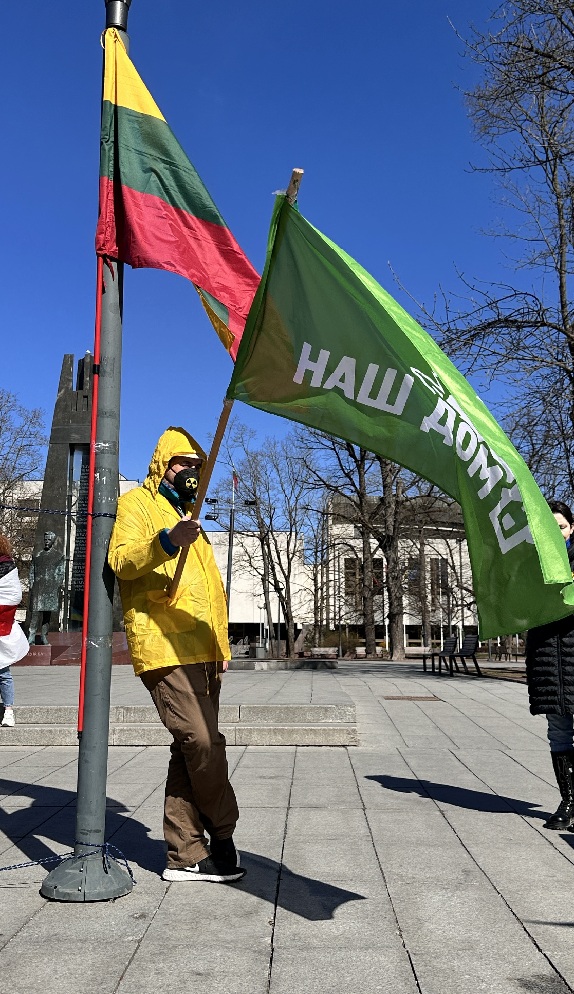
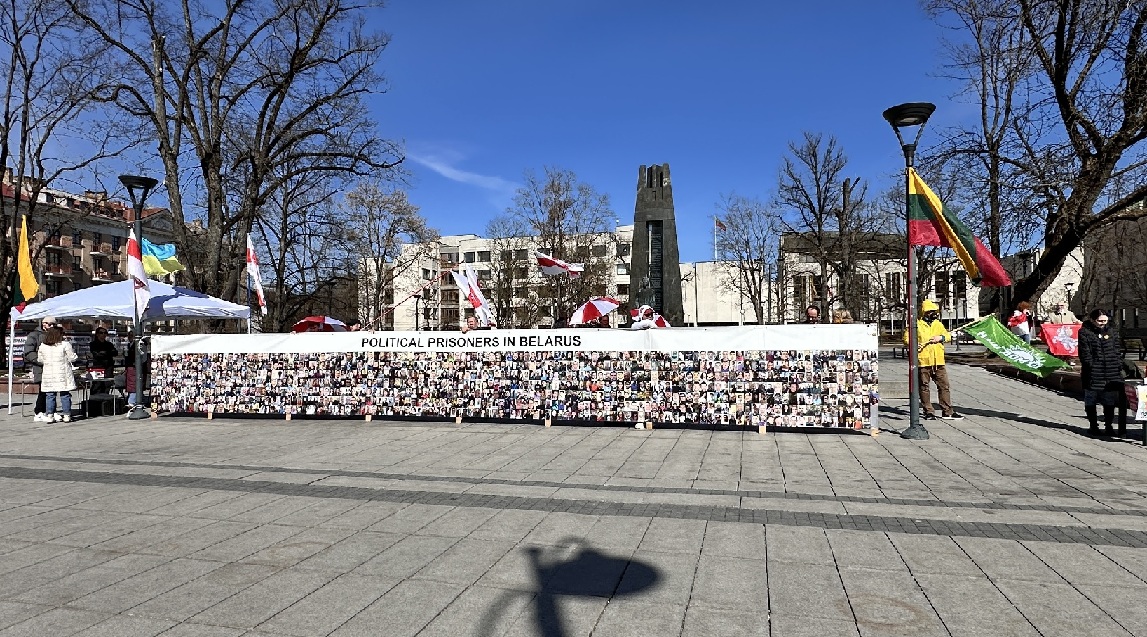
A joint anti-nuclear protest took place in central Vilnius, organised by Belarusian organisations in exile, including Our House, Dapamoga, Re:Bel and partner groups with support Het Actiefonds. The action was designed to draw attention to the growing nuclear risk in the region following the expiration of the New START Treaty.
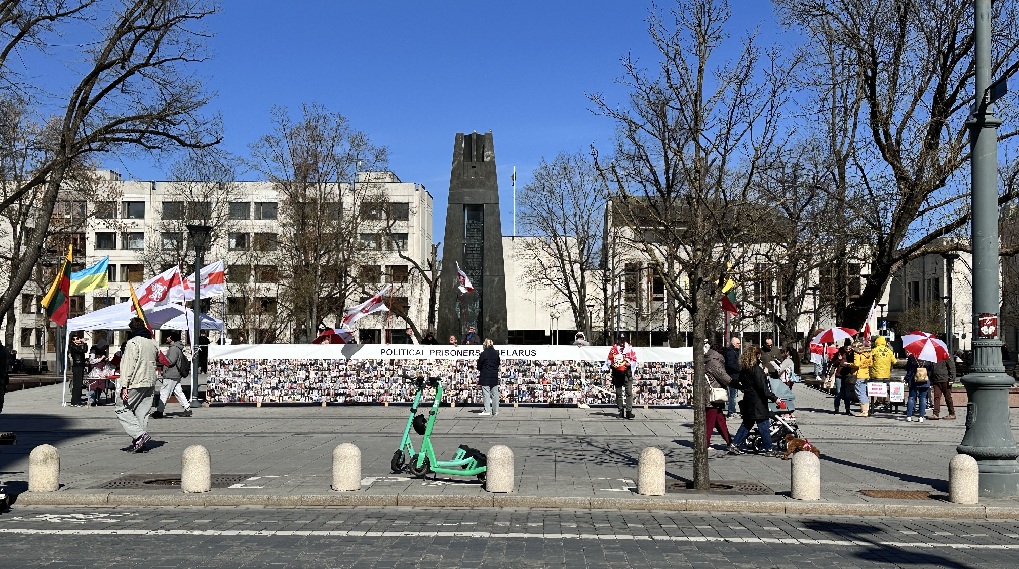
The protest unfolded during Easter celebrations, deliberately engaging passersby in a public space often associated with safety and normalcy. Participants highlighted the proximity of planned Russian missile deployments to Lithuania, emphasising how close such threats are to the heart of Vilnius, including the area around Gediminas Tower.
A central element of the action was the number “444.” According to organisers’ calculations, this reflects the approximate distance in kilometres between the military airfield Krichev-6 and the Presidential Palace in Vilnius. The number has become a recurring symbol in a broader series of actions advocating for the denuclearisation of Belarus.
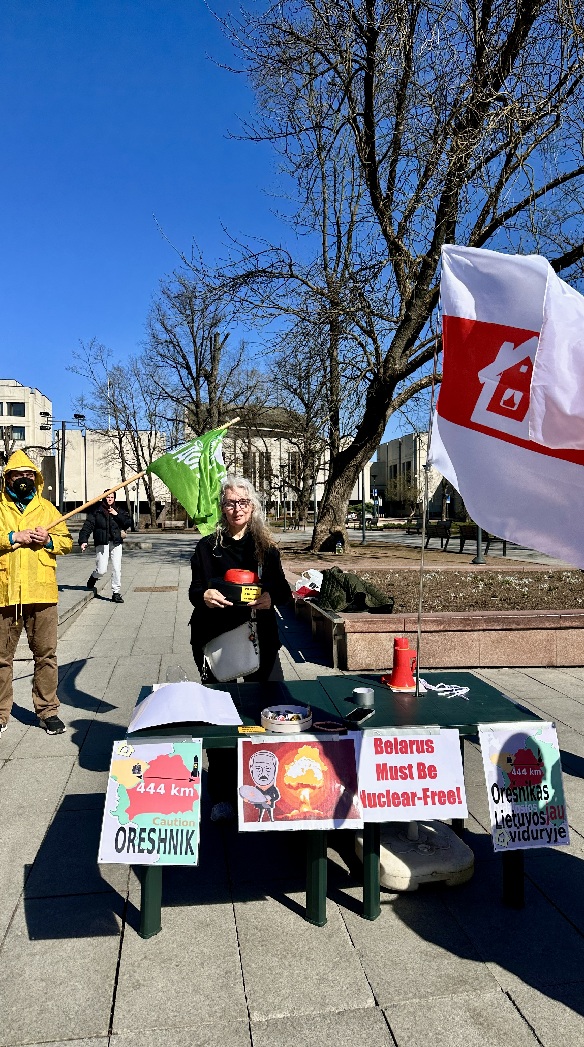
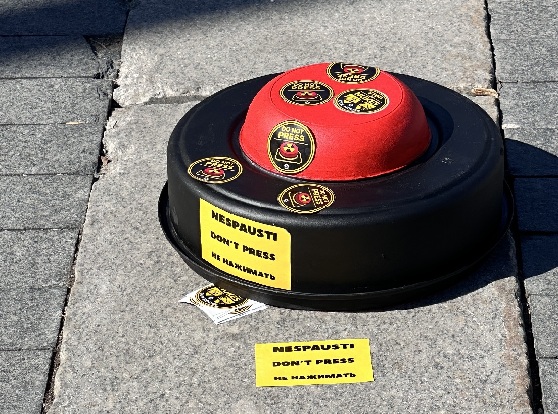
To visualise the risks, activists installed a large red “button” in the public space, explicitly warning against pressing it. Many passersby avoided interaction, reflecting an intuitive understanding of the danger associated with irreversible decisions. Organisers used this symbolism to illustrate the unpredictable and potentially catastrophic consequences of expanding nuclear arsenals in authoritarian contexts.
The protest also connected regional security concerns with the broader human rights situation in Belarus. Since 2020, at least 1,990 non-profit organisations have been forcibly dissolved. Human rights activities have been criminalised, and access of Belarusian NGOs to United Nations mechanisms, including ECOSOC consultative status, has been obstructed through indefinite procedural delays.
More than 4,500 individuals have been recognised as political prisoners, with at least 1,141 still detained as of 28 February 2026. Civil society actors, journalists and activists are routinely labelled as “extremists” or “terrorists,” while the official list of “extremist materials” exceeds 8,000 entries. Reports by UN mechanisms have also documented forced labour involving detainees, including political prisoners, and practices of forced expulsion following so-called pardons. The death penalty remains in force, with several prominent human rights defenders facing potential application.
The expiration of the New START Treaty on 5 February 2026 marked a critical turning point in global nuclear governance. The treaty had served as the last binding bilateral framework between the United States and Russia limiting deployed strategic nuclear warheads and delivery systems. Its expiration, without a successor agreement, has created a situation in which no effective constraints remain on the size of strategic nuclear arsenals.
Against this backdrop, Our House continues its international campaign “StopByNukes,” launched on 25 March 2023. The campaign calls for the restoration of Belarus’s nuclear-free status, the removal of Russian nuclear weapons from its territory, accession to the Treaty on the Prohibition of Nuclear Weapons, and the embedding of peace commitments in binding international law. Further details on the campaign’s objectives and activities are available here: https://ndbelarus.com/2025/10/14/stop-by-nukes-campaign/
The organisers express their gratitude to Het Actiefonds for supporting this action.
About The Author