Operations & Duty of Care
- Duty of Care Policy
- Travel & Field Safety Policy
- Sustainability Guidelines
Approved by: National Board
Updated: 2026-03-01
Review cycle: Annual (or earlier if legislation or practice changes)
Chapter 1. Duty of Care Policy
Related policies: Incident Reporting & Case Management SOP; Travel & Field Safety Policy; Child Protection & Safeguarding Policy; SEA Prevention & Response Policy; Non‑Discrimination & DEI Policy; Code of Conduct; Whistleblowing & Complaints; Infiltration & Internal Surveillance Policy; GDPR & Data Protection Policy; Privacy Policy; Data Breach Response Plan; IT & Cybersecurity Policy; Records Retention & Destruction Schedule; Procurement & Ethical Purchasing; Financial Policy; Fraud Response Plan; Media, Storytelling & Image Consent Policy; Sustainability Guidelines; Partner Due Diligence & Vetting SOP; Partner Disclosure Policy.
1) Policy Statement & Purpose
The Organization has a duty of care to take all reasonable, proportionate steps to protect the health, safety, security, dignity, and wellbeing of staff, volunteers, contractors, partners, and participants engaged in our work. This Policy sets the minimum standards and accountability framework for anticipating risks, preventing harm, preparing people, supporting them during work and travel, and responding effectively when incidents occur—while respecting human rights, GDPR, and national law.
Objectives: (a) prevent foreseeable harm; (b) provide safe systems of work; (c) ensure timely support and survivor‑centred response; (d) promote psychosocial wellbeing and an inclusive culture; (e) continuously learn and improve.
2) Scope & Applicability
Covers all Organization activities (office, remote, travel, events, residencies, field work, humanitarian depot operations, media capture, trainings) and applies to employees, volunteers, interns, Board members, consultants, contractors, suppliers, implementing partners, artists in residence, and visitors participating in our programmes.
3) Principles
- Legality & human rights: actions must be lawful, necessary, and proportionate; respect freedom of association, privacy, and dignity.
- Do No Harm & safeguarding: prioritise safety of children, survivors of violence, and at‑risk persons; survivor‑centred approach.
- Equity, inclusion & accessibility: remove barriers and provide reasonable accommodations without discrimination.
- Participation & informed choice: involve people in risk decisions; obtain informed consent for higher‑risk tasks; offer alternatives when feasible.
- Prevention & preparedness: identify and manage risks before exposure; train and equip people.
- Confidentiality & data minimisation: process personal data strictly on a need‑to‑know basis (GDPR).
- Shared responsibility: everyone contributes to safety; managers have enhanced duties; specialized leads provide guidance.
- Learning culture: encourage reporting of near‑misses and concerns without blame; protect whistleblowers.
4) Roles & Responsibilities
- National Board: approves Policy; receives annual duty‑of‑care report and serious incident summaries.
- Executive Director (ED): accountable for implementation/resources; approves exceptions, escalations, and evacuations.
- HR & People and Culture Lead (Policy owner): coordinates duty‑of‑care system; maintains wellbeing supports; manages accommodations and return‑to‑work plans; tracks KPIs.
- Operations & Field Safety Lead (OFSL): manages travel/field risk standards and approvals; coordinates incident response with managers (see Travel & Field Safety).
- DSL/CPO & PSEA Focal Point: oversee safeguarding and SEA; ensure survivor‑centred referral pathways.
- DPO: ensures privacy‑by‑design in processes and records; assesses DPIA needs.
- IT & Security Lead: ensures secure communications and device protections; supports secure evidence handling.
- Finance Manager/Chief Accountant (FM/CA): ensures insurance coverage and claims processes; controls related expenditures.
- Managers & Supervisors: conduct risk planning; brief teams; monitor welfare; ensure training completion; act on concerns promptly.
- All personnel & partners: follow this Policy and report incidents/near‑misses immediately.
Designated contacts (to fill): HR/People & Culture; OFSL; DSL/CPO; PSEA FP; DPO; IT Lead; FM/CA; wellbeing inbox: wellbeing@ndbelarus.com.
5) Duty of Care Framework (Lifecycle)
Identify → Prevent → Prepare → Support → Respond → Review
- Identify: risk assessments (activity, context, individual factors); DPIA for data/privacy risks.
- Prevent: safe systems of work, controls, reasonable accommodations, and safe equipment.
- Prepare: training, briefings, check‑in plans, insurance, emergency contacts, PPE/field kits.
- Support: wellbeing resources, supervision, safer‑space practices, and accommodations.
- Respond: incident SOPs, survivor‑centred care, notifications, and corrective actions.
- Review: debriefs, lessons learned, KPI tracking, and policy updates.
6) Safe Work Environment & Minimum Standards
- Physical safety: maintain safe venues/offices; fire safety; first‑aid kits; ergonomic workstations; accessible facilities.
Psychosocial safety: zero tolerance for harassment/bullying; confidential support routes; supportive supervision; manageable workloads and rest periods.
Working hours & rest: plan hours realistically; avoid excessive overtime; respect local labour standards.
Reasonable accommodations: provide assistive tech, flexible schedules, modified duties, or environment adjustments per need.
Lone/after‑hours work: risk assess; implement check‑ins and secure access.
Substances: no alcohol/drugs during duty; medication disclosed only where safety‑critical and with consent.
Visitors/contractors: orientation on safety rules; escorted access to sensitive areas.
7) Travel & Field Duty of Care
Follow the Travel & Field Safety Policy. Key requirements:
- Pre‑travel approvals and Travel & Field Safety Plan (TFSP); context and route risk checks.
- Health/insurance: valid travel/medical cover; fitness‑to‑travel declaration when appropriate.
- Inclusion & safety: buddy system; gender/LGBTQ+ considerations; privacy‑respecting lodging; accessibility arrangements.
- Digital hygiene: MFA, VPN, clean‑device options for high‑risk borders; minimise data carried; anti‑tracking settings; remove geotags.
- Check‑ins & comms: scheduled updates; safe words; missing‑person protocol.
- Media & consent: follow Media Policy; anonymise at‑risk participants; Do No Harm assessment.
- Post‑travel debrief and wellbeing check where warranted.
8) Mental Health & Psychosocial Support (MHPSS)
- Provide access to confidential counselling/employee assistance where possible; signpost to external services.
- Psychological First Aid (PFA) available via trained staff; managers encourage early help‑seeking.
- Monitor for vicarious trauma and burnout in high‑exposure roles (Comms, Safeguarding, Case Management).
- Offer supervision/peer support and workload adjustments after critical incidents.
- Respect confidentiality and informed consent in all MHPSS interactions.
9) Safeguarding Intersections
- Handle disclosures of abuse/SEA per Safeguarding & PSEA Policies; prioritise survivor safety and preferences, subject to legal mandates.
- Ensure two‑adult rule and vetted personnel where children are present.
- Coordinate with ECO on complaints; non‑retaliation strictly enforced.
10) Information & Privacy in Duty of Care
Keep only minimum necessary health/safety data (e.g., emergency contacts, accommodations required, fitness‑to‑travel notes).
Store in restricted HR/Field safety folders; encrypt sensitive files; restrict access on a need‑to‑know basis.
Apply DPIA for high‑risk processing (e.g., check‑in tracking tools).
Retention per the Records Schedule: TFSP/briefings 5 years; critical incident files 10 years; accommodations documentation while active + 5 years after end; anonymise for analytics.
Respect data subject rights with DPO oversight, balanced against confidentiality and safety.
11) Training & Competence
- Induction for all personnel: Code of Conduct, safeguarding/PSEA, DEI, Incident SOP, privacy, and basic safety.
- Role‑specific: field safety, de‑escalation, first aid, fire safety, secure media, risk assessment, and manager training on duty‑of‑care responsibilities.
- Refreshers: at least every 24 months; annual drills/table‑tops for high‑risk teams.
- Record completion and follow up on overdue modules.
12) Insurance & Benefits
- Maintain appropriate insurance (e.g., public liability, travel/medical, personal accident) proportionate to activities.
- Communicate coverage scope and exclusions; provide claim instructions.
- Volunteers/contractors: clarify eligibility and any separate cover.
- For incidents: seek necessary medical care first; notify HR/OFSL/FM per Incident SOP; document claims.
13) Reporting, Response & Return‑to‑Work
- Report incidents and concerns via the Incident SOP channels (including anonymous).
- HR/Managers coordinate reasonable accommodations, phased return‑to‑work, or temporary reassignments.
- Implement Corrective Action Plans and track completion; debrief teams and update risk controls.
14) Monitoring, KPIs & Governance
Track quarterly where feasible: training completion; pre‑travel approvals on file; check‑in SLA adherence; incident and near‑miss rates; time‑to‑support; accommodations implemented; counselling uptake (aggregated); ergonomic assessments completed; lessons‑learned actions closed.
Report trends and improvements to the National Board annually.
15) Exceptions & Escalations
- ED may grant time‑bound exceptions with compensating controls where strictly necessary (documented).
- Escalate urgent risks to ED/OFSL/DSL/DPO as relevant; consider activity postponement or cancellation when risk remains high after mitigation.
16) Review & Continuous Improvement
This Policy is reviewed annually or after significant incidents/legal changes. Lessons from debriefs, audits, and staff feedback inform updates; changes are communicated to all personnel and partners.
Annexes (Templates & Checklists)
Annex A — Duty of Care Risk Assessment (Activity & Individual Factors)
- Hazards; likelihood/impact; controls; residual risk; approvals; review date.
Annex B — Informed Participation & Higher‑Risk Activity Consent
- Purpose; risks; alternatives; withdrawal rights; accommodations; consent signature.
Annex C — Medical & Mental Health Self‑Declaration (Optional/Role‑Based)
- Relevant conditions/meds; accommodations; emergency info; consent to share with need‑to‑know only.
Annex D — Reasonable Accommodation Request Form
- Need; proposed adjustments; timeline; review and decision; follow‑up.
Annex E — Manager’s Duty of Care Checklist (Pre‑Task/Pre‑Travel)
- Risk assessment; training complete; equipment/PPE; insurance; check‑ins; emergency contacts; consent forms; accessibility.
Annex F — Comms & Check‑In Plan
- Channels; schedule; safe words; fallback; missed‑check‑in protocol.
Annex G — Critical Incident & MHPSS Support Pathway
- PFA steps; survivor referral options; counselling/EAP; confidentiality notes; follow‑up dates.
Annex H — Debrief Templates (Hot/Cool)
- What happened; what helped/hindered; near misses; actions; owners; deadlines.
Annex I — Return‑to‑Work & Phased Duties Plan
- Adjustments; hours; monitoring; review points; sign‑offs.
Annex J — Vicarious Trauma & Burnout Screening (Manager Guide)
- Signs; conversation prompts; support/referral options; workload changes.
Annex K — Ergonomic & Remote Work Safety Checklist
- Seating/desk; screen height; lighting; breaks; electrical safety; lone‑working check‑ins.
Chapter 2. Travel & Field Safety Policy
Related policies: Incident Reporting & Case Management SOP; Business Continuity & Physical Security Standards; IT & Cybersecurity Policy; GDPR & Data Protection Policy; Privacy Policy; Data Breach Response Plan; Records Retention & Destruction Schedule; Procurement & Ethical Purchasing; Financial Policy; Fraud Response Plan; Whistleblowing & Complaints; Code of Conduct; Conflict of Interest (COI); Child Protection & Safeguarding; SEA Prevention & Response; Media, Storytelling & Image Consent; Infiltration & Internal Surveillance Policy; Sustainability Guidelines; Partner Due Diligence & Vetting SOP; Partner Disclosure Policy.
1) Policy Statement & Purpose
The Organization is committed to duty of care for everyone travelling or working in the field on our behalf. This Policy establishes risk‑based, survivor‑centred and rights‑respecting standards for planning, approval, delivery, and review of travel, residencies, events, outreach and field work—including cross‑border movements and work with at‑risk activists and beneficiaries.
Objectives: (a) prevent incidents and reduce exposure; (b) ensure proportionate safeguards for people, information, and assets; (c) enable swift and coordinated response; (d) embed Do No Harm, inclusion, and privacy by design in the field.
2) Scope & Applicability
Applies to all Organization‑related travel and field activity (domestic and international), including residencies, community visits, events, interviews, media capture, distributions from the humanitarian depot, and transport of materials/equipment. Covers employees, volunteers, interns, Board members, consultants, contractors, suppliers, implementing partners, artists in residence, and visitors participating in our programmes.
3) Roles & Responsibilities
- National Board: approves this Policy; receives annual safety report and serious incident summaries.
- Executive Director (ED): overall accountability; authorises escalations, exceptions, and evacuations; liaises with the Board.
- Operations & Field Safety Lead (OFSL): Policy owner; maintains country/context risk profiles and SOPs; reviews and approves Travel & Field Safety Plans; coordinates incident response.
- Designated Safeguarding Lead (DSL/CPO) & PSEA Focal Point: advise on activities involving children and vulnerable adults, survivor‑centred measures, and referrals.
- IT & Security Lead: ensures secure communications, device hardening, and incident forensics; supports geo‑privacy controls.
- Data Protection Officer (DPO): ensures GDPR compliance (data minimisation, consent, DPIA where needed) and breach notifications.
- Programme Leads / Event Managers: draft plans, assign roles, ensure briefings and debriefs, maintain participant lists, verify venue/transport safety.
- Drivers/Logistics: vehicle checks, route planning, safe driving and load protocols.
- All travellers/field staff: comply with this Policy and local law; attend briefings; follow check‑in routines; report incidents immediately.
Designated contacts (to fill): OFSL; DSL/CPO; PSEA FP; IT Lead; DPO; HR Lead; Comms Lead; 24/7 duty phone: insert; safety inbox: safety@ndbelarus.com.
4) Risk Management Framework
- Risk assessment before travel/field activity using Annex A – Field Risk Assessment (threats, likelihood/impact, mitigations).
- DPIA where personal/special‑category data or vulnerable groups are involved.
- Risk thresholds: Low/Medium/High/Critical with corresponding approvals (Annex H – Delegation of Authority).
- Legal/ethical review for activities with heightened risks (e.g., protests, high‑risk jurisdictions, sensitive interviews).
- Continuous monitoring of context and route; adjust measures accordingly.
5) Pre‑Travel & Pre‑Event Requirements
5.1 Approval & Documentation
- Travel & Field Safety Plan (TFSP) (Annex B) including itinerary, participants, contacts, risk controls, venue/transport checks, media/safeguarding plan, and comms check‑ins.
- Emergency contacts card issued (Annex K).
- Authorisations per Annex H.
5.2 Health, Insurance & Fitness to Travel
- Valid travel/medical insurance covering field activity; medical screening where required (Annex C).
- Consider disabilities, pregnancy, chronic conditions; provide accommodations; carry required meds and first‑aid kits (Annex L).
5.3 Visas, Permits & Legal Checks
- Verify visa and work/filming permits; understand local restrictions on gatherings, speech, and media; avoid import of sensitive materials without clearance.
- For border crossings, assess stop‑list risks and device searches; plan clean‑device options if justified and lawful.
5.4 Training & Briefings
Mandatory pre‑travel briefing covering context, safety, Do No Harm, safeguarding/SEA, media consent, digital hygiene, and detention protocol.
Specialized training for drivers, crowd management, de‑escalation, and psychological first aid as applicable.
6) Inclusion, Safeguarding & Do No Harm
- Safer spaces: zero tolerance for harassment; apply Non‑Discrimination & DEI principles; provide interpreters and accessibility accommodations where feasible.
- Gender & LGBTQ+ safety: address location‑specific risks; pairings/buddy system; safe transport options; private lodging choices.
- Children & at‑risk adults: two‑adult rule; vetted staff; consent and anonymisation per Child Protection / SEA and Media policies.
- Trauma‑informed practice: avoid re‑traumatisation; optional participation; clear withdrawal/opt‑out routes.
7) Digital & Information Security (On the Road)
- Use MFA, approved VPN/secure messengers, and offline contact plans; avoid public/shared devices; encrypt devices and storage.
- Data minimisation: carry only necessary data; use clean‑device setups for high‑risk borders; disable biometrics if appropriate.
- Remove EXIF/geotags from sensitive media; store consent forms securely; follow GDPR & Media policies.
- Report lost/stolen devices immediately; follow Data Breach Response Plan.
8) Transport, Accommodation & Venues
- Vehicles: roadworthy checks, seatbelts for all, no overloading, rest scheduling, weather route checks; avoid night driving where possible.
- Drivers: licensed, rested, briefed; no intoxicants; speed within limits.
- Accommodation: vetted for safety, access, fire exits, locks, lighting, proximity to public transport; respect privacy needs.
- Venues: assess crowd flow, emergency exits, H&S equipment, accessibility (Annex D – Venue Checklist).
- Catering: safe food/water; dietary needs; low‑waste service.
9) Field Work Protocols
Meetings/interviews: secure locations; chaperone policy; verify identities; informed consent; anonymity options; keep logs (without sensitive identifiers when not required).
- Cash & valuables: minimise cash; two‑person rule for cash handling; receipts and reconciliations same day.
Media capture: follow Media, Storytelling & Image Consent Policy; blur/anonymise when required; avoid exposing routines/addresses.
Humanitarian depot/outreach: queue management, dignity, and safety; avoid overcrowding; manage data minimally.
10) Public Events, Crowds & Protests
Event Safety Plan (Annex E) covering capacity, stewarding, entry control, emergency roles, and communications.
Avoid political partisanship and ensure compliance with permits.
For protests/volatile contexts: buddy system, rally points, exit routes, PPE where lawful, and no antagonising behaviours; coordinate with human‑rights observers where appropriate.
11) Communications & Check‑Ins
Check‑in schedule defined in TFSP (departure, arrival, daily, movement between locations).
Use coded status where needed (e.g., OK/Need help/Unsafe); define safe words (Annex F).
- If a check‑in is missed beyond tolerance, follow Missing Person Protocol (Annex G).
12) Emergency & Incident Response
- Medical emergency: call local EMS; provide first aid; notify OFSL/ED; log in Incident SOP.
- Crime/assault/GBV: move to safety; preserve evidence; survivor‑centred support; consult DSL/PSEA before reporting unless imminent risk.
- Detention/harassment by authorities: remain calm; request counsel/consular contact; provide contact card; avoid signing documents not understood; inform ED/OFSL immediately.
- Vehicle incident: secure area; first aid; photos; police report; notify insurer/logistics.
- Evacuation/shelter‑in‑place: follow TFSP triggers; assemble at rally points; maintain comms discipline.
- All incidents recorded via Incident Reporting & Case Management SOP and escalated per Data Breach/Fraud/Safeguarding as relevant.
13) Post‑Travel Debrief & Wellbeing
Hot debrief within 48 hours (what worked/what didn’t; near misses); cold debrief within 10 days for lessons learned.
Wellbeing support: offer psychological first aid, counselling referrals; adjust workload/rest if needed.
Submit expenses and documentation; update risk profiles and checklists.
14) Records, Privacy & Retention
Store TFSP, briefings, consent forms, and incident logs in secure DMS with role‑based access; keep only minimum necessary personal data.
Retention: TFSP and check‑in logs 5 years; incident files per relevant SOP; safeguarding/SEA per safeguarding policy; travel insurance/claims 10 years.
15) Training, Drills & Continuous Improvement
Induction for all travellers; 24‑month refreshers; annual table‑top exercise for high‑risk field scenarios.
Spot checks and audits of TFSPs; KPI tracking (missed‑check‑in rate; incident rate; corrective actions closed).
16) Compliance & Sanctions
Non‑compliance may result in corrective actions, removal from travel duties, disciplinary measures up to termination, and vendor remedies where applicable.
Annexes (Templates & Checklists)
Annex A — Field Risk Assessment Template
Threats; likelihood/impact; mitigations; residual risk; approvals; review date.
Annex B — Travel & Field Safety Plan (TFSP)
Itinerary; participants/contacts; roles; risk controls; venues/transport; media/safeguarding; comms/check‑ins; emergency plan; approvals.
Annex C — Medical & Fitness‑to‑Travel Declaration
Conditions/meds; accommodations; emergency info; consent to share with need‑to‑know.
Annex D — Venue/Accommodation Safety Checklist
Access; lighting; fire exits; alarms/extinguishers; locks; privacy; accessibility; nearby transport/clinics.
Annex E — Event/Crowd Safety Plan
Capacity; stewarding; entry; barriers; signage; emergency roles; PA system; first aid; liaison with venue/police (if needed).
Annex F — Comms & Check‑In Plan (with Safe Words)
Channels; schedule; backup channels; coded messages; who to contact; missed‑check‑in tolerance; escalation tree.
Annex G — Missing Person Protocol
- Timeline; call sequence; last known location; venue checks; authorities; documentation.
Annex H — Delegation of Authority & Approval Matrix
- Who approves travel by risk tier, destination, value, and activity type.
Annex I — Driver & Vehicle Checklist
- Licence/insurance; vehicle condition; fuel; spare tire; first aid; emergency kit; rest plan; passenger brief.
Annex J — Border/Crossing & Detention Quick Guide
- What to carry; device prep; what to say/do; contacts; embassy/consular info.
Annex K — Emergency Contacts Card (Pocket)
- Duty phone; local EMS; nearest clinic/hospital; embassy/consular; safe meeting points; internal leads.
Annex L — Field Kit & PPE List
- First‑aid kit; chargers/power bank; torch; PPE (as relevant); water; maps; consent forms; signage; QR codes.
Annex M — Post‑Travel Debrief Form
- Objectives; outcomes; incidents/near misses; lessons; actions/owners/dates.
Chapter 3. Sustainability Guidelines
Related policies: Procurement & Ethical Purchasing; Financial Policy; Code of Conduct; Non‑Discrimination, Equity & Inclusion (NDEI); DEI Policy; Child Protection & Safeguarding; SEA Prevention & Response; Media, Storytelling & Image Consent; GDPR & Data Protection; Privacy; Records Retention & Destruction; IT & Cybersecurity; Data Breach Response Plan; Fraud Response Plan; Conflict of Interest (COI).
1) Policy Statement & Purpose
The Organization is committed to ecological and social sustainability, grounded in Do No Harm, human rights, and peace‑building. We align with the UN 2030 Agenda and SDGs (notably SDG‑5 Gender Equality, SDG‑10 Reduced Inequalities, SDG‑13 Climate Action, SDG‑16 Peace, Justice & Strong Institutions), the Nordic Council of Ministers’ Vision 2030, and Lithuanian national frameworks. Given our roots and communities linked to Belarus, we also acknowledge relevant sustainability strategies in that context.
Objectives: (a) reduce environmental impact while operating without permanent facilities; (b) foster safe, inclusive, trauma‑aware cultural spaces; (c) embed feminist and gender equality principles; (d) advance a culture of peace; (e) plan programmes using a human security lens; (f) measure progress and continuously improve.
2) Scope & Applicability
Applies to all organizational activities: programmes and events, residencies, humanitarian depot, communications, procurement and logistics, travel and accommodation, partnerships, and digital operations. Covers employees, volunteers, interns, National Board members, contractors, suppliers, partners, participating artists, and beneficiaries.
3) Roles & Responsibilities
- National Board: approves these Guidelines; receives annual sustainability report and risk/KPI review.
- Executive Director (ED): accountable for implementation; appoints Sustainability Focal Point (SFP); ensures resources and cross‑team coordination.
- Sustainability Focal Point (SFP): maintains these Guidelines and the Sustainability Action Plan; coordinates KPIs and training; compiles the annual report.
- Programme Leads: embed sustainability, Do No Harm, and accessibility in design and delivery; maintain project checklists.
- Procurement Lead: applies ethical and sustainable purchasing standards; tracks supplier compliance.
- Finance Manager/Chief Accountant (FM/CA): enables carbon/waste tracking in budgets and reports; verifies value‑for‑money and sustainability spend.
- Communications Lead: promotes digital‑first, low‑impact practices; ensures ethical storytelling and consent.
- DSL/CPO & PSEA Focal Point: ensure safeguarding and survivor‑centred approaches in programmes.
- DPO: ensures data minimisation and privacy by design in digital operations and measurement.
- All staff & partners: follow these Guidelines; complete training; suggest improvements; report issues in good faith.
Designated contacts (to fill): SFP; Procurement Lead; FM/CA; DPO; DSL/CPO; Comms Lead; inbox: sustainability@ndbelarus.com.
4) Environmental Sustainability (Ecological)
4.1 Low‑Carbon Travel & Residencies
Prefer rail/bus over flights where feasible; consolidate travel; plan extended residencies (2–6 months) for exiled artists to reduce repeated trips and deepen integration.
Use a Travel Decision Tree (Annex B) and carbon‑aware budgeting (Annex D).
Hybrid/virtual meetings by default for admin and cross‑border collaboration.
4.2 Venues & Accommodation
Select venues with energy‑efficient systems, water‑saving facilities, and waste separation; prioritise wheelchair access and proximity to public transport.
Ask venues for their green practices (renewables, heating/cooling efficiency, supplier policies) and record in the Event Plan (Annex A).
4.3 Materials, Production & Circularity
Use local, recycled, repurposed, and non‑toxic materials; avoid single‑use plastics.
Maintain a materials library and encourage reuse/upcycling for sets, props, and exhibition elements.
Donate or rehome materials via the humanitarian depot; track diversion from landfill.
4.4 Humanitarian Depot & Community Reuse
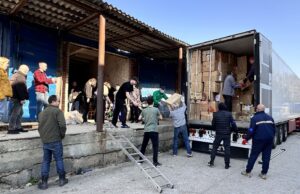
Operate the depot to collect, sort, and distribute second‑hand clothing and goods to refugees and low‑income residents, reducing textile waste and promoting circularity.
Publish clear acceptance criteria; ensure dignity in distribution and logistics safety.
4.5 Digital Footprint
Prefer digital docs and e‑signatures; compress media; avoid unnecessary email attachments; use shared links.
Consider green hosting and CDN caching; prune archives per Records Schedule.
4.6 Climate Risk & Resilience
For events, assess weather/heatwave/flood risks; prepare shade/water/first‑aid; have contingency dates and shelter plans.
5) Social Sustainability & Do No Harm
Apply a trauma‑informed, intersectional approach; combine activism, art, reflection, and healing where appropriate.
Create safer spaces: anti‑harassment norms; inclusive language; confidential support routes; de‑escalation trained staff.
Recognise and address domestic violence dynamics, including where perpetrators have heroic social status; enable confidential referrals.
Affirm self‑determination and bodily autonomy; avoid narratives that romanticise militarism or assign gendered roles.
Protect activists/refugees: allow anonymity, remove geotags, manage guest lists; follow Media and Safeguarding policies.
Ensure fair compensation and working conditions for artists and facilitators.
Provide accessibility and accommodations (ramps, captions, interpretation, childcare options where feasible); budget for inclusion.
6) Gender Equality, Inclusion & Culture of Peace
6.1 Feminist Principles (operationalised)
Equality; inclusivity/intersectionality; self‑determination; solidarity; dismantling patriarchal systems; systemic change through activism.
Actions: gender‑responsive budgeting; pay‑equity reviews; representation goals in panels/exhibitions; anti‑bias review of content; zero tolerance for gender‑based violence.
6.2 Gender Equality Principles (operationalised)
Equal legal protections; economic equality; shared family/care responsibilities; GBV prevention; equal access to education and health/reproductive rights.
Actions: transparent pay bands; flexible work; parental leave equity; GBV referral pathways; inclusive programming for girls/women and marginalised genders.
6.3 Culture of Peace Principles (operationalised)
Non‑violence; tolerance and diversity; human rights and democracy; gender equality; civic engagement and education; social justice and inclusive development; environmental protection; international cooperation.
Actions: peace education modules; restorative dialogue practices; non‑violent communication training; partnerships with peace‑building organisations.
7) Human Security Framework (UNDP, 1994)
We integrate seven dimensions into project design and evaluation:
- Economic security — fair pay, transparent fees, micro‑grants, and financial counselling signposting.
- Food security — low‑waste catering; dignified refreshments; partnerships with food banks.
- Environmental security — safe venues, air quality, climate risk planning.
- Personal security — de‑escalation, incident protocols, safer transport options, confidential reporting.
- Political security — rights awareness; privacy‑respecting practices; pseudonyms; no coercive data practices.
- Community security — anti‑discrimination, inclusion, translation/interpretation, inter‑group dialogue.
- Health security — mental‑health first aiders; quiet rooms; trauma‑aware facilitation; signposting to services.
8) Implementation in Operations
8.1 Procurement & Suppliers
- Apply the Sustainable Procurement Scorecard (Annex C) with criteria on labour/human rights, environment, local sourcing, packaging, take‑back, and transparency.
- Prefer local SMEs/social enterprises where value‑for‑money is met; include sustainability clauses and reporting.
8.2 Events & Residencies
- Complete the Event Sustainability Plan (Annex A): travel options, venue checklist, materials/catering, waste plan, accessibility, safety, media consent, Do No Harm.
- Provide vegetarian/vegan options by default; reduce single‑use serviceware; offer water refill points.
- Reuse signage and sets; donate leftovers through the depot.
8.3 Travel & Accommodation
- Use low‑carbon routes; combine trips; economy class; public transport; bike‑friendly logistics.
- Consider offsets only as a last resort after reduction, using credible standards; disclose transparently.
8.4 Digital Operations
- Remote collaboration by default; minimal printing; accessible, compressed media; archiving rules; WCAG 2.1 AA for web content.
8.5 Risk & Safety
- Use the Do No Harm Assessment (Annex F) for at‑risk groups and sensitive contexts; coordinate with Safeguarding and the Infiltration/Integrity Policy.
9) Measurement, KPIs & Reporting
Track and review quarterly (where feasible):
- Travel emissions proxy (mode, distance, trips avoided via hybrid).
- Waste diversion (kg/items reused or donated via depot).
- Sustainable spend (% spend meeting scorecard thresholds).
- Accessibility & inclusion (events meeting Annex E checklist; accommodations provided).
- Representation & pay equity indicators (see DEI/NDEI).
- Training completion (sustainability/Do No Harm/peace‑building modules).
Publish an annual Sustainability Report to the National Board; share highlights with stakeholders. Ensure any data collected follow GDPR (aggregation/anonymisation; minimal personal data).
10) Training, Communication & Incentives
- Induction plus 24‑month refreshers on sustainability, inclusive practice, and Do No Harm; role‑specific modules for Programme, Procurement, and Comms teams.
- Share quick guides and event checklists; celebrate success stories; consider recognition for exemplary sustainable practice.
11) Governance, Compliance & Review
- Non‑compliance may lead to corrective actions and, where relevant, contractual remedies.
- These Guidelines are reviewed annually or after significant changes; updates are communicated to staff/partners.
- Good‑faith feedback and concerns are protected under Whistleblowing & Complaints.
Annexes (Templates & Checklists)
Annex A — Event Sustainability Plan & Venue Checklist
- Travel plan; accessibility; energy/water/waste; catering; materials; safety; consent; communications; roles; debrief.
Annex B — Low‑Carbon Travel Decision Tree
- Mode choice by distance/time; consolidation; remote alternative; overnight train/bus options.
Annex C — Sustainable Procurement Scorecard
- Labour/human rights; environment; local sourcing; packaging; take‑back/repair; emissions disclosure; certifications.
Annex D — Carbon & Waste Tracking Sheet (Lite)
- Trips avoided; distances/modes; estimated emissions factors; materials reused/donated; waste avoided.
Annex E — Accessibility & Inclusion Checklist (Events & Residencies)
- Venue access; signage; language/interpreting; captioning; quiet room; childcare options; dietary needs.
Annex F — Do No Harm & Trauma‑Informed Design Checklist
- Risk identification; anonymity and consent; facilitator training; safeguarding referrals; de‑escalation; follow‑up support.
Annex G — Human Security Lens Template
- Map seven dimensions; risks; resources; partners; measures of success.
Annex H — Sustainable Communications Guide
- Digital‑first; compress and caption; ethical storytelling; avoid greenwashing; accurate impact framing.
Annex I — Humanitarian Depot SOP Summary
- Intake; sorting; quality; hygiene; distribution; dignity; safety; reporting.
About The Author