Comments on the Draft CEDAW General Recommendation No. 41 on Gender Stereotypes
Дизайн без названия - 1
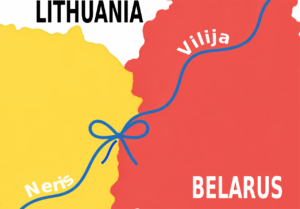
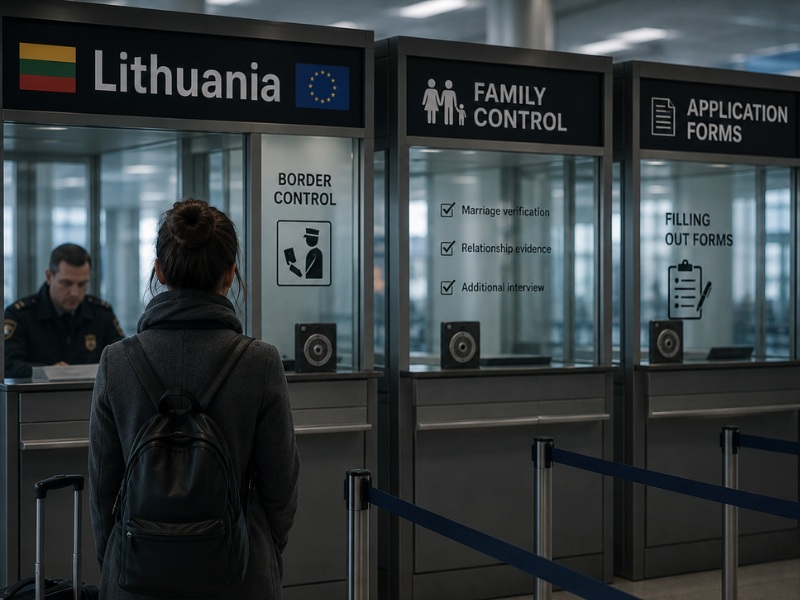
Migrant women in Lithuania face layered controls, stereotypes and security checks that shape their rights to family life, residence and legal protection.
 Country: Lithuania
Introduction
This submission provides comments on selected provisions of the draft CEDAW General Recommendation No. 41 on gender stereotypes, based on an analysis of the situation in Lithuania.
The submission focuses on the situation of migrant women, in particular nationals of Belarus and Russia, and examines how gender stereotypes manifest in migration policy, public discourse, and administrative practice.
Particular attention is given to the impact of such stereotypes on the enjoyment of the rights of migrant women, including the right to equality and non-discrimination, the right to marry and to family life, as well as access to legal protection and integration.
Comments on Chapter I
Comment on paras. 2 and 4
The current draft General Recommendation does not sufficiently address the intersection between gender stereotypes, migration status, nationality and securitised migration policies.
In Lithuania, gender stereotypes affecting migrant women are shaped at the intersection of gender, migration status, nationality, and the current political context, including considerations of national security.
These stereotypes vary depending on country of origin; this submission focuses primarily on women from Belarus and Russia, as the combination of migration control, securitisation and suspicion has been most evident in relation to nationals of these countries.
On the one hand, Lithuania’s migration policy recognises the importance of foreign labour, family migration and the integration of migrants. On the other hand, enhanced control mechanisms are applied to nationals of certain countries, in particular Belarus and Russia. These include special questionnaires, as well as the assessment of biographical background, professional activities, social ties and political views. According to official data from the Migration Department, in 2024, 598 Belarusian nationals and 125 Russian nationals were recognised as posing a threat to state security, public order or health. According to data published by LRT in 2025, citing the Migration Department, Lithuania recognised 1,721 citizens of Belarus and Russia as posing such a threat; all of them were also banned from entering Lithuania.
In one documented case, materials for which are on file with the authors, a national of the Russian Federation was denied a residence permit on the grounds that she was considered a threat to national security. This conclusion was based, inter alia, on her previous employment in the banking sector. This case illustrates that risk assessments may be based on generalised assumptions rather than on the individual’s concrete actions.
This policy develops within a broader context of the securitisation of migration, linked to the crisis at the border with Belarus and the perception of migration as an element of hybrid threats. As a result, a dual system is formed in which migrants are simultaneously viewed as economically necessary and as potentially dangerous.
In one case currently examined by the European Court of Human Rights, a Belarusian national married to a Lithuanian citizen was refused the extension of her residence permit. The reason given was her long-term employment in a state media outlet, interpreted as an indication of loyalty. The authorities stated that her personal interest in residing in Lithuania on the basis of family reunification could not outweigh the interests of national security; as a result, she was banned from entering the country for two and a half years.
In such a context, migrant women find themselves in a situation where their legal status, family life and access to rights may depend not only on individual circumstances, but also on generalised assumptions linked to their nationality, professional background and presumed loyalty.
The General Recommendation should explicitly recognise that gender stereotypes may intersect with migration status, nationality and securitised migration policies.
Comments on Chapter II
Comment on paras. 9–12 and 23
The current draft General Recommendation does not sufficiently address stereotypes that associate women from certain countries with security risks, disloyalty or presumed political affiliation.
One of the key stereotypes identified in the described context is the perception of women from certain countries, in particular Belarus and Russia, as potentially “suspicious” or associated with security risks.
This stereotype is formed through a combination of institutional and discursive practices in which individual characteristics of applicants are replaced by generalised assumptions about loyalty, political views and social ties. In particular, the use of special questionnaires, including questions on professional activities, contacts and attitudes towards political developments, effectively introduces criteria that go beyond individual conduct and imply an assessment of belonging to a particular group.
It is indicative that, in some cases, long-term professional activity, such as employment in state media, may be interpreted as a sign of loyalty and used as a basis for restricting the right to reside, despite the existence of family ties in the country.
Such practices may lead to indirect discrimination on the grounds of nationality and migration status and undermine the principle of individualised assessment.
In its gender dimension, this stereotype has a specific effect: women are simultaneously perceived as less autonomous and dependent, while also being viewed as potentially “hidden” carriers of risk through their social or family ties. This contradictory perception reinforces stricter control and distrust towards migrant women.
Such stereotypes may institutionalise a practice of distrust, resulting in discriminatory outcomes affecting the right to residence, family life and legal security.
The General Recommendation should explicitly recognise that gender stereotypes affecting migrant women may manifest through assumptions linking women of certain nationalities or backgrounds to disloyalty, extremism or security-related risks.
Suggested wording:
States parties should ensure that migration and national security policies do not reinforce gender stereotypes affecting migrant women through generalised assumptions linked to nationality, political affiliation, professional background or family status.
Comment on paras. 23 and 27
The current draft General Recommendation does not sufficiently address stereotypes concerning “fictitious” or “instrumental” marriages involving migrant women and the impact of such stereotypes on the right to marry and to family life.
In the context of Lithuania’s migration policy, a specific stereotype concerns the perception of marriages involving migrant women as potentially fictitious or instrumental.
This stereotype manifests not only in individual decisions but also in the institutional architecture of migration control. In particular, state and municipal institutions are required to report to the Migration Department any possible indications of a fictitious marriage, fictitious adoption or fictitious partnership. While such a system may be legitimate as a tool to prevent abuse, in the absence of sensitivity to the gender and migration context it creates a risk of a presumption of suspicion in relation to family relationships involving migrant women.
Within the same documented case, additional checks of the authenticity of the marriage were carried out, including the assessment of the number of personal meetings, the presence of formalised attributes of marriage and other circumstances that do not directly indicate fictitiousness. Such practices show that the assessment of relationships may rely on formal criteria that do not fully reflect the actual nature of family life.
In addition, family-based residence permits in Lithuania are dependent in nature: a person may reside in the country on the basis of a family relationship as long as the relevant conditions are met, unless they obtain a residence permit on another ground. This is particularly significant for women whose legal status is linked to marriage, partnership or family reunification.
As a result of the refusal to grant a residence permit in the above-mentioned case, the applicant found herself in a situation of legal uncertainty, and her cohabitation with her spouse in Lithuania became impossible. This illustrates the disproportionate impact of such decisions on women in dependent migration situations.
Individual cases demonstrate that these risks are not abstract. In one case currently examined by the European Court of Human Rights, a Belarusian national married to a Lithuanian citizen was refused an extension of her residence permit on the basis of family reunification; the authorities stated that her personal interest in residing with her spouse could not outweigh the interests of national security.
In another case, a Russian national, the spouse of a Lithuanian citizen and the mother of five Lithuanian citizens, faced removal from the country following the refusal of protection. According to LRT, her family ties and children were not adequately taken into account in the decision; the ombudsperson also noted that the decision appeared formal and taken without sufficient consideration of the family’s circumstances.
Furthermore, case law has already pointed to the problem of premature conclusions regarding fictitious marriages: in one case, the Vilnius Regional Administrative Court annulled a decision of the Migration Department, noting that the conclusion of fictitiousness had been made without a full examination of the circumstances and that an entry ban is not absolute where the right to family life is at stake.
Taken together, these practices may undermine the principle of individualised assessment and disproportionately affect migrant women in the exercise of their rights under Article 16 of the Convention, including the right to marry and to family life.
The General Recommendation should explicitly recognise that stereotypes portraying marriages involving migrant women as “fictitious”, “instrumental” or security-related may result in excessive scrutiny, discriminatory migration decisions and disproportionate interference with the right to marry and to family life.
Suggested wording:
States parties should ensure that measures aimed at preventing fictitious marriages are based on individualised assessment and do not create discriminatory presumptions affecting migrant women or disproportionately interfere with the right to family life.
Comment on paras. 16, 23 and 27
The current draft General Recommendation does not sufficiently address the gendered impact of dependent migration status and the risks arising where women’s residence rights are linked to marriage, partnership or family reunification.
Family migration in Lithuania is of particular relevance for the analysis of gender stereotypes, as the legal status of family members is often dependent on the status of the person they are joining. The Migration Department explicitly states that a person may reside in Lithuania for as long as the family member they joined remains in the country, unless they obtain a residence permit on another ground.
Such arrangements create additional risks for migrant women whose residence rights depend on marriage, partnership or family reunification, particularly in situations of conflict, divorce, domestic violence or pressure within the family.
As a result, migrant women may be treated primarily as dependent family members rather than as independent rights-holders, limiting their autonomy and reinforcing structural discrimination.
Family reunification is one of the recognised channels of legal migration and is directly linked to the right to family life.
Dependent migration structures may therefore place women in a particularly vulnerable position and should be assessed in light of the principles of non-discrimination, individualised assessment and gender sensitivity.
The General Recommendation should explicitly recognise that dependent migration status may reinforce gender stereotypes portraying women as dependent subjects rather than autonomous rights-holders.
Suggested wording:
States parties should take measures to ensure that migrant women whose residence status depends on marriage or family reunification have access to autonomous legal status and effective protection against discrimination, dependency and abuse.
Comment on para. 24
The current draft General Recommendation does not sufficiently address stereotypes portraying migrant women as “foreign”, culturally incompatible or insufficiently capable of integration, and the discriminatory consequences of such stereotypes.
In addition to the stereotypes described above, there is a persistent perception of migrant women in Lithuania as “foreign” or insufficiently capable of integrating into the host society.
This stereotype is shaped through public and media discourse associating migration from countries at the centre of geopolitical tensions, particularly Belarus and Russia, with cultural, linguistic and social “otherness”.
The level of integration is often assessed through formal criteria such as proficiency in the state language, while structural barriers, including limited access to language courses and integration programmes, receive insufficient consideration.
In addition, migration statistics and studies show that a significant proportion of migrants, including Belarusian nationals, are in fact oriented towards long-term residence and integration, including relocation with their families and participation in the economic life of the country. Despite this, public discourse continues to portray migrants as temporary or insufficiently integrated, reinforcing the gap between actual circumstances and their perception.
Such approaches may shift responsibility for integration from the State to the individual, disregard structural barriers to integration, and reinforce stereotypes portraying migrant women as “outsiders”, resulting in discriminatory outcomes affecting access to rights and participation in public life.
In its gender dimension, this stereotype has additional consequences. Women are more often engaged in family and care responsibilities, which limits their opportunities to learn the language and participate in integration programmes. However, these circumstances are rarely taken into account when assessing their level of integration, reinforcing the perception of women as “passive” or “non-integrable”.
This stereotype may also reinforce perceptions of migrants as a social or economic burden, restricting women’s access to employment, social services and public participation.
Taken together, these practices may institutionalise stereotypes of “foreignness”, resulting in unequal access to rights and social isolation.
The General Recommendation should explicitly recognise that stereotypes portraying migrant women as “foreign”, culturally incompatible or insufficiently integrated may result in discrimination and unequal access to social, economic and cultural rights.
Comments on Chapter III
Comment on paras. 36–38, 43 and 44
The current draft General Recommendation would benefit from more explicit guidance concerning the obligations of States parties in situations where migration control, national security considerations and integration policies may reinforce gender stereotypes affecting migrant women.
States parties are obliged to ensure that measures applied in the field of migration, including procedures for the screening and assessment of applicants, do not result in discrimination based on generalised assumptions related to nationality, professional background or presumed loyalty. In particular, in the context of enhanced control practices applied to nationals of certain countries, States must guarantee that such measures are based on individualised assessment and do not create a presumption of risk.
States parties should review the application of mechanisms aimed at preventing threats to national security to the extent that they affect the right to residence and family life.
Where security considerations are prioritised over family ties, States parties must ensure proportionality, proper justification and individualised assessment.
In the field of family migration, States parties must ensure that measures aimed at identifying fictitious marriages do not lead to a systematic presumption of suspicion with regard to third-country nationals. Additional control practices, including verification of the “authenticity” of relationships, must be applied in a manner consistent with the right to marry and to family life and must not impose a disproportionate burden of proof on applicants.
States parties must also take into account that the dependent nature of migration status may increase the vulnerability of women. In this regard, mechanisms should be ensured to enable women in dependent situations to obtain an autonomous legal status, particularly where family relationships are unsafe or cannot continue.
In the context of integration policies, States parties should take into account that the assessment of the “level of integration” cannot be based solely on formal criteria, such as proficiency in the state language, without considering structural barriers. States must ensure real access to language courses and integration programmes, including with due consideration to gender-specific factors.
States parties should refrain from using rhetoric that links migration with security threats on the basis of generalised characteristics and should take measures to prevent the dissemination of stigmatising narratives in public discourse.
Finally, States parties are obliged to ensure legal certainty in migration procedures, including transparent criteria and effective remedies. The use of broad and evaluative categories such as “threat to national security” must be accompanied by clear safeguards against arbitrary application.
The General Recommendation should provide more explicit guidance on the obligations of States parties to prevent migration, security and integration policies from reinforcing gender stereotypes affecting migrant women.
Final Recommendations
In light of the above, it is proposed to strengthen the draft General Recommendation No. 41 with the following provisions:
Ensure that migration screening and security assessments do not rely on generalised assumptions concerning nationality, political views or presumed loyalty.
Ensure that national security measures do not disproportionately interfere with the right to family life.
Review practices aimed at identifying fictitious marriages to eliminate the presumption of suspicion with regard to third-country nationals, to ensure that the burden of proof does not become disproportionate for applicants, and to prevent discriminatory presumptions affecting migrant women.
Introduce mechanisms enabling migrant women to obtain an autonomous legal status in cases where their stay in the country is linked to family reunification, including in situations of divorce or other forms of dependency, in order to reduce structural vulnerability and ensure effective protection of their rights.
Ensure transparency and reasoned decisions in national security-related migration procedures.
Remove structural barriers limiting migrant women’s access to language courses and integration opportunities.
Refrain from rhetoric associating migration with security threats on the basis of generalised characteristics.
Ensure effective mechanisms for appealing decisions on refusal or revocation of residence permits, including in cases related to national security assessments and the right to family life.
About The Author