“Right to Language”: Our House launches campaign to defend Belarusian linguistic rights
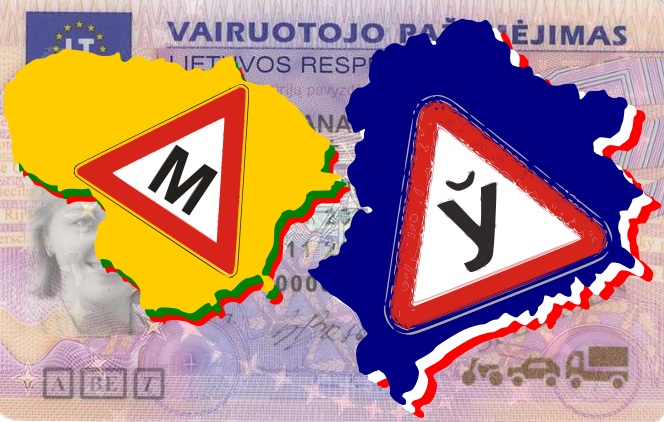
Our House launches campaign defending Belarusians’ right to use their language
On May 6, the human rights organization Our House Centre for Human Rights and Relief officially launched the campaign “Right to Language” (“Права на мову”). The word mova in Belarusian means “language” – not only as a tool of communication, but as a core element of identity, dignity, and belonging. The campaign asserts a simple principle: Belarusians have the right to speak, use, and access essential services in their native language.
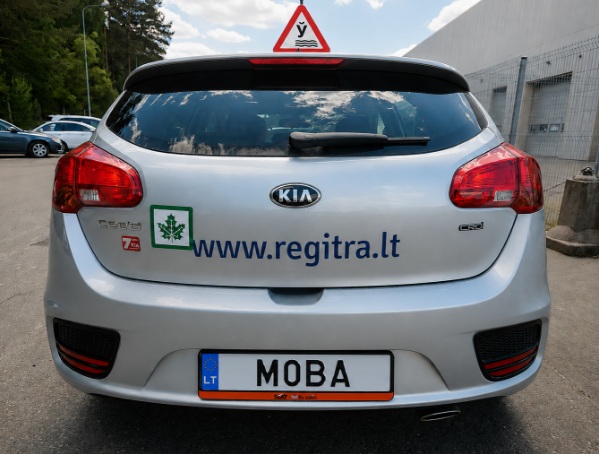
The launch of the campaign is accompanied by a formal обращение from the organization’s leader, Olga Karach, to the Minister of the Interior of the Republic of Lithuania, Vladislav Kondratovičius. In her letter, Karach calls for urgent changes to the current regulations governing driving exams administered by AB “Regitra,” specifically requesting that Belarusians be allowed to take these exams in Belarusian with the assistance of a qualified interpreter.
The issue arises from a ministerial order adopted on November 8, 2024 (No. 1V-661), which significantly changed the language framework of driving examinations. Since January 1, 2026, theoretical exams must be conducted in Lithuanian, with limited availability of other official EU languages. For practical exams, interpretation is restricted exclusively to EU languages.
In practice, however, the situation is inconsistent. Ukrainian – a non-EU language – reportedly remains available in the system as a humanitarian adaptation. At the same time, Belarusian is entirely excluded. This creates a clear imbalance: some communities are accommodated, while others are denied even minimal linguistic access.
The campaign “Right to Language” highlights this contradiction as a matter of principle. If one non-EU language can be used, then excluding another – especially the language of a recognized national minority – requires clear, objective, and proportionate justification. No such justification has been provided.
Belarusians are officially recognized as a national minority in Lithuania. Their language is not an optional cultural attribute; it is central to their identity. At the same time, Belarusian is a language under pressure. In Belarus, its public use is systematically restricted, and speakers may face discrimination or repression. International bodies, including the United Nations Human Rights Council, have documented the marginalization of the Belarusian language and the risks faced by its users.
In this context, the issue extends beyond administrative convenience. For many Belarusians living in Lithuania – including those who have received international protection or were forced to leave Belarus for political reasons – language is both a protected identity marker and a factor of vulnerability. Denying access to essential procedures, such as obtaining a driver’s license, in a comprehensible language creates a real barrier to employment, mobility, and integration.
The position of Our House is precise. The campaign does not challenge the role of the Lithuanian state language, nor does it seek to replace it. The demand is limited, practical, and proportionate: allow Belarusians to take exams with a certified Belarusian-language interpreter, or introduce Belarusian as an additional language option where feasible. Such a measure does not alter exam content, does not reduce safety standards, and does not provide any advantage. It ensures only one thing – understanding.
In her statement, Olga Karach calls on the Ministry to review the current regulation, clarify the criteria under which certain languages are permitted, and introduce a fair and transparent mechanism for linguistic adaptation. She also requests the establishment of clear procedures governing the use of interpreters, ensuring that exam integrity remains fully protected.
The campaign “Right to Language” is not a technical initiative. It is a statement. It asserts that language cannot be selectively allowed or denied without consequence. It affirms that equality before the law includes the right to be understood. And it makes clear that for Belarusians, mova is not just a word – it is a right.
About The Author