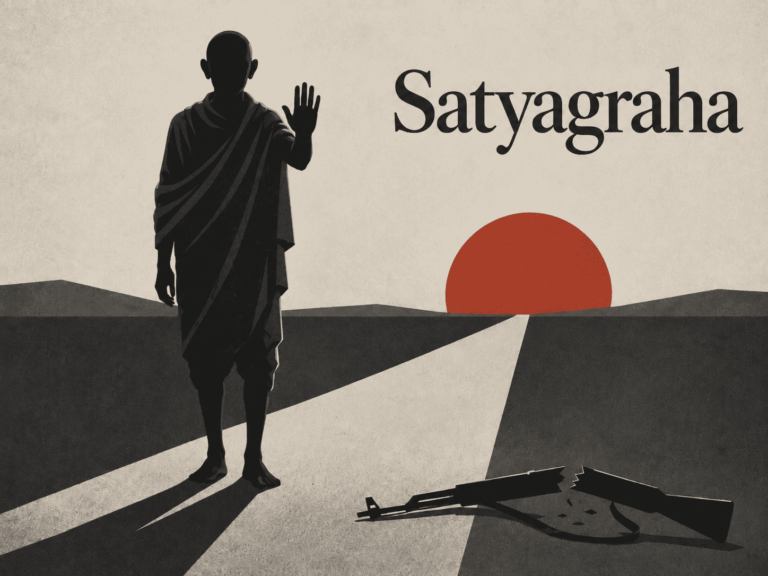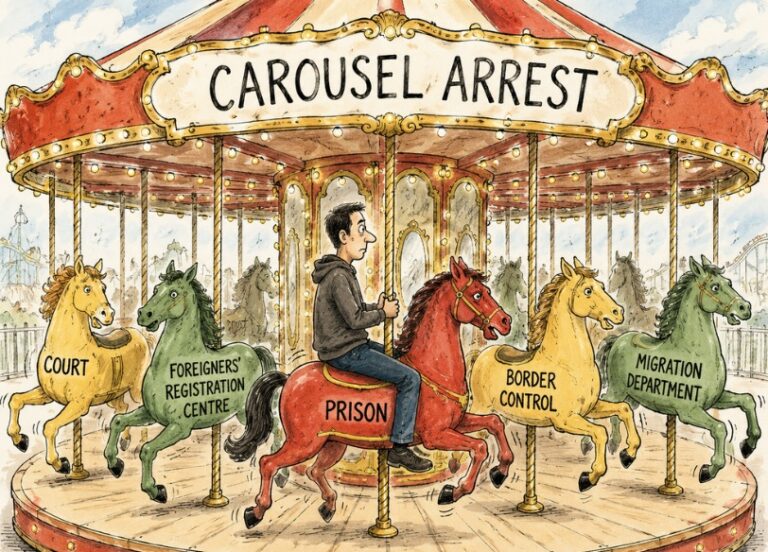

Legal amendments tighten military obligations, narrowing exemptions and expanding enforcement mechanisms nationwide.
In 2025, state policy in the field of military obligation was supplemented by significant amendments to criminal legislation aimed at strengthening liability for failure to comply with conscription-related and related obligations.
Strengthening liability for evasion of military obligation
On 17 February 2025, the President signed the Law «On Amendments to Codes on Issues of Criminal Liability». Among other things, the amendments affected approaches to the application of provisions of the Criminal Code of the Republic of Belarus regulating liability for evasion of conscription measures and other obligations related to military service.
Official explanations indicated an increase in liability for failure to appear at military commissariats and an expansion of the grounds for bringing criminal charges for violations that had previously been considered less serious. These changes effectively reduce the space for formal or de facto evasion of conscription measures and strengthen the punitive nature of the system of military obligation.
In October 2025, a fundamentally new logic governing the interaction between criminal prosecution and conscription procedures was established. In accordance with the amendments reflected in Law No. 101-Z, as well as in official explanations by state media, a person against whom criminal proceedings have been initiated under Article 435 of the Criminal Code may be released from criminal liability on the condition of submitting a written statement of readiness to fulfill military obligation, after which the person is subject to conscription for service.
This legal construction forms a mechanism of coercive «choice without choice», in which criminal prosecution is used as an instrument of compulsion to military service, and consent to serve becomes a condition for the termination of criminal proceedings.
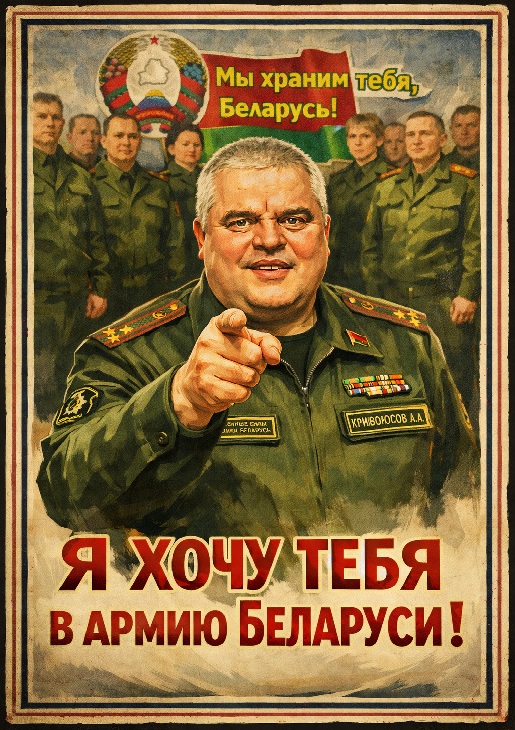
Restart of the military registration system and strengthening of administrative control
On 17 September 2025, Resolution of the Council of Ministers of the Republic of Belarus No. 505 «On Military Registration« was adopted, approving a new Regulation on military registration and repealing a number of previously existing subordinate normative acts.
The Regulation defines the system of registration of persons liable for military service and conscripts as a state system that includes the registration of citizens at their place of residence, work, and study. These norms strengthen administrative control and fix citizens’ obligations with regard to military registration regardless of their actual place of residence, which means that citizens of Belarus residing outside the country who have not been removed from military registration in accordance with the established procedure continue to be considered liable for military service within the Belarusian system and may be subject to summonses or liability for failure to receive call-up notices.
The new regulation expanded the obligations of employers, educational institutions, and housing organizations to transmit data on citizens subject to military registration, and also strengthened control over changes in place of residence, employment, and actual living arrangements. Military commissariats received more stringent grounds for conducting inspections and requesting information.
In essence, this resolution created an administrative infrastructure of comprehensive military registration, increasing the effectiveness of coercion at all stages – from summonses to military commissariats to control over the movement of citizens.
Preservation and strengthening of the concept of the «trained soldier»
In parallel with the tightening of criminal liability in 2025, the immutability of the basic defence concept based on mass involvement of the population was reaffirmed at the highest political level. State sources quoted Lukashenko’s position that «drones are a new reality, but no drone will replace a trained soldier». In the same context, the need to expand forms of citizen participation in defence was emphasized, including the development of territorial and other forms of mobilization readiness.
Such rhetoric demonstrates that technological changes in the nature of modern conflicts do not lead to a revision of the conscription model, but, on the contrary, are used for its additional justification. Military service and preparation for it continue to be regarded as a mandatory element of civic loyalty, rather than as a matter of public or individual choice.
Conscription of reserve officers and the loss of the «protective« function of military departments
On 5 May 2025, Presidential Decree of the Republic of Belarus No. 179 «On the Conscription of Reserve Officers for Military Service» was signed. The Decree provides for the compulsory conscription for up to 12 months of men under the age of 27 who hold reserve officer ranks and have not previously completed compulsory or alternative service.
This measure means that completion of military departments and receipt of an officer’s rank have ceased to perform the function of de facto protection from conscription. Reserve officers have been institutionally designated as a resource for reinforcing the armed forces, rather than as a category exempt from compulsory service.
At the same time, in 2025 the activity of territorial troops was intensified, including regular training assemblies and the practice of conscripting persons liable for military service without a formal declaration of mobilization. State media explicitly indicated that such measures are aimed at maintaining combat readiness and deploying a personnel reserve.
Legally, these measures constitute preparation for rapid mobilization deployment without the formal introduction of a mobilization regime.
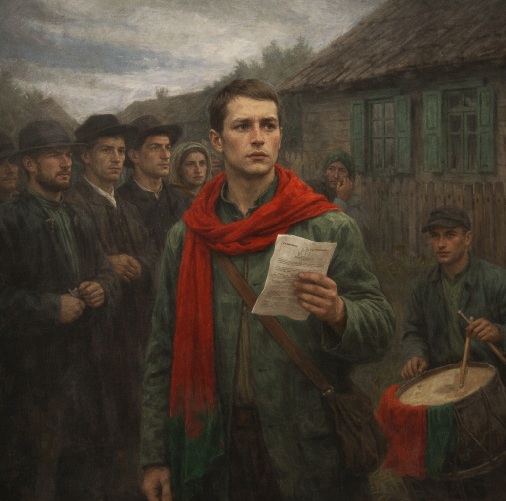
Significance of the changes in the context of 2025
Taken together, the amendments to criminal legislation and public statements by the state leadership indicate a systemic strengthening of coercion to fulfill military obligation. Instead of reforming the conscription model or expanding legal alternatives, the state reinforces punitive and mobilization instruments, forming an overall context in which refusal of service and attempts to distance oneself from the military system become legally and socially more risky.
Refusal of military service on grounds of conscience: systemic restriction of the right
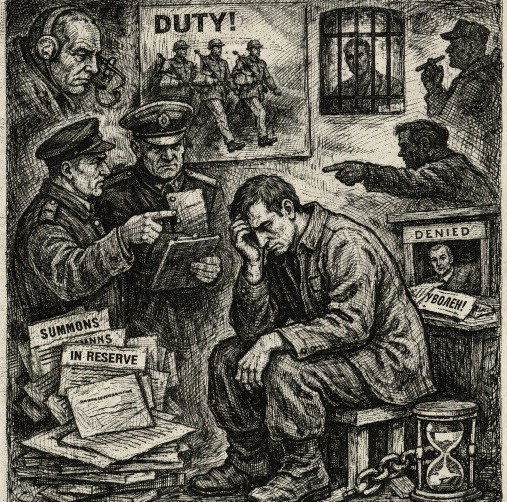
Despite the formal existence of an institution of alternative civilian service, the right to refuse military service on grounds of conscience in Belarus does not function as a real and accessible mechanism for the protection of beliefs. In practice, refusal of service is treated by the state not as a legitimate manifestation of freedom of thought and conscience, but as a deviation from the normative model of behavior, subject to administrative, ideological, and in certain cases criminal pressure.
The integration of conscientious objectors into the broader system of militarization is manifested in the fact that by the time they reach conscription age, young people have already undergone many years of socialization in which military service is presented as the only acceptable form of «civic maturity». In this context, refusal of service itself is perceived not as a right, but as a violation of expectations shaped by schools, clubs, camps, and public propaganda.
Structural restrictions on the right to refuse
Firstly, the right to alternative service in Belarus is substantially limited in its substance. Legislation recognizes the possibility of replacing military service with alternative service only in cases where refusal is based on religious beliefs that explicitly prohibit participation in the armed forces. Secular, ethical, philosophical, or pacifist beliefs are not recognized as equivalent grounds, which automatically excludes a significant proportion of conscientious objectors from the scope of legal protection.
Secondly, the procedure for obtaining alternative service is non-transparent in nature. Decisions are taken by conscription commissions without clear criteria for assessing beliefs, which creates space for arbitrary refusals. The absence of an independent appeal mechanism effectively deprives conscientious objectors of effective means of legal protection.
Thirdly, alternative service itself is used as a deterrent rather than as an equivalent substitute for military service. Its duration exceeds that of compulsory military service, and conditions of service often include assignment to remote regions and limited choice of placement. This creates a situation in which alternative service is perceived as a form of punishment for refusal, rather than as the realization of a right.
 Pressure and consequences for conscientious objectors
In the context of active militarization and the crisis of the conscription model, refusal of service is accompanied by social and administrative pressure.
An additional problem is that negative consequences for conscientious objectors are not limited to the period of conscription. The status of a person who has refused service may affect future relations with military commissariats, employment opportunities, and repeated summonses within the framework of reserve obligations. Thus, refusal of service is not treated as a one-time act of exercising one’s beliefs, but turns into a long-term source of vulnerability.
In 2025, restrictions on the right to refuse military service persist against the backdrop of intensified propaganda of service and the expansion of pre-conscription training. Instead of expanding access to alternative service or recognizing non-religious forms of conscientious objection, the state invests in ideological and administrative instruments aimed at reducing the number of objectors. This confirms that refusal of service on grounds of conscience is not regarded as a protected right, but as a problem to be minimized.
Thus, the situation of conscientious objectors cannot be considered in isolation. It is a direct consequence of the previously described militarization of children and adolescents, as well as public propaganda of military service in the context of a crisis of conscription. In a system where military service is pre-defined as the norm, refusal of service is structurally pushed beyond the boundaries of acceptable behavior.
Reservists: continuation of military dependency after the formal «fulfilment of duty»
The system of the military reserve in Belarus functions not as an exceptional or auxiliary mechanism, but as an instrument for the continuous retention of citizens within the orbit of military obligation. For persons who have already completed compulsory military service or have been deemed fit for reserve service, military obligation does not end, but rather transforms into a form of long-term and renewable coercion.
Within the logic of the state, the reserve is viewed as a natural continuation of compulsory service and pre-conscription training. This means that even the formal «fulfilment of duty» does not lead to real release from military obligations, and refusal of further participation in the system is regarded as unacceptable behavior.
Structural problems of the reserve system
Firstly, inclusion in the reserve does not presuppose informed consent. Call-up to the reserve is carried out on the basis of administrative decisions, and the possibility of refusal or withdrawal from the reserve is virtually absent. Persons deemed fit find themselves in a situation in which military obligation may be reactivated at any moment.
Secondly, the status of a reservist creates long-term legal and social vulnerability. Reservists are subject to regular summonses to training assemblies, medical re-examinations, and registration-related procedures. Failure to comply with these obligations may entail administrative or criminal liability, which effectively establishes permanent control by military authorities.
Thirdly, the reserve system does not take changes in life circumstances into account. Family status, health conditions, professional activity, and the beliefs of reservists carry limited weight in decisions on summonses for training. This makes reserve service difficult to reconcile with civilian life and employment obligations.
In 2025, reserve service was actively used within the framework of general conscription campaigns. State bodies issued decrees on call-up not only for compulsory military service, but also to the reserve, including persons who had not previously completed compulsory service, as well as reserve officers. This indicates the growing role of the reserve as a compensatory mechanism in the context of declining attractiveness of compulsory service.
Public statements emphasized the need to maintain combat readiness and a «personnel reserve», while issues of voluntariness, consent, and the rights of reservists were virtually absent from official rhetoric.
Thus, reserve service becomes yet another level of pressure on those attempting to exercise their right to refuse military service and reinforces the sense of «inescapability» embedded in the system of military obligation.
Militarization as a continuous system of coercion
Practices documented in 2025 demonstrate that militarization in Belarus is not a set of fragmented measures or a reaction to isolated challenges. It constitutes a continuous, multi-level system, embedded in state policy and encompassing individuals throughout their entire lives – from early childhood to old age.
At early stages, this system is implemented through preschool and school institutions, where military and law-enforcement agendas are introduced into the everyday educational environment in the form of «patriotic education», rituals, symbolism, and the direct presence of representatives of law-enforcement bodies. At this stage, basic loyalty is formed and the army is normalized as an integral part of civic life.
During adolescence, militarization acquires a more institutionalized character through military-patriotic clubs, camps, and elements of pre-conscription training. These formats translate military logic from the symbolic sphere into the practical one: discipline, hierarchy, subordination, and contact with military infrastructure become part of everyday experience, while military service is established as a pre-determined trajectory of growing up.
At the stage of conscription, the system is supplemented by intensive public propaganda of military service, which in 2025 was accompanied by acknowledgements of the need to «increase the attractiveness of the army». Such rhetoric points to a crisis of the conscription model and simultaneously explains the shift of focus toward earlier ideological conditioning – in a context where voluntary motivation is declining, the state invests in long-term loyalty formation.
In this context, the right to refuse military service on grounds of conscience is structurally displaced. Alternative service remains limited in its grounds and procedures, does not recognize secular or philosophical beliefs, and is effectively used as a deterrent mechanism. Refusal of service is treated not as the exercise of a right, but as a deviation from an expected norm of behavior formed at earlier stages of militarization.
Even after the formal «fulfilment of duty», the system does not provide for a genuine exit. Through the institution of the reserve, the state retains long-term control over citizens, including them in military registration systems and subjecting them to regular summonses and obligations up to the maximum age of reserve liability. Thus, military obligation in Belarus is not temporary, but prolonged and renewable, leaving virtually no space for informed refusal or definitive release.
Taken together, these elements form a closed system in which militarization begins long before conscription age, is accompanied by ideological and administrative pressure during the conscription period, and continues through reserve mechanisms. Within such a system, children’s rights, freedom of belief, and the right to refuse military service are systematically subordinated to the logic of military mobilization and state loyalty.
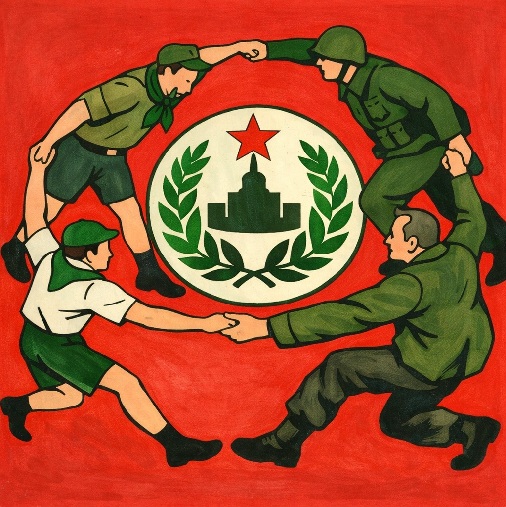
In illustrating the text, visual motifs and stylistic references were drawn from artists who depicted war, including Pascal Dagnan-Bouveret, Otto Dix, James Montgomery Flagg, René Magritte and Henri Matisse.