Belarusian Conscientious Objector Siarhei at Risk of Deportation from Lithuania to Belarus
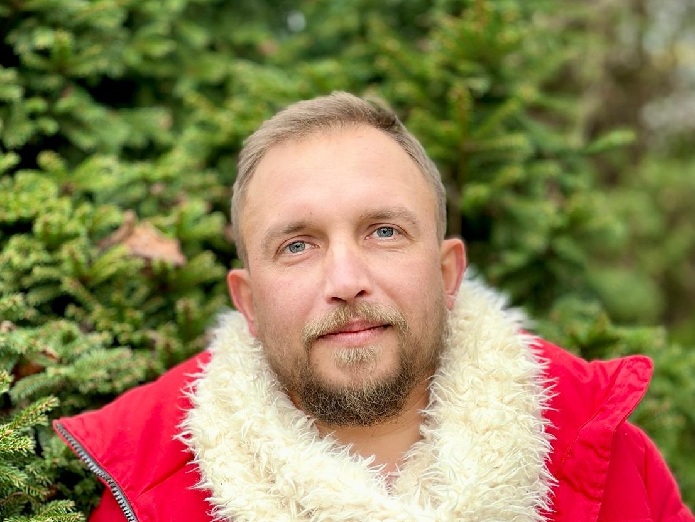
Conscientious objector from Belarus faces deportation risk despite clear persecution evidence.
This case concerns Siarhei, a Belarusian welder and trained engineer, and a conscientious objector to military service. Coming from a multi-generation family of military officers, he made a deliberate and principled break with that tradition, rejecting militarization and adopting a consistent anti-war and human rights position.
After participating in the 2020 protests in Belarus, he helped organize a workers’ strike committee at facilities linked to the Ostrovets nuclear power plant, while also maintaining public anti-authoritarian and anti-war views. These activities exposed him to politically motivated persecution. His civic engagement and public profile are documented in independent media and human rights reports, which significantly increase the risk of identification and prosecution by Belarusian authorities.
If deported to Belarus, Siarhei faces criminal charges under multiple politically motivated articles of the Criminal Code, including Articles 342, 3611, 3614, 368, 3691, 293, and 130, with a potential cumulative sentence of up to 25 years. The risk includes arrest, torture, and particularly severe treatment as a former serviceman, who may be labelled a “traitor” by security services.
Despite the documented risks, Lithuanian authorities repeatedly refused asylum and annulled his residence status. He is currently undocumented, denied access to legal employment, healthcare, and basic means of subsistence, and remains under imminent threat of deportation. The case also raises serious procedural concerns, including lack of translation of key decisions, factual inconsistencies, and insufficient assessment of risks related to conscientious objection and worsening repression in Belarus.
Current Legal Status: Asylum in Lithuania has been denied multiple times; his temporary residence permit was annulled without sufficient reasoning. His Rule 39 request before the European Court of Human Rights was rejected. He is currently undocumented in Lithuania, unable to access healthcare, prohibited from legal employment, deprived of means of subsistence with his bank account frozen, denied the right to marry, and remains at imminent risk of deportation to Belarus and subsequent imprisonment.
Protection Sought: International refugee protection on the basis of political persecution, participation in the 2020 protests, documentation by media and human rights organizations, sustained public opposition to the authoritarian regime, conscientious objection to military service, categorical rejection of armed violence, and the substantial risk of torture and long-term imprisonment upon return.
Chronology of Facts
Age 18: Resigned from the Belarusian Republican Youth Union (BRSM), the main state-controlled youth organization of Alexander Lukashenko, as a protest against state propaganda and the coercive nature of participation. At that time, refusal to join BRSM carried punitive risks for minors, including threats of removal from their families and placement in state institutions.
2005-2006: Completed compulsory military service in the Belarusian army.
2006-2008: Served under contract in the Belarusian army but deliberately refused to extend the contract due to profound disillusionment with the profession, its brutality, and its futility. This marked a conscious and categorical rejection of any further military career.
Post-2008: Retrained as a welder. Adopted a deliberate civic identity as a conscientious objector, consistently opposing militarization.
2010: Began openly criticizing Alexander Lukashenko (at work, within his family, and social circles). In the same year, he enrolled at university as an engineering student and graduated in 2018.
2020: Elections and Protests
Spring-Summer: Encouraged colleagues and friends to support alternative candidates.
Filed a complaint with the Central Election Commission (CEC) regarding violations of electoral law.
August: Participated in demonstrations in Hrodna; photographed with protest symbols, images published by Belsat1.
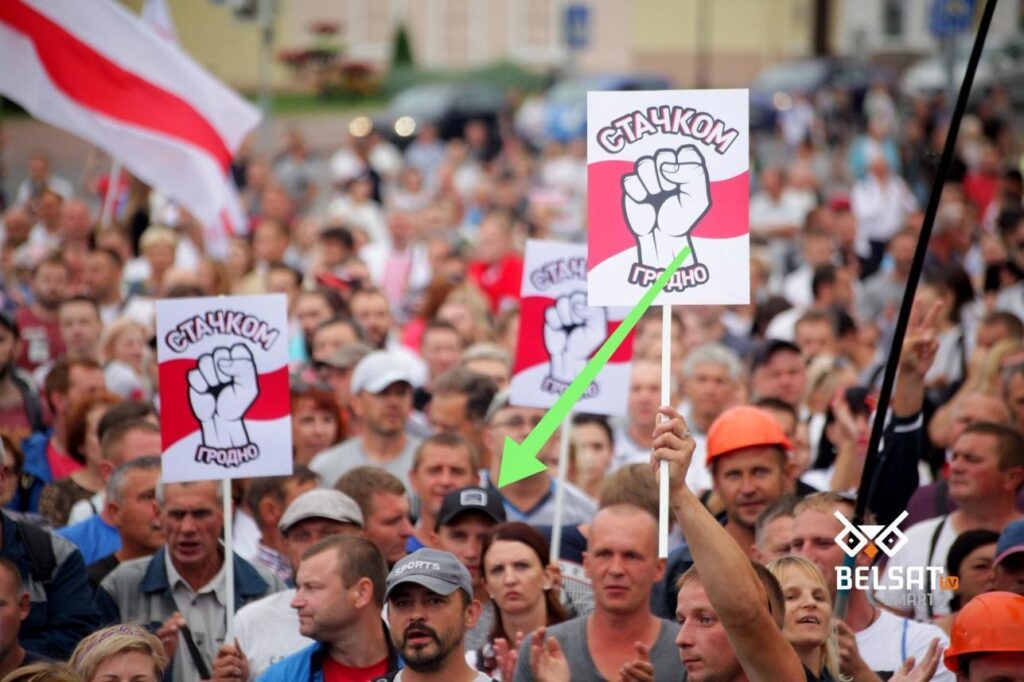
August-September: Co-founded a strike committee (stachkom) at “Hrodnapromstroy,” cooperating with other union leaders and cells. Conducted site visits, delivered legal briefings to workers, called for peaceful protest, and participated in public demonstrations.
September: Summoned to the police and the Investigative Committee; formally warned of possible criminal or administrative prosecution. Belarusian authorities obtained mobile operator MTS metadata confirming his presence at protest sites.
2020-2022: Human Rights Documentation and Relocation to Lithuania
Interviews and references in human rights and independent media: Human Rights Center Viasna, TUT.BY, Nasha Niva, Charter97, Belsat.
These records subsequently came into the possession of Belarusian security services through raids and seizures.
The introduction of the Kipod/Synesis facial recognition system in Belarus further increased the risk of identification.
08 November 2020: Entered Lithuania on a work visa. Shortly afterward, Belarusian police visited his home, questioning his wife about his whereabouts.
2021-2022: Brief returns to Belarus for family reasons. In Lithuania, continued publicly criticizing the regime and the war in Ukraine; participated in Freedom Day rallies.
2023: Stabilization and Crisis
April: Rented an apartment, entered a relationship, enrolled in driving school, and planned Lithuanian language courses.
May: During repeated raids, Belarusian police questioned his relatives and the dormitory warden where he previously resided, warning of risks if he returned.
18 May 2023: Lithuanian residence permit annulled and he was designated a “threat to national security” by the State Security Department (SSD), based solely on his military service in Belarus 16-20 years earlier. He was simultaneously banned from entry. The SSD argued that past service could imply “loyalty to the Belarusian regime” or potential recruitment by the KGB. The decision was technically inaccessible; Migration Department staff were unable to explain it at the time.
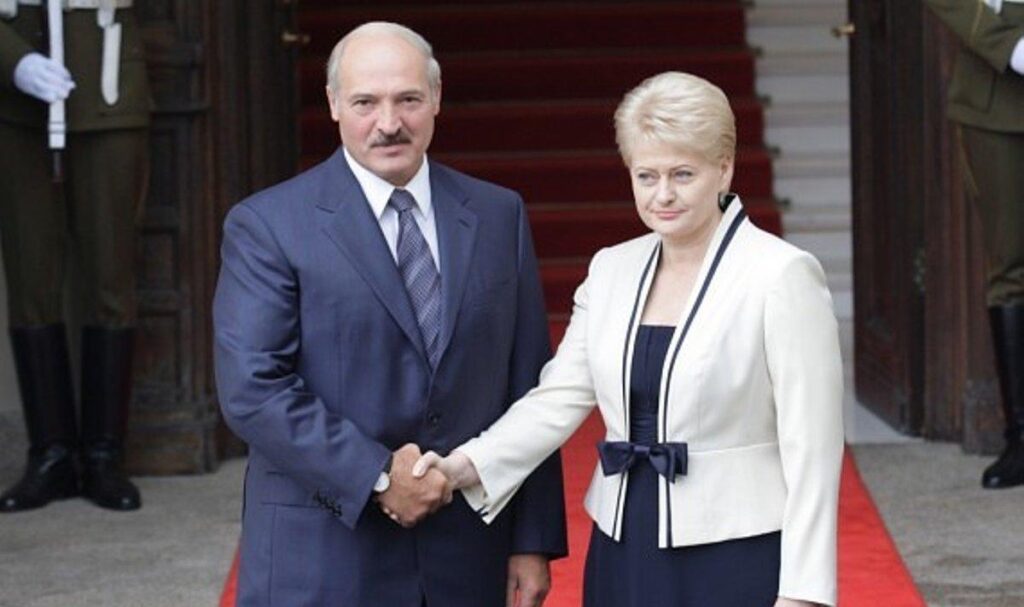
Note: At the time of his military service (2005-2008), relations between Belarus and Lithuania were friendly. In 2009, Lithuanian President Dalia Grybauskaitė welcomed Lukashenko as “a good neighbor and partner,”2 praising prospects for closer bilateral cooperation. Despite this context, the SSD retroactively designated his past service as a national security threat, without applying the same reasoning to statements made by Lithuanian officials at that time.
2024: Asylum Rejection and Court Decisions
23 February 2024: Application for political asylum in Lithuania rejected, citing his Belarusian military service nearly two decades earlier.
29 April 2024 (Regional Administrative Court) and 19 June 2024 (Supreme Administrative Court): Both courts ruled that the Migration Department’s decision was illogical and inconsistent, ordering a reconsideration of his asylum claim.
2024-2025: Repeat Rejections and Procedural Violations
22 December 2024 (Sunday, 22:06): A second rejection issued and signed by the Director of the Migration Department.
02-03 January 2025: In Klaipėda, during disclosure proceedings, Migration officials refused to provide a translation of the decision into a language he could understand, in violation of the Law on Foreigners. The text (18 pages) was read aloud into a dictaphone over approximately 70 minutes.
20 March 2025 and 07 May 2025: Lithuanian courts upheld the Migration Department’s refusal, despite acknowledging the applicant’s political opposition and despite factual errors (e.g., misidentifying him as a “resident of Minsk” instead of Hrodna).
Key procedural violations in Lithuania:
Failure to provide translations of key decisions (contrary to the Law on Foreigners).
Logical contradictions: simultaneously recognizing him as an opponent of Lukashenko and as “loyal to the regime.”
Factual inaccuracies (e.g., incorrect place of residence).
Procedural delays beyond the three-month mandate, noted by the Lithuanian Ombudsperson.
Failure to assess his anti-war stance and the risks of prosecution for it.
Ignoring the escalation of repression in Belarus in 2024–2025, including expanded “extremist lists.”
ECHR Proceedings:
16 May 2025: Application for interim measures under Rule 39 was filed; rejected on 20 May 2025.
14 July 2025: Full application submitted to the European Court of Human Rights, registered as a priority case.
Harassment, Criminal Charges and Threats
Relevant Criminal Provisions under the Criminal Code of Belarus
- Art. 342 (organization/participation in actions disrupting public order) – up to 3 years.
- Art. 293 (mass disturbances) – up to 7 years.
- Arts. 3611/3614 (creation of or assistance to an extremist formation) – up to 7 years.
- Art. 368 (insulting the President) – up to 1 year.
- Art. 3691 (discrediting the Republic of Belarus) – up to 4 years.
- Arts. 130/1301 (incitement to hatred / “rehabilitation of Nazism”) – up to 5 / 3 years.
- Arts. 339/341 (hooliganism / damage to property) 2 up to 3 / 1 year.
Matrix: Actions → Legal Risks
- Open criticism of Lukashenko (since 2010) → Arts. 368, 3691.
- Electoral campaigning (2015, 2020) → Arts. 342, 3691.
- Complaint to the Central Election Commission (2020) → Art. 342.
- Interviews with Viasna, TUT.BY, Belsat and others → Art. 3614.
- Organization of strike committee (2020) → Arts. 342, 293.
- Calls for protest and slogans → Arts. 342, 339, 368.
- Anti-war posts and criticism of Russia/Wagner → Arts. 130, 3691, 368.
- Subscriptions/shares (NEXTA, Real Belarus, Deifi, Maxim Katz) → Art. 3614; for NEXTA also terrorist designation.
- Donation to “Our House” → Arts. 3611/3614.
- Participation in rally in Klaipėda → Arts. 342, 3691.
- Correspondence with Viasna and the Office of Sviatlana Tsikhanouskaya → Arts. 3614/3611.
- Public debates with regime propagandists → Arts. 368, 3691.
- Use of white-red-white symbols → Arts. 1301, 339, 341.
Conclusion
Taken together, these factors – participation in protests, involvement in strike committees, media publications, digital footprint, documented contacts with organizations designated as “extremist,” and sustained public anti-war positions – create an extremely high risk of criminal prosecution, torture, and imprisonment of up to 25 years under the cumulative application of multiple charges.
Digital and Public Activism
While residing in Lithuania, Siarhei continued his political activity by:
- Sharing and reposting anti-regime content on Facebook and VK
- Commenting under YouTube videos supporting Belarusian opposition
- Republishing anti-war appeals
- Subscribing to Telegram channels recognized as extremist in Belarus
These actions are criminalized under Articles 361-1 and 369-1 of Belarusian law. His face and name appear in archived media and screenshots preserved by security services.
The Lithuanian migration authority failed to consider the full scope of these activities and their consequences if deported.
Siarhei has publicly and repeatedly condemned the Russian war against Ukraine and declared his firm and principled refusal to ever again take up arms. As a conscientious objector, he opposes any form of militarism and refuses to participate in violence.
List of Referenced Organizations and Media Outlets Designated as “Extremist” in Belarus
- Human Rights Center “Viasna” – laureate of the 2022 Nobel Peace Prize; nevertheless, designated by the Belarusian authorities as an extremist formation (23 August 2023).
- Reform.by / Reform.news – independent media designated as extremist materials (14 March 2024); domain reform.by seized on 15 April 2024.
- Charter’97, TUT.BY/Zerkalo.io, Nasha Niva, Belsat – independent media designated as extremist between 2021-2022.
- NEXTA / NEXTA Live – independent media designated as extremist materials (2020) and as a terrorist organization (2022).
Viktar Babaryka’s channel – designated as extremist materials (since 2021).
Real Belarus, Deifi, Maxim Katz – independent media designated as extremist between 2022–2025.
Our House (Nash Dom) – human rights organization, twice nominated for the Nobel Peace Prize (2024 and 2025), yet designated by the Belarusian authorities as an extremist organization/materials (2021-2022). The organization’s director, Olga Karach, was further designated a “terrorist” in September 2021.
Recommendations
We, the International Centre for Civil Initiatives “Our House”, urgently call on:
Lithuanian authorities to immediately suspend all deportation procedures against Siarhei Siarhei;
To review his asylum request in light of new circumstances in Belarus and under full procedural guarantees;
To grant a temporary humanitarian residence permit or other form of legal stay pending the final determination of his asylum claim;
To allow access to legal aid, social services, and health care;
To inform UNHCR and OHCHR about his case for further monitoring and protection mechanisms.
1 https://belsat.eu/ru/news/vlasti-dali-zadnyuyu-miting-v-grodno-byl-obyavlen-nesanktsionirovannym-fotoreportazh
About The Author