Our House Youth Bring Belarusian Voices to Helsinki
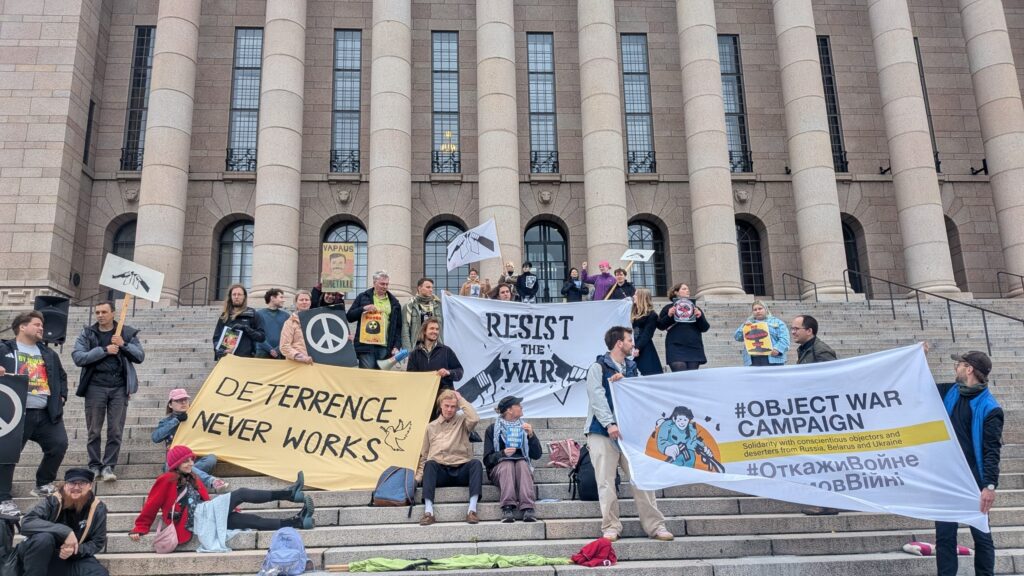
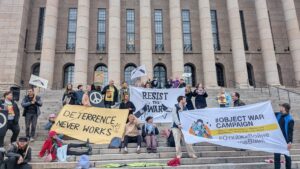
Our House’s youth team recently visited Helsinki for a programme of meetings, exchanges and advocacy activities focused on the challenges facing young Belarusians in exile.
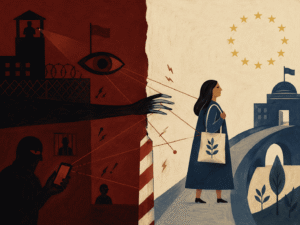
An important part of the visit was a series of meetings with Finnish parliamentarians and German diplomats. These conversations provided an opportunity to raise concerns about the protection of Belarusian refugees and political exiles in the European Union, discuss existing gaps in protection mechanisms, and highlight the right to conscientious objection to military service.
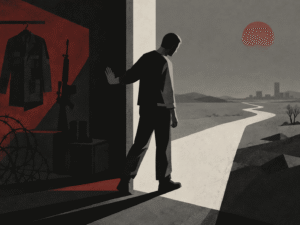
The latter is becoming increasingly important in a region shaped by war, growing militarisation and mounting pressure on young people to participate in military structures. For Our House, protecting conscientious objectors is not only a matter of individual freedom of conscience, but also an essential part of protecting human rights in times of conflict and political instability.
At every meeting, we also raised concerns about Lithuania’s practice of designating Belarusian citizens as alleged “threats to national security”.
People subjected to such decisions often find themselves in an extremely vulnerable position. Their ability to understand the grounds on which a decision was made, challenge the information used against them and effectively defend their rights may be severely limited.
According to Our House’s calculations, Lithuanian authorities designate an average of around four Belarusian citizens every day as threats to national security.
Behind these figures are individual lives. Such decisions can affect a person’s residence status, employment, education, family life and personal security. In some cases, they may also create a risk of removal to Belarus, where the individual could face persecution.
During the meetings in Helsinki, we stressed that this issue should not be viewed solely through the lens of migration policy or administrative procedures. It also raises broader questions about due process, access to an effective remedy, the reliability of information used in national security assessments, and the responsibility of EU Member States to protect people fleeing political repression.
Our youth participants also spoke about the wider reality faced by young Belarusians in exile: uncertainty over their legal status, fear of deportation, transnational repression, difficulties with integration, and the challenge of building a new life away from home.
For us, it was important to speak openly — without self-censorship and without trying to make uncomfortable realities more convenient for political or diplomatic audiences.
International dialogue is meaningful when it creates space not only for comfortable diplomatic language, but also for the experiences of people directly affected by political and administrative decisions.
The Helsinki visit gave young people from Our House an opportunity to share those experiences directly with European decision-makers and to ensure that the voices of Belarusian refugees, conscientious objectors and young people in exile remain part of the wider European discussion on human rights, security and the future of the region.
About The Author