EU Erasmus+ Project: 12-Member Our House Delegation Heads to Helsinki to Meet Finnish MPs
Young Belarusians will discuss peace, human rights, and refugee challenges in Helsinki.
Ten young Our House activists and two former Belarusian political prisoners will spend a week in Helsinki participating in an international project funded by the European Union through the Erasmus+ programme. The project focuses on human rights, peace, democratic participation, and conscientious objection to military service.
The Our House delegation from Lithuania is heading to Helsinki, where, from 21 to 27 September, it will take part in the European Youth Peace Week, funded by the European Union’s Erasmus+ programme. The delegation consists of ten young activists and two adult accompanying participants, both former political prisoners from Belarus.
The seven-day programme in Helsinki is more than a youth gathering. It will be an intensive week of training, discussions, practical workshops, and direct dialogue with decision-makers. According to the official project application, its key objectives include strengthening the civic competences of young activists, promoting democratic participation and a culture of peace and nonviolence, and raising awareness of the human right to conscientious objection to military service.
Young Belarusians to Meet Members of the Finnish Parliament
One of the key elements of the visit will be meetings with members of the Finnish Parliament. Young Belarusians will have an opportunity to speak directly about the human rights situation in Belarus, political repression, forced migration, the situation of conscientious objectors, and the challenges faced by Belarusian refugees living in Lithuania.
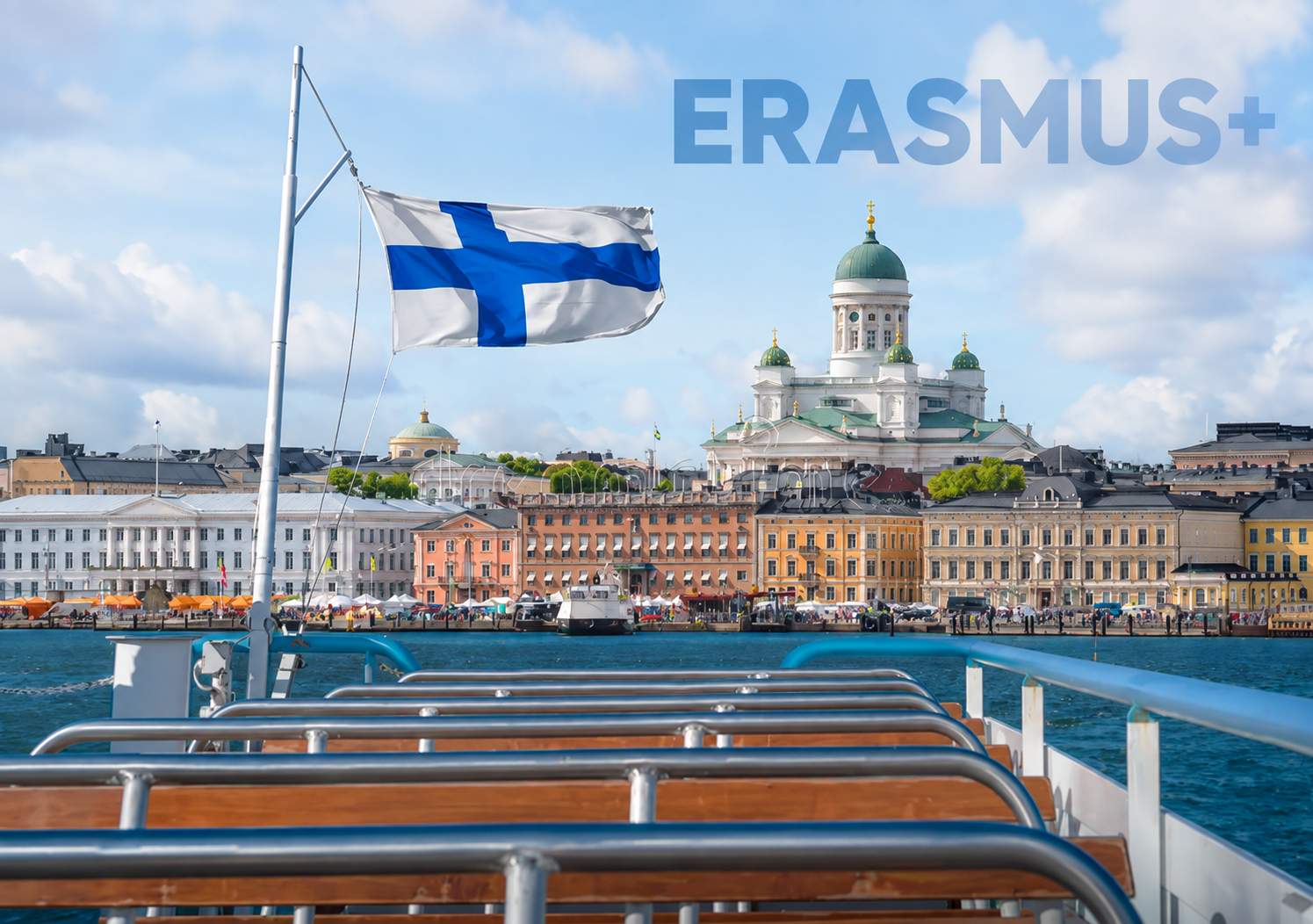 This is not an activity added after the project was approved. The official Erasmus+ project application specifically provides for a visit to the Finnish Parliament – the Eduskunta – and discussions with MPs about peace, human rights, and antimilitarism.
The project application also explicitly states that one of the purposes of the visit to the Finnish Parliament is to engage with MPs and draw their attention to the problems faced by young Belarusian refugees.
This is particularly important for the young people from Our House. Most members of the group are young Belarusians living in Lithuania whose lives have been directly affected by political repression, forced migration, the war in the region, and questions surrounding military service. The project documents describe the Our House youth group primarily as young people who fled Belarus and are now living in Lithuania.
The Right to Refuse Participation in War
One of the central themes of the European Youth Peace Week is the human right to conscientious objection to military service.
Our House has specific practical experience in this field. The organisation informs young people about their right to refuse military service and provides legal and advocacy support to people who face persecution because of this choice.
In Helsinki, participants will discuss what happens to a young person who, because of their conscience or religious, ethical, or political convictions, does not want to take up arms, and what protection democratic European states can provide to such people.
Participants will also learn how to defend human rights through peaceful and democratic means, organise campaigns, engage with politicians and the media, and involve other young people in civic activities. The project programme includes practical workshops, discussions, simulations, creative activities, and meetings with local peace and human rights activists.
Three Countries – Three Different Historical Experiences
The youth groups represent three different European experiences. The Finnish group includes young activists from Finland’s peace and conscientious objection movement. The German group consists mainly of young people from Berlin. The Our House group is composed primarily of young refugees from Belarus living in Lithuania.
The choice of these countries also gives the project a historical dimension. For their societies, the 20th century brought wars, occupations, militarisation, totalitarian regimes, and their consequences. Today, a new generation is meeting not to reproduce old conflicts, but to learn how to prevent them from happening again.
For this reason, part of the programme deliberately connects history with the present. The young participants will visit Suomenlinna Fortress and the historic submarine Vesikko, discuss Finland’s military history and contemporary militarisation, and then move on to a practical question: what role can today’s young people play in building peace?
From History to Practical Action
The European Youth Peace Week is based on the principles of non-formal education: young people are not simply there to listen to lectures. They actively participate in developing activities, take part in discussions, organise public actions, and gain practical experience.
In Helsinki, the programme includes workshops on peace and human rights, preparation for meetings with politicians, a public creative action, a Food Not Bombs activity, and daily reflection sessions. One of the project’s objectives is to help young people learn how to articulate their positions publicly, participate in democratic processes, and pursue social change through peaceful means.
The project is also intended to continue beyond the final day of the international week. The official application envisages the creation of a long-term international youth network so that activists from Finland and Germany, together with Belarusians living in Lithuania, can continue developing joint initiatives after the European Youth Peace Week.
A few generations ago, young Europeans too often found themselves on opposing sides of war. In 2026, young Belarusians, Germans, and Finns are meeting in Helsinki through the European Union’s Erasmus+ programme to learn together how to build peace, defend human rights, and resolve conflicts without violence.
About The Author