Olga Karach’s Speech at World Peace Award 2026 Published in Swedish Magazine Ställ om!
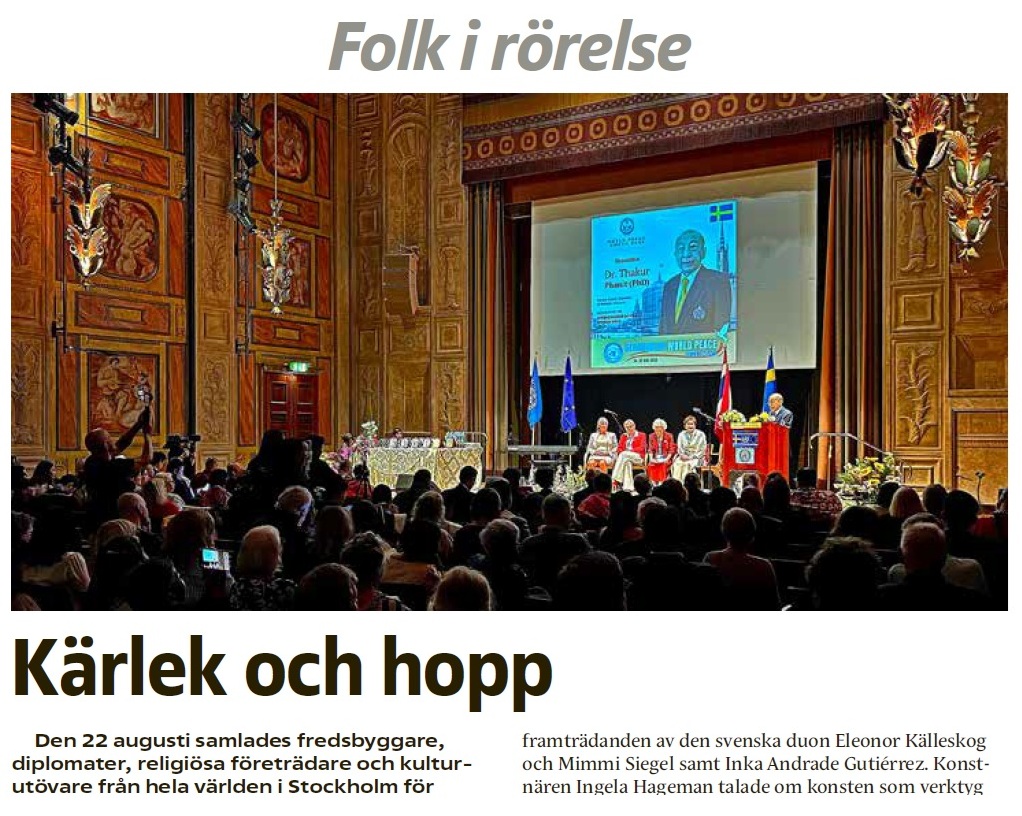
Swedish magazine publishes Olga Karach’s reflections on peace, war and nonviolence worldwide.
Swedish magazine Ställ om!, which focuses on peace and climate justice, has published a speech by Belarusian human rights defender and head of the human rights organisation Our House, Olga Karach, delivered at the World Peace Award 2026 in Stockholm.
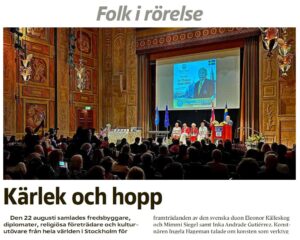
The speech, entitled “Peace Does Not Begin When the War Ends” (Freden börjar inte när kriget tar slut), was published in full across two pages of the magazine’s September issue.
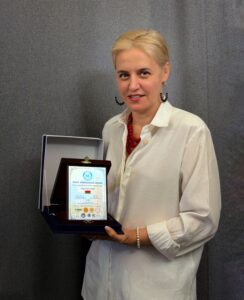
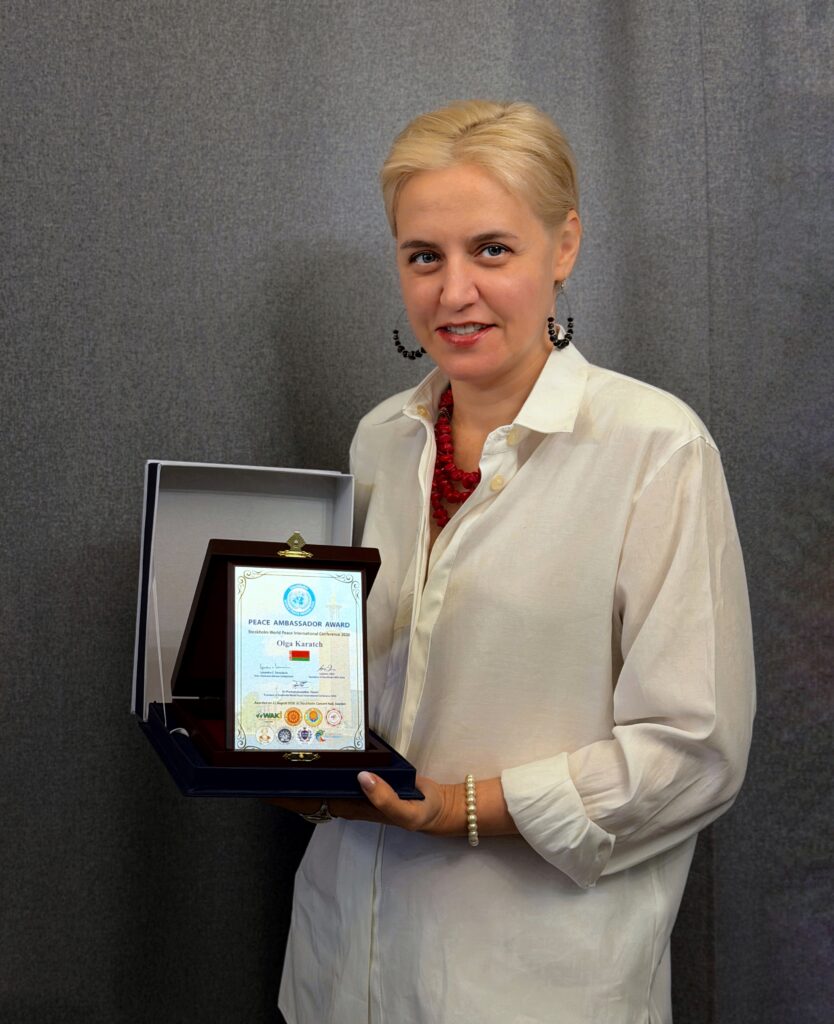
On 22 August, the World Peace Award international gathering took place in Stockholm, bringing together peacebuilders, diplomats, representatives of religious communities and cultural figures from different countries. The magazine specifically names Olga Karach among the international speakers. The event also included the presentation of the World Peace Award, Ambassador of Peace and World Peace Youth Ambassador 2026 awards.
At the heart of Olga Karach’s speech was a question that usually remains outside discussions about war and peace: what happens to war after the war itself is over?
“Wars do not disappear when the guns fall silent,” the speech begins. War leaves behind not only destroyed cities and borders, but also people who have learned to live according to the logic of war: former combatants, refugees, political prisoners who carry the trauma of torture and humiliation, conscientious objectors and deserters, as well as children who may learn, before they have had a chance to understand politics in any other way, that security means weapons, strength means domination, and another human being can easily be turned into an enemy.
A separate part of the speech addresses the consequences of war for nature. Forests burn, rivers and groundwater are polluted, soil is poisoned, while mines and unexploded ordnance make fields and forests dangerous for decades. As Karach stresses, a ceasefire can be signed in a single evening, but a river cannot be restored in a single evening, nor can a destroyed forest simply be brought back. Therefore, for the Earth, too, war continues after the war.
This leads to the central idea of the speech: one of Europe’s most important tasks is not only to end the wars that already exist, but also to prevent war from reproducing itself — in people, in societies and in our relationship with the world around us. A peace agreement can end an armed confrontation, but it cannot automatically dismantle the habits, identities, fears and relationships created by war.
A particularly important theme of the speech is the courage not to kill.
Olga Karach speaks about Our House’s many years of work with Belarusian conscientious objectors and deserters. When the state tells them that another human being is an enemy whom they must kill, these people answer “no”. In doing so, Karach argues, they preserve the very possibility of a human relationship with the other person.
Another important thread of the speech is how to remain human when we profoundly disagree with another person. Peace, in Olga Karach’s view, does not require us to erase political, religious, historical or other disagreements. It begins when disagreement ceases to be a sufficient reason to dehumanise another person.
This is why, after a war, an enormous role must be played not only by states but also by civil society, peace movements, religious communities and interfaith dialogue. States can negotiate agreements and create institutions, but rebuilding trust, reconciliation, responsibility, forgiveness and human identity takes place at a much deeper level.
In the final part of her speech, Olga Karach connects the two themes of the gathering — “peace on Earth” and “peace with the Earth”. In her view, these are not two separate tasks. A culture that allows us to treat another person, nation or community simply as an obstacle also allows us to treat nature in the same way — as something without a voice or value of its own.
War takes this logic to its extreme: a forest becomes shelter or a military obstacle, a river becomes a defensive line, a field becomes a battlefield, and a landscape becomes territory to be conquered or defended. But a river remains a river, a forest remains a living ecosystem, and a field remains the foundation of someone’s future.
The speech concludes with a call to move from domination to responsibility, from fear to trust, and from searching for enemies to recognising our interdependence.
According to Olga Karach, the central task of post-war reconstruction is to ensure that what has been shaped by war — our people, our societies and our Earth — does not become the mechanism through which the next war begins. Instead, it must become the place where a different future can begin.
The speech was published in the September issue of Ställ om!, a Swedish publication produced by activists working for peace and climate justice and designed to circulate through peace and climate movement networks.
About The Author