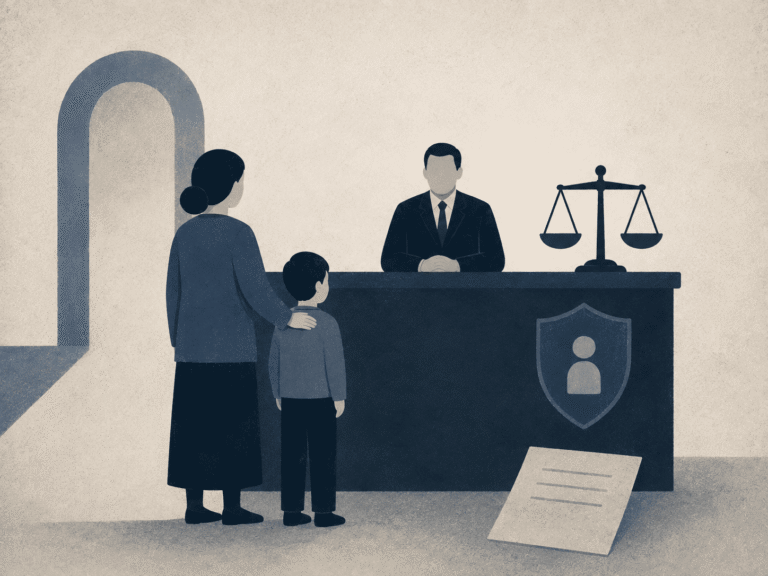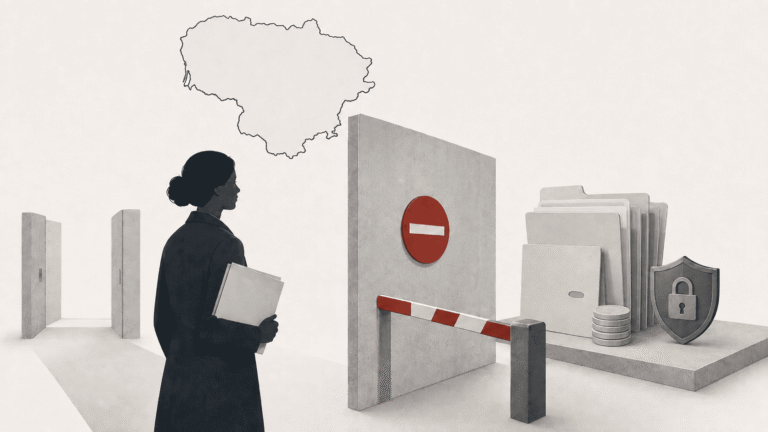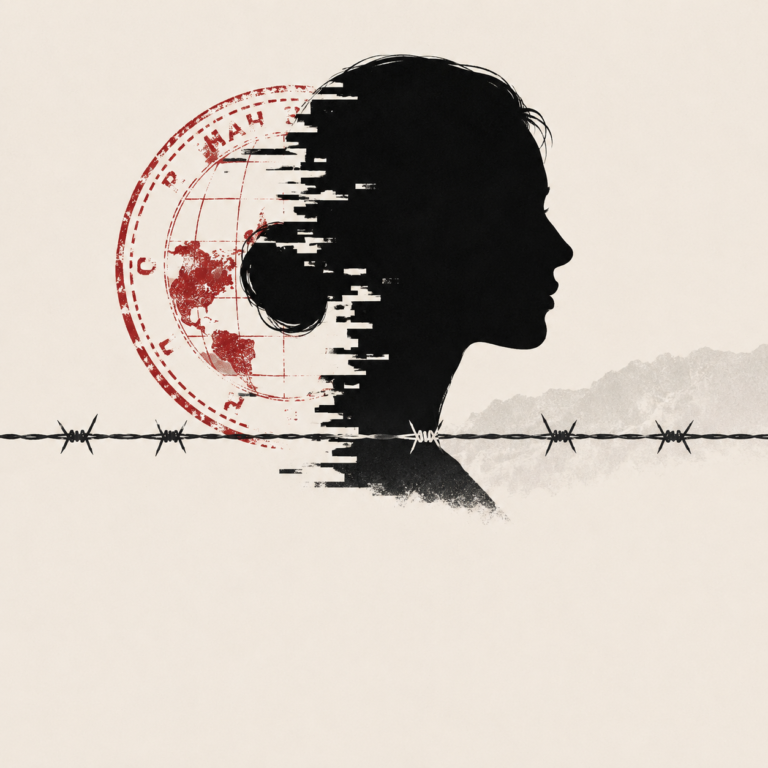

Our House brings exile women’s voices into Europe’s future gender equality policy.
Our House Centre for Human Rights and Relief has prepared a policy contribution to the development of the European Union’s next Gender Action Plan IV (GAP IV) for 2028–2034, following an invitation shared by colleagues from PeaceWomen Across the Globe.
The official regional Structured Dialogue for Enlargement and the Eastern Neighbourhood will take place online on 17 September 2026. It forms part of the preparations for GAP IV and is organised by the European Commission and the European External Action Service (EEAS), in collaboration with the Policy Forum on Development.
This is more than another civil society consultation. The decisions being prepared today will help shape how the European Union approaches gender equality, women’s empowerment and the Women, Peace and Security agenda in its external action during the next programming period.
The European Commission and EEAS are seeking contributions from civil society organisations, women’s rights organisations, feminist movements and other stakeholders across different regions and partner countries. The purpose is to strengthen the evidence base for GAP IV and examine how the EU can build stronger partnerships with civil society and local actors.
Importantly, the consultation has been designed to influence the policy while it is still being developed. Contributions from the Structured Dialogue will feed into the preparation of GAP IV alongside the earlier Call for Evidence, the intermediate evaluation of GAP III, previous structured dialogues and other consultations. Following the regional sessions, a synthesis report will summarise the main conclusions, regional perspectives and recommendations raised by participants.
For Our House, this creates an important opportunity to bring into the European gender policy debate an experience that remains too often divided between separate policy fields: the experience of women human rights defenders, activists and peacebuilders living in exile and facing repression across borders.
Repression does not stop at the border
The central message of the Our House contribution is straightforward: leaving an authoritarian state does not necessarily mean leaving its repression behind.
Women human rights defenders and activists in exile can remain exposed to surveillance, digital harassment, threats, pressure against relatives, disinformation and reputational attacks, as well as attempts to exploit legal, administrative and cross-border mechanisms against them.
This requires looking at gendered transnational repression not merely as an isolated security problem, but as an issue situated at the intersection of gender equality, human rights, civic space and Women, Peace and Security.
GAP IV provides an opportunity for the EU to recognise this reality explicitly.
Women in exile must become visible in EU policy
Our House argues that women human rights defenders and women activists in exile should be explicitly recognised as a distinct protection and participation group under GAP IV.
Current policy categories can leave women in exile caught between different systems. They may be considered migrants in one context, human rights defenders in another, civil society representatives in a third and security cases in yet another.
Their experience, however, is interconnected.
Political repression can produce displacement. Displacement can create new vulnerabilities. Authoritarian states can continue targeting opponents abroad. Legal insecurity, economic precarity and insufficient institutional protection can then make women activists more vulnerable precisely when they are attempting to continue their public work.
EU policy needs to recognise this continuum.
Protection should therefore encompass not only emergency responses to immediate physical threats, but also legal and status support, digital security, protection against cross-border intimidation, meaningful political participation and sustainable institutional support for organisations operating in exile.
Women, Peace and Security must also address authoritarianism and militarisation
The development of GAP IV is closely connected with the EU’s wider Women, Peace and Security agenda.
Our House therefore proposes broadening the discussion about who is recognised as a peace actor.
Women affected by war are central to WPS. But so are women who work to prevent militarisation, defend human rights under authoritarian regimes, support conscientious objectors, resist political violence, build dialogue across divided communities and continue peacebuilding work from exile.
The Belarusian experience demonstrates why these dimensions cannot always be separated.
Repression, militarisation, displacement and transnational repression can form a single political continuum.
Women who challenge authoritarianism and militarisation should therefore not disappear from European peace and security policy simply because they have been forced to leave their country.
EU funding must reach the organisations it seeks to empower
Our House also raises a structural problem familiar to many smaller civil society organisations.
The EU repeatedly recognises the importance of grassroots organisations, feminist movements, women-led initiatives and local civil society. Yet access to European funding can remain disproportionately difficult for precisely these actors.
Complex application procedures, co-financing requirements, large minimum grant sizes, demanding financial eligibility requirements, short project cycles and the scarcity of institutional funding can create a gap between political commitments to grassroots participation and the organisations that can realistically access EU resources.
GAP IV should therefore establish a stronger principle of funding accessibility for grassroots, feminist, women-led and exile organisations.
This should include simplified small-grant mechanisms, cascading funding, multiannual institutional support, emergency mechanisms and proportionate reporting requirements.
Nothing about exile civil society without exile civil society
Finally, participation cannot consist of occasional invitations to conferences.
Our House proposes systematic inclusion of exile civil society and women-led organisations in relevant EU Delegation consultations, Gender Country Profiles, Civil Society Roadmaps and Women, Peace and Security processes.
This is particularly important in authoritarian contexts such as Belarus, where a significant part of independent civil society has been forced to operate outside the country.
If EU institutions want an accurate picture of civil society in such countries, geography alone cannot determine whose voices count as «local».
The Structured Dialogue itself asks how EU engagement with civil society can become more meaningful, inclusive and strategic by 2034 and how underrepresented organisations can be better supported in their leadership, participation and protection. These are precisely the questions that make the experience of civil society in exile relevant to GAP IV.
Four proposals for GAP IV
Our House will bring four principal recommendations into the discussion:
- Recognise women human rights defenders and activists in exile as a distinct protection and participation group under GAP IV.
- Integrate gendered transnational repression into EU gender equality and Women, Peace and Security policy.
- Create accessible, flexible and long-term EU funding and protection mechanisms for grassroots, feminist, women-led and exile organisations.
- Ensure systematic participation of exile civil society in EU Delegation consultations, Gender Country Profiles, Civil Society Roadmaps and WPS implementation.
The European Commission has created a process in which civil society is being asked not simply to comment on an existing policy, but to contribute while the next framework is being developed. The organisers state that the inputs from these Structured Dialogue sessions will feed into the preparation of GAP IV and that a synthesis report will subsequently capture the principal recommendations and regional perspectives raised by participants.
For Our House, the objective is therefore concrete: to ensure that the future European gender equality framework recognises a reality already experienced by women across the Eastern Neighbourhood.
A woman should not become invisible to European protection because repression forced her across a border. And an authoritarian regime should not gain the ability to continue that repression simply because its target now lives inside Europe.