“Our House” Welcomes the Treaty on the Prohibition of Nuclear Weapons and Calls on Belarus to Join It
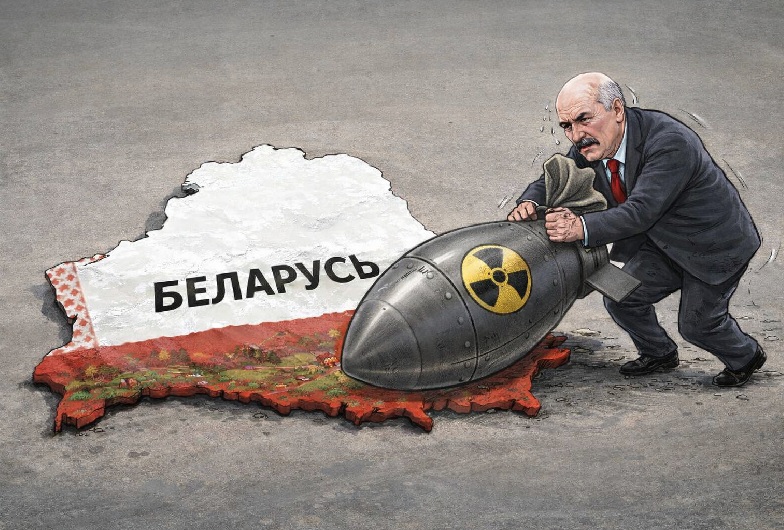
Five years after the Treaty on the Prohibition of Nuclear Weapons entered into force, Belarus still refuses to accede to it.
On 22 January, five years mark the entry into force of the Treaty on the Prohibition of Nuclear Weapons (TPNW). On 22 January 2021, this treaty became a legally binding international instrument and opened a new chapter in the history of global nuclear disarmament.
The Belarusian human rights organisation Our House welcomes this treaty as a crucial step toward a world free of nuclear weapons and calls on the Republic of Belarus to immediately accede to it.
What happened on 22 January 2021
The Treaty on the Prohibition of Nuclear Weapons entered into force after it was ratified by 50 states — the minimum number required for its legal activation.
From that moment, nuclear weapons became the first weapon of mass destruction to be fully prohibited by an international treaty.
For states parties to the TPNW, it became illegal to:
- develop nuclear weapons,
- produce them,
- possess them,
- deploy them,
- use them,
- threaten to use them,
- or assist, encourage, or induce any of these activities.
How and by whom the treaty was adopted
The treaty was adopted by the United Nations General Assembly on 7 July 2017.
It was initiated by non-nuclear-weapon states with the active participation of civil society and the International Campaign to Abolish Nuclear Weapons (ICAN).
In September 2017, the treaty was opened for signature, and on 22 January 2021 it entered into force after reaching the required number of ratifications.
Why this is historically important
For the first time in history, nuclear weapons were recognised as illegal under international humanitarian law — in the same way as chemical and biological weapons had previously been banned.
Yes, nuclear-armed states did not sign this treaty. But legally, it created a new international norm: nuclear weapons are now considered illegitimate.
The position of Belarus
Belarus:
- is not a party to the TPNW;
- has not signed the treaty;
- has not ratified it;
- while remaining a party to the Nuclear Non-Proliferation Treaty (NPT).
This is particularly alarming and symbolic given that in the 1990s Belarus voluntarily renounced nuclear weapons and gained international recognition as a state that chose the path of disarmament.
Today, however, Belarus is once again politically and militarily tied to the nuclear infrastructure of the Russian Federation, which contradicts both the spirit of the NPT and the fundamental principles of global security.
The position of “Our House” as a Belarusian human rights organisation
We believe that Belarus must:
- return to the logic of nuclear disarmament;
- accede to the Treaty on the Prohibition of Nuclear Weapons;
- reaffirm its responsibility toward future generations.
Nuclear weapons do not protect. They destroy.
Five years ago, the world took a step toward their complete prohibition. Belarus must not remain outside this historic process.
Our House supports the Treaty on the Prohibition of Nuclear Weapons and demands that Belarus join it as a state that once already chose the path away from nuclear threat.
22 January is not just a date.
It is a reminder that the choice in favour of life always remains possible.

About The Author