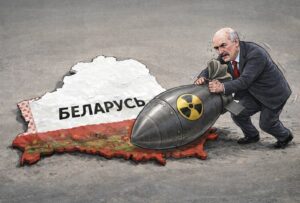
Belarus’s Nuclear Policies Under Human Rights Scrutiny
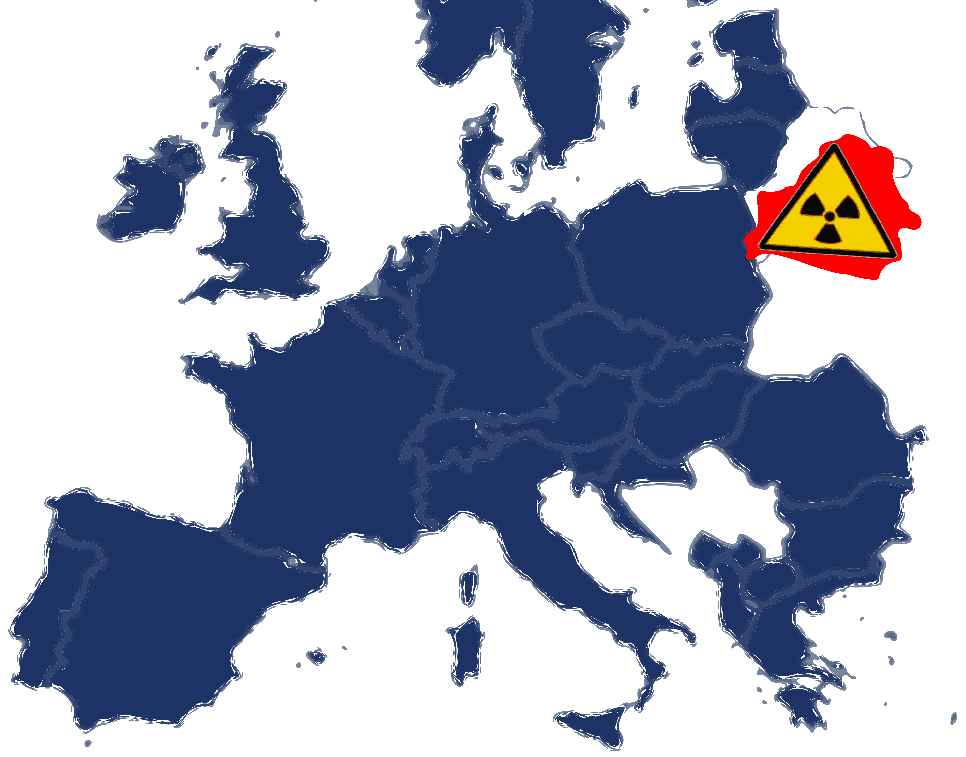
A joint UPR filing urges Belarus to end nuclear hosting, restore its nuclear-free status, and align security policy with human rights law.
Submitted for the UN Human Rights Council’s Universal Periodic Review (50th session), this dossier—led by the World Future Council with Aotearoa Lawyers for Peace, Basel Peace Office, Citizens for Global Solutions, the International Centre for Civil Initiatives “Our House,” the World Federalist Movement–Institute for Global Policy, and Youth Fusion—assesses Belarus’s nuclear policies against international human rights, humanitarian, and security law.
The submission commends Belarus’s past disarmament steps but flags post-2022 reversals: ending constitutional nuclear-free status, hosting Russian nuclear weapons, and rhetoric implying readiness to use them. It recommends halting any support for nuclear threats, reinstating the nuclear-free clause, returning all warheads to Russia, advancing a European Nuclear-Weapon-Free Zone, and replacing nuclear deterrence with common-security approaches under the UN Charter and the International Court of Justice.
Nuclear weapons policies and practices of Belarus with respect to international human rights law
UPR submission urges Belarus to end nuclear hosting, restore nuclear-free status, and align its policies with human rights and international law.
List of Issues Submission to the UN Human Rights Council during its Universal Periodic Review (UPR) of the Republic of Belarus
50th Session of the UPR Working Group
3-14 November 2025
Submitted jointly on April 4, 2025 by:
Aotearoa Lawyers for Peace, Basel Peace Office, Citizens for Global Solutions, International Centre for Civil Initiatives “Our House”, World Federalist Movement-Institute for Global Policy, World Future Council and Youth Fusion*
Lead organization:
World Future Council
c/o Club of Rome Deutschland, Rosenstr. 2. 20095 Hamburg, Germany
Tel.: +49 40 3070914-0. www.worldfuturecouncil.org
Contact: Alyn Ware. alynmware@gmail.com
* World Future Council, Citizens for Global Solutions and World Federalist Movement-Institute for Global Policy are non-governmental organizations in consultative status with the United Nations Economic and Social Council.







Table of Contents
2.The threat to human rights and humanity from nuclear weapons
3.International law applicable to nuclear weapons including human rights law
3.1International Human Rights Law
3.2International Humanitarian Law and the Laws of Peace and Security
4.Positive measures by Belarus to implement legal obligations relating to nuclear weapons policies and practices
5.Policies of Belarus that are inconsistent with its obligations under international law
5.1.Belarus is in direct violation of this obligation by requesting and receiving transfer of nuclear weapons from Russia
5.2.Belarus is also in violation of the obligation not to threaten or use nuclear weapons
6.1.Refrain from any support for the threat or use of nuclear weapons, especially in the Russian invasion of Ukraine
6.2.Support China’s proposal for a no-first-use agreement amongst nuclear weapon States
6.3.Reinstate the commitment in Article 18 of the constitution affirming Belarus as a nuclear-weapon-free country
6.4. Return to Russia all nuclear weapons on Belarusian territory
6.5.Renew the proposal for a European Nuclear-Weapon-Free Zone
6.6.Replace reliance on nuclear deterrence with common security approaches, full adherence to the UN Charter, and acceptance of compulsory jurisdiction of the International Court of Justice.
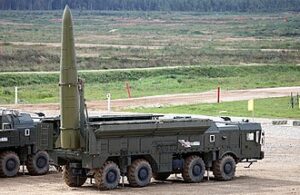
← Iskander-M short-range nuclear missile on the starboard erector arm of the 9P78-1 transporter erector launcher. Russia has transferred an undisclosed number of these to Belarus. The warheads have yields between 5 and 50 kilotons. In comparison, the yield of the Hiroshima bomb was 15 kilotons.
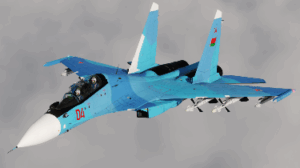
One of the SU-30 fighter-attack planes in the Belarussian airforce. Russia has transferred an undisclosed number of free-fall nuclear bombs that can be delivered by the SU-30. These have a yield of can carry free fall nuclear bombs with yield of 15-20 kilotons. →
The general illegality of the threat or use of nuclear weapons, and the universal obligation to negotiate for their complete elimination, have been affirmed by the International Court of Justice in its Advisory Opinion on the Threat or Use of Nuclear Weapons (July 8, 1996) and by the UN Human Rights Committee in its General Comment 36 of October 30, 2018. States also have obligations relating to nuclear weapons policies under specific treaties and agreements to which they are party. In the case of Belarus, these include the Nuclear Non-Proliferation Treaty and the Memorandum of Security Assurances in connection with Accession of the Republic of Belarus to the Treaty on Non-Proliferation of Nuclear Weapons.
The civil society organizations making this submission have evaluated the nuclear weapons policies and practices of Belarus with regard to their obligations under international treaties, human rights law and other international law.
We commend the government of Belarus for its actions to accede to the Nuclear Non-Proliferation Treaty in 1993 as a non-nuclear State, relinquish all nuclear weapons on its territory by 1996 in accordance with the NPT and the Memorandum of Security Assurances, and adopt a constitution in 1996 that affirmed Belarus as a nuclear-weapon-free country (Article 18 of the Constitution). We also commend Belarus for proposing in 1990 the establishment of a European Nuclear-Weapon-Free Zone.
However, we express deep concern by actions of Belarus between 2022 and 2025 to:
- Support the illegal threat and potential use of nuclear weapons by the Russian Federation (hereafter, Russia) in the context of the Russian invasion of Ukraine;
- Revoke Article 18 of the constitution in order to end the status of Belarus as a nuclear-weapon-free State;
- Enter into agreement with Russia for the deployment of nuclear weapons in Belarus;
- Cooperate with Russia on the transfer to military bases in Belarus of Iskander M tactical missiles with operational nuclear warheads and aerial nuclear bombs for Su-25 and Su-30 fighters.
We also express deep concern at the reports about unwarranted ‘purges’ (dismissals) of government workers suspected of opposing the current Belarus regime. This includes workers across the railway sector, regardless of whether they have personally engaged in delivering the nuclear weapons systems to the military bases in Belarus.
We recognize that there are reasons for Belarus and other states to rely on nuclear deterrence as part of their security – in particular, to prevent aggression or the use of nuclear weapons against their countries. However, international law requires such states to find alternatives to nuclear deterrence to meet these security needs. We uphold common security and international law as feasible alternatives to nuclear deterrence, especially the provisions in UN Charter articles 2 and 33-38, and the role of the International Court of Justice as a mechanism to resolve international conflicts peacefully.
We recommend that Belarus:
- Refrain from any support for the threat or use of nuclear weapons, especially in the Russian invasion of Ukraine;
- Support the proposal of the People’s Republic of China (hereafter, China) for a no-first-use agreement among the acknowledged nuclear weapon States (China, France, Russia, United Kingdom and United States),
- Reinstate the commitment in Article 18 of the constitution to affirming Belarus as a nuclear-weapon-free country;
- Return to Russia all nuclear weapons on its territory;
- Renew the proposal for a European Nuclear-Weapon-Free Zone;
- Replace reliance on nuclear deterrence with common security approaches, full adherence to the UN Charter, and acceptance of compulsory jurisdiction of the International Court of Justice.
Note that the obligations under human rights law and other international law, on nuclear weapons non-threat, non-use and disarmament, apply universally and not only to the Republic of Belarus. Organizations making this submission have also made submissions on the nuclear weapons policies and practices of other nuclear-allied countries (including those in Europe) and of nuclear-armed countries.1 These submissions included some similar, and some differentiated, recommendations to those above.
The threat of nuclear war has increased markedly through conflicts involving nuclear armed and allied states, notably including the Russian invasion of Ukraine. In recognition of this perilous situation, on January 28, 2025, the Bulletin of Atomic Scientists set the hands of the Doomsday Clock to 89 Seconds to Midnight indicating the high risks of a global catastrophe from nuclear war, climate collapse, or other existential threat to current and future generations.2 UN Members participating in the Summit of the Future last year – including Belarus – likewise expressed concern at the “growing risks of a nuclear war which could pose an existential threat to humanity” and committed to making “every effort to avert the danger of such a war, bearing in mind that a nuclear war cannot be won and must never be fought.”3
These warnings and statements must be accompanied by responsive and immediate action. Any use of nuclear weapons would cause catastrophic humanitarian consequences. Multiple uses of nuclear weapons in armed conflict could lead to the destruction of civilization as we know it.
The threat or use of nuclear weapons has been affirmed as violating international human rights law, international humanitarian law, and international law governing peace and security.
In paragraph 66 of General Comment No. 36 on the right to life,4 the United Nations Human Rights Committee stated:
The threat or use of weapons of mass destruction, in particular nuclear weapons, which are indiscriminate in effect and are of a nature to cause destruction of human life on a catastrophic scale, is incompatible with respect for the right to life and may amount to a crime under international law.
States parties must take all necessary measures to stop the proliferation of weapons of mass destruction, including measures to prevent their acquisition by non-state actors, to refrain from developing, producing, testing, acquiring, stockpiling, selling, transferring and using them, to destroy existing stockpiles, and to take adequate measures of protection against accidental use, all in accordance with their international obligations.
They must also respect their international obligations to pursue in good faith negotiations in order to achieve the aim of nuclear disarmament under strict and effective international control and to afford adequate reparation to victims whose right to life has been or is being adversely affected by the testing or use of weapons of mass destruction, in accordance with principles of international responsibility.
This paragraph complements and updates CCPR General Comment No. 14: Article 6 (Right to Life) Nuclear Weapons and the Right to Life, adopted by the Human Rights Committee on 9 November 1984.5
Under the ICCPR, Article 4(2), the right to life is non-derogable, to be observed in all circumstances, even in the event of a “public emergency which threatens the life of the nation.” According to the Maastricht Principles the human rights protected under the ICCPR apply to both current and future generations.6
The Republic of Belarus is a state party to the ICCPR and as a result is obligated to implement its provisions in good faith according to Article 26 of the 1969 Vienna Convention on the Law of Treaties (pacta sunt servanda). Even if the General Comment is not legally binding as such, it is considered the Committee’s authentic interpretation of Article 6 and the relevant practice thereto.
The submitting organizations also take opportunity to share the “profound regret” expressed by the Human Rights Committee regarding Belarus’s denunciation in 2022 of the First Optional Protocol to the ICCPR, the individual complaint procedure, 30 years after its accession, which deprives victims and survivors of an opportunity for justice and poses “a serious and unfortunate setback for human rights protection under the Covenant,” according to Committee Chairperson Photini Parzartzis.7
The obligations under international human rights law not to threaten or use nuclear weapons, and to pursue comprehensive nuclear disarmament, are reinforced by the international law applicable to armed conflict, which includes international humanitarian law (jus in bello) and the laws of peace and security including Article 2 of the UN Charter (jus ad bellum).
The International Court of Justice in 1996 affirmed that this body of law, and additional elements of customary international law, renders the threat or use of nuclear weapons generally illegal and requires the pursuit and conclusion of nuclear disarmament in all its aspects under strict and effective international control. This law is universally binding. In addition, Belarus has accepted an obligation to engage in negotiations for nuclear disarmament under Article VI of the Nuclear Non-Proliferation Treaty.8 Since 1996, the UN General Assembly has called on UN member states to implement these obligations by negotiating a nuclear weapons convention – an international treaty to prohibit and eliminate nuclear weapons.9
Positive measures by Belarus to implement legal obligations relating to nuclear weapons policies and practices
We commend the government of Belarus for its actions to accede to the Nuclear Non-Proliferation Treaty (NPT) in 1993 as a non-nuclear State; relinquish all nuclear weapons on its territory by 1996 in accordance with the NPT, Lisbon Protocol (1992) and the Memorandum of Security Assurances in connection with Accession of the Republic of Belarus to the Treaty on Non-Proliferation of Nuclear Weapons (1994)10, and adopt a constitution in 1996 that affirmed Belarus as a nuclear-weapon-free country (See Section 6.3 below).
Ukraine and Kazakhstan, two of the other Soviet Republics that hosted Soviet nuclear weapons, took similar actions. These ensured that the break-up of the Soviet Union did not result in proliferation of nuclear weapons to any newly established states and helped to maintain regional security. 11
We also commend Belarus for proposing in 1990 the establishment of a European Nuclear-Weapon-Free Zone, and submitting this proposal to the UN General Assembly in 1991.12 A similar proposal by Kazakhstan for the Central Asian states succeeded in the establishment of the Central Asian Nuclear-Weapon-Free Zone in 2006. This has helped to build common security and prevent nuclear weapons deployments or threats in the region.13
It is unfortunate that the proposal from Belarus did not gain sufficient traction among other European States to see the same success as in Central Asia. The increased threat of nuclear war in Europe as a result indicates the importance and timeliness of reviving this proposal.
Policies and practices of Belarus that are inconsistent with its obligations under international law
Belarus has obligations as a member of the NPT “not to receive the transfer from any transferor whatsoever of nuclear weapons or other nuclear explosive devices or of control over such weapons or explosive devices directly, or indirectly; not to manufacture or otherwise acquire nuclear weapons or other nuclear explosive devices; and not to seek or receive any assistance in the manufacture of nuclear weapons or other nuclear explosive devices.“14
On May 25, 2023, Viktor Khrenin, Minister of Defense in Belarusian President Alexander Lukashenko’s government, and his Russian counterpart, Sergei Shoigu, signed an agreement on the transfer of Russian nuclear weapons to Belarus. On June 13, 2023, President Lukashenko said that he had asked Vladimir Putin to “return nuclear weapons to Minsk.” On June 16, 2023, Russia officially confirmed the beginning of the transfer of nuclear warheads to Belarus.15
On May 7, 2024, President Lukashenko announced an immediate check of the combat readiness of nuclear assets deployed in Belarus. According to the Ministry of Defence in Minsk, a division of the Iskander operational-tactical ballistic missile system and a squadron of Su-25 aircraft were put on alert. It was reported that ‘the whole range of actions, from planning and preparation to strikes with tactical nuclear weapons’ would be tested. President Lukashenko has said that he was ready to use them “without hesitation in case of aggression against Belarus.”16
We recommend that Belarus:
6.1 Refrain from any support for the threat or use of nuclear weapons, especially in the Russian invasion of Ukraine
Belarus should publicly affirm what the commitment to which it agreed at the Summit of the Future that “a nuclear war cannot be won and must never be fought.” It must step back from provocative statements regarding the deployment of nuclear weapons. Above all, President Lukashenko and authorities must never indicate again that Belarus is ready to use nuclear weapons “without hesitation.”
6.2 Support China’s proposal for a no-first-use agreement amongst nuclear weapon States
China has proposed that the Permanent Members of the UN Security Council (the five recognized nuclear-armed countries under the NPT) negotiate an agreement on no-first-use of nuclear weapons.17 Such an agreement could help prevent nuclear war and pave the way for negotiations on nuclear disarmament. A no-first-use agreement would not weaken the deterrent value of nuclear weapons – as such weapons could be used in retaliation if a country is attacked with nuclear weapons. Rather, it would provide a stop-gap measure to help prevent nuclear war, until such prevention is guaranteed through the negotiated elimination of nuclear weapons.
Although such an agreement would be amongst the five nuclear-weapon States, the positions of the countries under extended nuclear deterrence relationships with the USA and Russia (nuclear allied countries) play an important role. If the position of those countries is that they require first-use policies for their security, it would be difficult for USA or Russia to adopt no-first use policies or enter into a comprehensive no-first-use agreement. If, however, the nuclear allied countries agree that their security can be met without first-use policies, it makes it a lot easier for Russia and USA to move to no-first-use.
During the Soviet era, Russia maintained a general no-first-use policy, which was abandoned in 2000. Instead, government at the time adopted a mutual no-first-use agreement with China. Support by Belarus for no-first-use policies could be influential in Russia’s consideration to revert back to a general no-first-use policy and join China, France, UK ,and US in negotiations for a P5 agreement.
6.3 Reinstate the commitment in Article 18 of the constitution affirming Belarus as a nuclear-weapon-free country
Until March 2022, Article 18 of the Belarus Constitution upheld that:
“In its foreign policy the Republic of Belarus proceeds from the principles of the equality of States, the non-use of force or the threat of force, the inviolability of frontiers, the peaceful settlement of disputes, non-interference in internal affairs of States and other universally acknowledged principles and standards of international law. The Republic of Belarus pledges to make its territory a neutral, nuclear-free state neutral.”18
On February 27, 2022, the Belarusian authorities held a referendum on constitutional amendments19 that, among other actions, cancelled Belarus’s nuclear weapon free status and exempted former presidents from accountability for actions committed during their term in office. Human rights defenders deemed the referendum non-transparent and illegitimate.20
On the day of the referendum, peaceful demonstrations took place across the country protesting Russia’s military invasion of Ukraine. Police detained hundreds of protesters and subjected them to beatings and other ill-treatment. In the following months, police routinely detained people for anti-war placards and inscriptions. Authorities opened dozens of criminal cases for “aiding extremist activity” against people who shared photos and videos of Russian troops’ movement.21
In addition, the constitutional amendment rescinding Belarus’s status as a nuclear free zone to allow for deployment of Russian nuclear weapons in Belarus is a violation of the obligations of Belarus under human rights law as expressed in General Comment 36 and of the obligations of Belarus under the NPT on non-transfer of nuclear weapons to non-nuclear States.
6.4 Return to Russia all nuclear weapons on Belarusian territory
Belarus should rescind the agreement with Russia on nuclear sharing and return to Russia the nuclear weapons deployed on the territories of Belarus. This does not mean that Belarus would be required to also relinquish nuclear deterrence at the same time. Belarus could continue to rely on nuclear deterrence without Russian weapons on their territories, just as is done by most other non-nuclear states under extended nuclear deterrence relationships.
6.5 Renew the proposal for a European Nuclear-Weapon-Free Zone
In 1990, Belarus submitted the first of three proposals for a European Nuclear-Weapon-Free Zone. The proposal envisaged an agreement of Central and Eastern European countries (Belarus, Ukraine, Lithuania, Latvia, Estonia, Poland, Czechoslovakia, Hungary, Romania and Bulgaria) to not host nuclear weapons on their territories. At the time, Russia indicated support for such a zone.
In 1995, Belarus introduced a slightly modified proposal to the NPT Review and Extension Conference at the United Nations in New York. This proposal envisaged a broader group of participating countries (Belarus, Ukraine, Lithuania, Latvia, Estonia, the territory of the former German Democratic Republic, Poland, the Czech Republic, Slovakia, Hungary, Austria, the Republic of Moldova, Romania and Bulgaria) and additional obligations.
A third Belarus initiative in 1996 was a Central and Eastern European Nuclear-Weapon-Free Space. It expanded the idea of the previous zonal approach and set up three different membership categories with different obligations. The core states mostly remained the same with unchanged obligations.22
It is unfortunate that none of these initiatives came to fruition at the time. However, they demonstrate a commitment by Belarus to provide leadership on such an initiative, and willingness to explore various options to meet the security needs of potential participating countries.
Since Russia’s full-scale invasion of Ukraine, there have been a number of calls for a revival of the proposal for a European NWFZ. Bojan Lazarevski, for example, argues that “Establishing an NWFZ in Central and Eastern Europe would serve as an obstacle to further nuclear escalation and a crucial safeguard for regional stability,“ noting that “such a zone could offer a framework for addressing the Russo-Ukrainian conflict by establishing a neutral buffer that promotes stability and dialogue.“23
Belarus is encouraged to renew their proposal for a European Nuclear-Weapon-Free Zone and initiate discussions on this in the Conference on Disarmament and NPT Review Conference.
6.6 Replace reliance on nuclear deterrence with common security approaches, full adherence to the UN Charter, and acceptance of compulsory jurisdiction of the International Court of Justice.
The UN was established as a common security framework to ‘save succeeding generations from the scourge of war” to “reaffirm faith in fundamental human rights” and to “establish conditions under which justice and respect for the obligations arising from treaties and other sources of international law can be maintained.” 24
The UN Charter requires Member States to refrain from the threat or use of force in their international relations and to resolve their international disputes through peaceful means (UN Charter Article 2). The UN Charter provides a number of approaches and mechanisms for peaceful resolution of conflicts, including negotiation, enquiry, mediation, conciliation, arbitration, judicial settlement, resort to regional agencies or arrangements, or other peaceful means of their own choice (Article 33).
Regarding judicial settlement of disputes, the UN Charter highlights that “these should as a general rule be referred by the parties to the International Court of Justice in accordance with the provisions of the Statute of the Court.“ The Court has demonstrated its effectiveness when utilized by UN members: It is reported that of the 196 cases considered by the Court, more than 80% have been accepted by all parties and implemented, including those when the court finds (as it often does) in favour of the smaller, less powerful countries in a dispute.25 The main problem limiting the its impact is that only 74 UN Member States currently accept compulsory jurisdiction of the Court.
We encourage Belarus (and all other nuclear-reliant States) to a replace their reliance on nuclear deterrence with common security, full adherence to the UN Charter and acceptance of compulsory jurisdiction of the International Court of Justice.26
Aotearoa Lawyers for Peace: www.facebook.com/nzpeacelaw, www.unfoldzero.org
Aotearoa Lawyers for Peace (ALP) is an organization of lawyers and law students from Aotearoa (New Zealand) working to abolish nuclear weapons, increase respect for international law and abolish war. ALP is the New Zealand affiliate of the International Association of Lawyers Against Nuclear Arms, and is a founding partner of UNFOLD ZERO, which promotes United Nations initiatives for nuclear disarmament.
Contact: Matt Robson matt@mattrobson.co.nz
Basel Peace Office: www.baselpeaceoffice.org
Basel Peace Office (BPO) is a coalition established by five Swiss and four international organizations to advance the peace and security of a nuclear-weapon-free world. Basel Peace Office makes connections between inter-related issues – including peace, the climate, nuclear disarmament, human rights and sustainable development – and builds cooperation amongst key constituencies including mayors, parliamentarians, religious leaders, academics, youth/students, women, lawyers, medical professionals, government officials and UN entities. BPO is a member of the EU Non-proliferation Consortium and serves as the Basel representative in Mayors for Peace.
Contact: Dr Andreas Nidecker anidecker@bluewin.ch
Citizens for Global Solutions: www.globalsolutions.org
CGS is a non-governmental, non-profit, non-partisan membership-based organization that for more than 75 years has brought together a diverse collective of individuals and organizations with a common goal of a unified world predicated upon peace, human rights, and the rule of law. From championing ratification of the UN Charter upon its establishment in 1947, to supporting the creation of the International Criminal Court (ICC) 25 years ago, to advocating for global instruments to confront today’s enduring challenges of war and climate degradation.
Contact: Rebecca Shoot rshoot@globalsolutions.org
International Centre for Civil Initiatives “Our House”: www.news.house
The International Centre for Civil Initiatives “Our House” is a Belarusian human rights organization in exile, registered in Vilnius (Lithuania) since 2014. Founded in 2002, it advocates for democracy and the protection of vulnerable groups, especially women and children, and supports Belarusian and Ukrainian refugees in the EU. “Our House” has been nominated for the Nobel Peace Prize in both 2024 and 2025, and is a member of ICAN, leading a civil campaign against the deployment of Russian nuclear weapons in Belarus. The organization has received several international awards, including the Sean MacBride Peace Prize (2023) and Weimar Human Rights Award (2022). Its director, Olga Karach, is a laureate of the Alexander Langer Peace Prize (2023). Today, “Our House” prioritizes support for Belarusian conscientious objectors, helping prevent military involvement in the war against Ukraine, and fills critical human rights protection gaps often overlooked by other actors.
Contact: Olga Karach olga.karatch@gmail.com
World Federalist Movement-Institute for Global Policy: www.wfm-igp.org
World Federalist Movement-Institute for Global Policy (WFM-IGP) is a global coalition of organizations working for better global governance with the vision of a world federalist system, in order to prevent war, ensure universal adherence to international law, protect human rights, advance global democracy and protect the environment. WFM-IGP established the Coalition for an International Criminal Court, which was instrumental in the campaign to establish an International Criminal Court. More recently, WFM-IGP has co-launched Legal Alternatives to War (LAW not War) and Mobilizing an Earth Governance Alliance.
Contact: John Vlasto boardchair@wfm-igp.org
World Future Council: www.worldfuturecouncil.org
The World Future Council (WFC) was established to promote effective policies to ensure a peaceful and sustainable future. WFC consists of 50 eminent global change-makers from governments, parliaments, civil society, academia, the arts and business who have already successfully created change. They are supported by a staff of experts that work with the councillors to identify, develop, highlight and spreading effective, future-just solutions for current challenges humanity is facing.
Contacts: Neshan Gunasekera neshan.gunasekera@gmail.com and Alyn Ware alynmware@gmail.com
Youth Fusion: www.youth-fusion.org
Youth Fusion is a world-wide networking platform for young individuals and organizations in the field of nuclear disarmament, risk-reduction and non-proliferation. Youth Fusion focuses on youth action and intergenerational dialogue, building on the links between disarmament, peace, climate action, human rights, public health and sustainable development. Youth Fusion serves as the youth section of Abolition 2000, the global civil society network to eliminate nuclear weapons.
Contact: Ayleen Roy ayleen@pnnd.org
1 See Nuclear weapons and the UN human rights bodies, Basel Peace Office https://baselpeaceoffice.org/article/nuclear-weapons-and-un-human-rights-bodies
2 See Closer than ever: It is now 89 seconds to midnight, Bulletin of Atomic Scientists, January 28, 2025. https://thebulletin.org/doomsday-clock/2025-statement/
3 Action 25 of the Pact for the Future, adopted by consensus at the UN Summit of the Future, September 22, 2024. https://www.un.org/sites/un2.un.org/files/sotf-pact_for_the_future_adopted.pdf
4 General comment No. 36 (2018) on article 6 of the International Covenant on Civil and Political Rights, on the
right to life. https://www.ohchr.org/sites/default/files/Documents/HRBodies/CCPR/CCPR_C_GC_36.pdf
5 See CCPR General Comment No. 14: Article 6 (Right to Life) Nuclear Weapons and the Right to Life. Adopted at the Twenty-third Session of the Human Rights Committee on 9 November 1984. https://www.refworld.org/docid/453883f911.html
6 See The Maastricht Principles on the Human Rights of Future Generations, https://www.rightsoffuturegenerations.org/ and Commentary to the Maastricht Principles on the Human Rights of Future Generations, Gideon Basson, Sandra Liebenberg (Chair), Margaretha Wewerinke-Singh, Ashfaq Khalfan, Carroll Muffett, Miloon Kothari, Magdalena Sepulveda Carmona and Sharon Venne-Manyfingers, Forthcoming in Human Rights Quarterly, August 2025. www.rightsoffuturegenerations.org/commentary
7 https://www.ohchr.org/en/press-releases/2022/11/belarus-withdrawal-individual-complaints-procedure-serious-setback-human
8 “Each of the Parties to the Treaty undertakes to pursue negotiations in good faith on effective measures relating to cessation of the nuclear arms race at an early date and to nuclear disarmament, and on a treaty on general and complete disarmament under strict and effective international control.“ Treaty on the Non-Proliferation of Nuclear Weapons (NPT), Article VI, at https://www.un.org/disarmament/wmd/nuclear/npt/text/
9 See, for example, A/RES/70/56, Follow-up to the advisory opinion of the International Court of Justice on the legality of the threat or use of nuclear weapons, adopted by the UNGA on Dec 7, 2015.
10 Memorandum of Security Assurances in connection with Accession of the Republic of Belarus to the Treaty on Non-Proliferation of Nuclear Weapons https://treaties.un.org/Pages/showDetails.aspx?objid=0800000280338ba9
11 See The Lisbon Protocol At a Glance, Arms Control Association, December 2020. https://www.armscontrol.org/factsheets/lisbon-protocol-glance
12 See Scope for Nuclear Weapon-Free Zone in Central and Eastern Europe, Strategic Analysis, October 1998, https://ciaotest.cc.columbia.edu/olj/sa/sa_98pns01.html
13 See A Force for Regional Security: The Central Asian Nuclear-Weapon-Free Zone, Dauren Aben, Global Asia, https://globalasia.org/v18no4/cover/a-force-for-regional-security-the-central-asian-nuclear-weapon-free-zone_dauren-aben
14 Treaty on the Non-Proliferation of Nuclear Weapons, Article II, https://disarmament.unoda.org/wmd/nuclear/npt/text/
15 Nuclear weapons in Belarus: what is currently known?, International Centre for Civil Initiatives, https://news.house/63839
16 Ibid
17 No-first-use of Nuclear Weapons Initiative, Working paper submitted by China to the NPT Prep Com, 12 July 2024. https://reachingcriticalwill.org/images/documents/Disarmament-fora/npt/prepcom24/documents/WP33.pdf
18 Constitution of the Republic of Belarus (prior to March 2022). https://constitutionnet.org/sites/default/files/Belarus%20Constitution.pdf
19 Constitution of the Republic of Belarus with amendments of February 2022 https://www.venice.coe.int/webforms/documents/default.aspx?pdffile=CDL-REF(2022)034-e
20 See Situation of human rights in Belarus: report of the Special Rapporteur on the Situation of Human Rights in Belarus, Anaïs Marin. Human Rights Council https://digitallibrary.un.org/record/3974497?v=pdf
21 Belarus: Events of 2022, Human Rights Watch, https://www.hrw.org/world-report/2023/country-chapters/belarus
22 See A Nuclear Weapon-Free Zone in Europe Concept – Problems – Chances, Peace Research Institute Frankfurt, January 2016. https://www.prif.org/fileadmin/Daten/Publikationen/Prif_Working_Papers/PRIF_WP_27.pdf
23 Europe needs a Nuclear-Weapon-Free Zone, Bojan Lazarevski, The New Federalist, October 24, 2024. https://www.thenewfederalist.eu/europe-needs-a-nuclear-weapon-free-zone?lang=fr
24 Common security is defined and described as “achieving national, regional and international security by taking into account the security needs of other nations, including one’s adversaries, as well as one’s own security needs. It is based on the assumption that sustainable security cannot be obtained by undermining or threatening the security of others, but rather on resolving conflicts with one’s adversaries and ensuring the security of all is upheld. Common Security relies on diplomacy, negotiation, mediation and other forms of conflict resolution, as well as on the application of international law, to ensure peace, fairness and security for all. Common Security is a win-win approach to relations between countries (resolving issues so that everyone benefits) – rather than a win-lose approach (one country dominant over another) or a lose-lose approach (such as war).” See Common Security, https://www.unfoldzero.org/common-security/
25 A study by Sara McLaughlin Mitchell and Paul R. Hensel analyzed 29 territorial, river, and maritime disputes submitted to the ICJ or its predecessor, the Permanent Court of International Justice (PCIJ), up to May 2007. They found that in 86.2% of these cases, both parties complied with the court’s decision without further litigation. An additional 10.3% of cases saw compliance after subsequent appeals, while only one case (3.4%) remained unresolved. Another analysis by Eric A. Posner and John C. Yoo, referencing research by Tom Ginsburg and Richard H. McAdams, examined compliance based on how the ICJ’s jurisdiction was established. They reported compliance rates of 85.7% for cases initiated by special agreement, 60% for those under treaty-based jurisdiction, and 40% for cases under the ICJ’s optional clause jurisdiction. These studies indicate that while compliance rates can vary depending on the context, a significant majority of ICJ decisions are indeed accepted and implemented by the parties involved. See Mitchell, S.M. and Hensel, P.R. (2007) International Institutions and Compliance with Agreements and its web annex, Compliance with ICJ/PCIJ Decisions; Posner, E.A. and Yoo, J.C. (2004) A Theory of International Adjudication.
26 See NPT countries called to replace nuclear deterrence with Common Security, https://www.unfoldzero.org/npt-countries-called-to-replace-nuclear-deterrence-with-common-security/
About The Author