Empowering Women in Water Diplomacy for Peacebuilding in the Conflict-Affected MENA Region
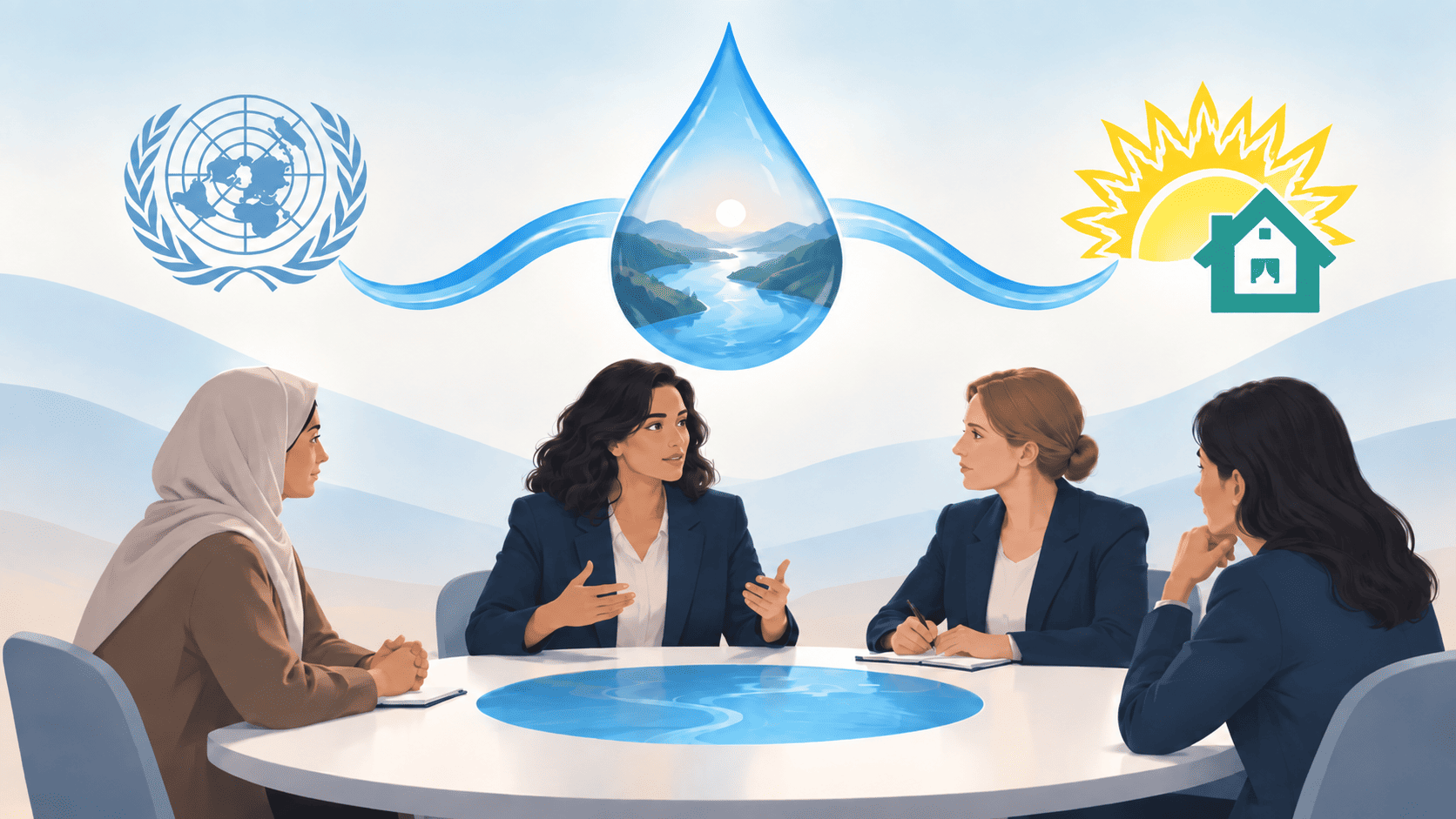
Human rights defender Olga Karach joins international experts advancing women-led water diplomacy.
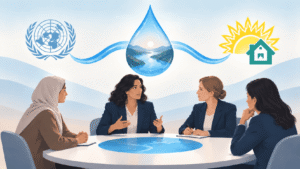
On 14 September 2026, Belarusian human rights defender and peace activist Olga Karach, head of the International Centre for Civil Initiatives “Our House”, will take part in the international Expert Roundtable “Empowering Women in Water Diplomacy for Peacebuilding in the Conflict-Affected MENA Region.”
The high-level expert discussion is organised by the Geneva Water Hub in collaboration with the Global Water Partnership–Mediterranean (GWP-Med), as part of the broader Initiative on Empowering Women in Water Diplomacy in the MENA Region. The initiative was launched in 2020 to strengthen women’s leadership and decision-making roles in water diplomacy and transboundary water cooperation.
The Expert Roundtables bring together water specialists, public decision-makers, negotiators, mediators, peace and security practitioners, researchers, and representatives of women-led and international organisations. Their purpose is particularly significant in conflict-affected settings, where access to and control over water can become a source of political tension and conflict, but shared water resources can also create opportunities for cooperation, dialogue and peacebuilding.
A central idea behind the initiative is that women should not be viewed merely as populations affected by conflict and water insecurity. Instead, they should be recognised as diplomatic actors, negotiators, agents of change and leaders in peacebuilding. Women remain seriously under-represented in both water-resource management and diplomacy, despite the direct relationship between water security, human security and sustainable peace.
The initiative builds on several years of work by the Geneva Water Hub and GWP-Med. Their cooperation initially included a comparative study examining women’s participation in water diplomacy in Egypt, Jordan, Lebanon, Morocco and Palestine. Nearly 100 women experts contributed to the research underpinning the initiative. The work identified both structural barriers to women’s participation and the need to strengthen the practical skills required of contemporary water diplomats.
In 2026, the initiative has placed additional emphasis on negotiation in conflict-affected environments, including the ability to manage deadlocks, navigate complex multi-stakeholder processes and conduct negotiations under pressure. The broader objective is to connect women’s leadership in water governance with conflict prevention, reconciliation and sustainable peace.
Karach’s participation brings to the discussion the perspective of a human rights defender and peacebuilder from Eastern Europe, where questions of conflict, militarisation, human security and the protection of civilian populations have acquired particular urgency.
The Roundtables are also intended to have a concrete policy impact. Contributions from participating experts will feed into a joint Geneva Water Hub–GWP-Med analytical paper linked to major international policy processes, including the 2026 UN Water Conference, the Euro-Mediterranean Water Forum in Rome and the 11th World Water Forum in Riyadh in March 2027. The organisers intend the process to produce a practice-based contribution connecting gender, conflict and water diplomacy.
For Olga Karach, participation in the Roundtable also represents an opportunity to connect peacebuilding experience from Eastern Europe with approaches being developed in the conflict-affected MENA region. Despite very different regional contexts, the underlying question is universal: how can resources essential for human survival become instruments of cooperation rather than sources of confrontation, and how can women gain a meaningful role in negotiating those solutions?
Format: Offline