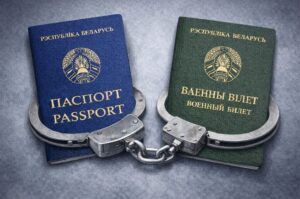
Our House submits OHCHR input on conscientious objection in Lithuania

Our House reports systemic barriers to conscientious objection and asylum protection in Lithuania.
Our House Centre for Human Rights and Relief has submitted an official input to the Office of the United Nations High Commissioner for Human Rights (OHCHR) under the Call for Inputs on Conscientious Objection to Military Service.
The submission contributes to the High Commissioner’s analytical report to be presented to the UN Human Rights Council at its 62nd session in June 2026, in accordance with Human Rights Council resolution 20/2.
The input focuses on Lithuania, where the expansion of compulsory military service has exposed serious gaps between formal legal guarantees and their practical implementation. Although Lithuanian law recognizes the right to conscientious objection, alternative civilian service remains punitive in duration and insufficiently civilian in nature. Non-religious objectors face particular difficulties in having their convictions recognized.
The submission documents the widespread use of administrative and criminal sanctions against conscripts, including repeated fines that cumulatively undermine freedom of conscience. It also recalls the European Court of Human Rights judgment in Teliatnikov v. Lithuania, which found Lithuania’s alternative service incompatible with Article 9 of the European Convention on Human Rights.
A major part of the submission addresses the situation of Belarusian and Russian conscientious objectors seeking asylum in Lithuania. Despite clear risks of persecution in their countries of origin, such applicants are frequently denied protection and classified as “threats to national security.” These practices create a serious risk of violations of the principle of non-refoulement.
The submission highlights systemic problems in migration procedures, including non-transparent security assessments, limited access to legal aid, repeated re-use of security service conclusions despite court rulings, and the absence of realistic pathways to legal status after asylum refusal.
Our House’s input concludes with detailed recommendations to Lithuania and to the international community, including:
– full recognition of conscientious objection for all belief systems;
– genuinely civilian, non-punitive alternative service;
– proportional and non-discriminatory enforcement practices;
– fair and individualized asylum assessments;
– strict compliance with the principle of non-refoulement.
According to OHCHR, all inputs may be published on the Office’s official website and used in preparing the High Commissioner’s report.
By submitting this Lithuania-focused input, Our House continues its work to defend freedom of conscience, protect conscientious objectors, and promote compliance with international human rights standards in Europe.
About The Author