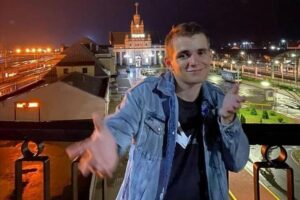
Raman Bandarenka: A Symbol of State Impunity
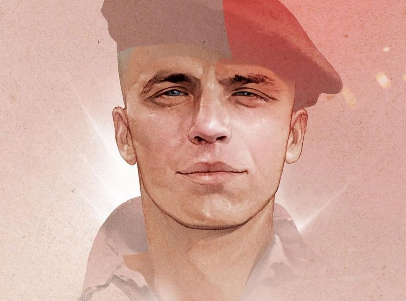
Designer Raman Bandarenka was beaten to death in Minsk in 2020. His case became a symbol of unpunished violence in Belarus.
Raman Bandarenka, a 31-year-old artist and shop manager from Minsk, was brutally beaten by plain-clothed men in the “Square of Changes” courtyard after defending peaceful protest symbols. He died the next day from severe head injuries. His death sparked national mourning and worldwide condemnation of the Belarusian regime’s violence against civilians.
Despite credible evidence and international scrutiny, Belarusian authorities suspended the investigation and denied state involvement. Suspected perpetrators linked to the presidential circle remain under EU and US sanctions. Bandarenka’s case continues to stand as a defining example of brutality, denial, and the collapse of justice in post-election Belarus.
Human rights violation dossier: Raman Bandarenka
Prepared by: International Center for Civil Initiatives “Our House”
Date: November 2025
1. Personal information
Field | Information |
|---|---|
Name, surname | Raman Bandarenka |
Date of birth | 1 August 1989 (Minsk, Belarus) |
Citizenship | Republic of Belarus |
Education | Belarusian State Academy of Arts, Faculty of Design (graduated 2012) |
Profession | Designer; shop administrator/manager |
Status | Died on 12 November 2020 after being beaten by unidentified men in plain clothes and subsequently hospitalized |
2. Basic Information
Raman Bandarenka was a 31-year-old resident of Minsk, a designer, and a store manager.
On the evening of 11 November 2020, in the courtyard of his apartment building (“Square of Changes”), a group of people in civilian clothes cut down white-red-white ribbons – a symbol of the protest movement. When Bandarenka came outside, he was knocked to the ground, beaten, and taken away in a minivan. After midnight on 12 November 2020, he was delivered from the district police department to the Minsk City Clinical Emergency Hospital with a severe head injury; he died later that day.
Bandarenka’s death provoked a strong public reaction in Belarus and condemnation from international institutions and human rights organizations. His case became one of the most well-known examples of violence against peaceful citizens during the 2020 protests.
3. Chronology of Facts
11 November 2020, ~22:00. A group of masked men in civilian clothes arrived in the “Square of Changes” courtyard and removed protest symbols. Witnesses reported that Bandarenka was beaten, loaded into a van, and taken away.
According to independent investigations by Belarusian and international media, individuals from Alexander Lukashenko’s inner circle – Natallia Eismant, Dzmitry Baskau, and Dzmitry Shakuta – may have been involved in the assault and subsequent events. These individuals were sanctioned by the EU, the UK, Canada, and the USA for their alleged involvement in the incident that led to Bandarenka’s death. The official investigation in Belarus failed to establish their responsibility, which human rights defenders regard as a collapse of justice and an example of impunity. (Sources: Amnesty International, Human Rights Watch, EU Sanctions Register, Reuters, Deutsche Welle.)
12 November 2020, after midnight. An ambulance was called from the police department; Bandarenka was admitted to the hospital unconscious, with severe head injuries, and died a few hours later.
Official representatives later claimed that Bandarenka was “drunk and provoked the conflict.”
These statements were refuted by medical documents made public by hospital staff and confirmed by independent sources. The publication of medical data led to the criminal prosecution of the doctor and journalist who exposed the truth – which, according to human rights groups, indicates a state-led cover-up of the case.
13 November 2020. Human Rights Watch reported Bandarenka’s death “as a result of a brutal beating by a group of unidentified men” and demanded an effective investigation.
20 November 2020. Mass funerals were held in Minsk; thousands of people came to pay their respects. The events were documented by Associated Press and other media outlets.
26 November 2020. The European Parliament adopted a resolution that specifically mentioned “the killing of Raman Bandarenka” and called for accountability.
2020–2021. Human rights organizations and media reported the absence of a transparent investigation; later, the Belarusian Prosecutor General’s Office suspended the case.
2023–2024 (context). Reports by the UN Office of the High Commissioner for Human Rights (OHCHR) stated that systemic violations in Belarus followed the 2020 elections – the context in which Bandarenka’s death occurred.
Note: The above formulations are based on data from international human rights organizations (HRW, OHCHR), EU resolutions, and major international media. Statements by Belarusian authorities denying involvement are included as official positions but were not confirmed by independent investigations, as highlighted by Amnesty International.
4. Threats and Risks
Current risk context (for activists and witnesses in the case):
Systemic impunity and lack of an effective investigation into Bandarenka’s death increase the risk of pressure on witnesses and activists.
OHCHR reports describe arbitrary detentions, violence, and intimidation of protesters and human rights defenders in 2020–2024, creating ongoing risks for those connected to the Bandarenka case.
Recommendations for documenting risks: Record cases of pressure (messages, calls, surveillance), store screenshots and medical records, and regularly transmit information to international monitoring structures (OHCHR, UN Special Procedures mandates, international NGOs).
5. Current Legal and Other Status
Status of Bandarenka: deceased as of 12.11.2020.
Status of investigation: according to media and human rights organizations, the criminal investigation into his death was suspended; international institutions continue to call for an independent and effective investigation.
During the official investigation, Belarusian state agencies attempted to present Bandarenka’s death as a result of alcohol intoxication, claiming that he was allegedly under the influence at the time.
However, independent forensic examinations and medical documentation published by doctors and human rights groups established the absence of ethanol in his blood.
International human rights organizations (Human Rights Watch, Amnesty International, Reuters, BBC) regarded these official claims as attempts to distort the circumstances and discredit the victim, which contributed to the loss of credibility in the investigation.
According to international human rights reports, the investigation into Bandarenka’s death was effectively terminated despite information about possible involvement of high-ranking officials – including Natallia Eismant, Dzmitry Baskau, and Dzmitry Shakuta – who remain under EU and other international sanctions. The inactivity of the Belarusian Investigative Committee is viewed by the international community as the collapse of the case and a cover-up of those responsible.
International reactions: The European Parliament resolution (26 November 2020) condemned the killing and demanded accountability; human rights organizations (HRW, Amnesty International) called for an impartial investigation.
6. Required Support
Urgent protection and legal assistance:
International pressure on the Belarusian authorities to reopen and conduct an effective, independent, and impartial investigation into Bandarenka’s death, in line with ECHR/ICCPR standards.
Support for human rights defenders and lawyers documenting the case and protecting witnesses.
Public campaign / media outreach:
Continued international attention to the case (publications, briefings, appeals to UN special procedures).
Psychological support for victims and witnesses:
Access to independent psychologists and NGOs working with trauma from political violence; ensuring confidentiality and safety.
7. Conclusion
The death of Raman Bandarenka on 12 November 2020 became one of the symbols of violence and impunity in Belarus after the 2020 presidential elections. The consolidated position of international human rights organizations and EU institutions emphasizes the need for an independent investigation, accountability for those responsible, and protection for witnesses and activists.
About The Author