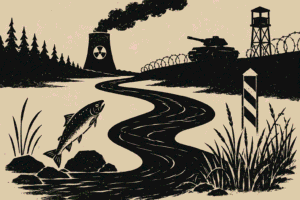
Russian Artist and Cartoonist Semyon Skrepetsky, Who Criticized War and Dictatorships, Shot Dead in Poland

Dear friends!
On 15 June 2026, Russian artist, cartoonist, and political émigré Semyon Skrepetsky (Robert Kuzovkov), known for his satirical works directed against authoritarianism, war, militarism, and political violence, was killed in the Polish city of Biała Podlaska.
According to Polish media reports, the artist was shot dead in a daytime armed attack. Polish law enforcement authorities are investigating the circumstances of the crime.
Semyon Skrepetsky was known for taking an equally critical stance toward various political forces and leaders in our region and for consistently speaking out against war and dictatorship.
His cartoons addressed Vladimir Putin, the Russian authorities, Ramzan Kadyrov, radical Islam, war, militarism, human rights violations, Volodymyr Zelenskyy, certain Ukrainian political forces and oligarchs, Alexander Lukashenko and Belarusian political forces, Alexei Navalny, the Russian opposition, and other political subjects.
It was precisely because of this independent position that the cartoonist provoked irritation and hostility among representatives of a wide range of political camps that traditionally oppose one another. He was labelled a provocateur by both state and non-state media outlets. He was criticised in Russia, in Ukraine, and within émigré communities. In recent years, he had been living in Biała Podlaska after emigrating from Russia due to fears of political persecution.
Shortly before his murder, Semyon Skrepetsky reported receiving threats.
The Ukrainian far-right radical website Myrotvorets had previously included Semyon Skrepetsky on its list of “enemies” and published information about his place of residence in Poland following his criticism of Volodymyr Zelenskyy and a number of political forces in Ukraine. At present, there is no publicly available evidence linking the Myrotvorets website to the murder itself. At the same time, the publication of personal data of public figures and political émigrés creates additional risks to their security and deserves a separate legal assessment by the Ukrainian law enforcement authorities.
Such practices create serious threats to journalists, artists, human rights defenders, political refugees, and public figures regardless of their views and political beliefs.
We express our deepest condolences to the family members, relatives, friends, and loved ones of Semyon Skrepetsky.
The murder of an artist, journalist, activist, or any public critic can never be justified by political disagreements. Freedom of expression and the right to criticism must be protected by law, not become grounds for persecution, threats, or violence.
We call on the Polish authorities to conduct a swift, independent, and effective investigation into the circumstances of the murder, to identify all those responsible for the crime, and to bring them to justice.
We also call on the Ukrainian authorities to provide a legal assessment of the practice of publishing personal data on the Myrotvorets website and to determine to what extent such actions create additional security risks for individuals included on such lists.
We urge European institutions to pay serious attention to the safety of journalists, artists, human rights defenders, and anti-war activists residing in European Union countries, and to adopt additional measures to protect freedom of expression and freedom of conscience.
The safety of political émigrés, human rights defenders, journalists, artists, and civil society activists in Europe must remain an unconditional priority for democratic states.
Updated. It has just emerged that the Ukrainian website Myrotvorets marked the artist’s profile as “liquidated” following his death. It reads as an endorsement of a political killing and raises serious questions about the site’s moral and political responsibility.

The designation “liquidated” inevitably prompts a fundamental question: who killed the artist? While the circumstances of his death remain unresolved and require an independent investigation, such wording fuels suspicion and public debate about whether the crime was linked to Russian security services or to radical Ukrainian nationalist actors.
Regardless of who is ultimately responsible, publicly labeling a deceased artist as “liquidated” amounts to the normalization of political violence and undermines any claims of commitment to human rights and the rule of law.


Political cartoons by Siemion Skrepetski
About The Author